
 FEATURED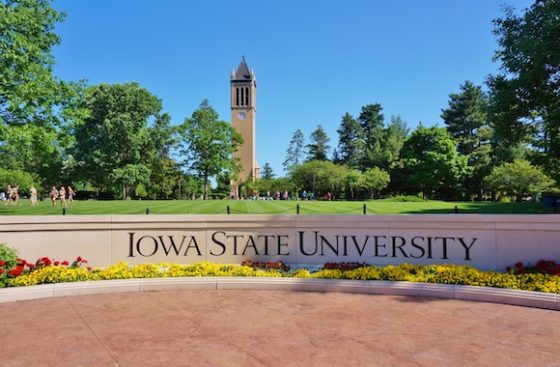
Key Takeaways
- The Iowa House passed a bill requiring public universities to offer two civics courses: one on American Government and one on American History, along with several other history-related requirements.
- Students will read significant historical documents and the bill calls for the establishment of ongoing lecture and debate series by designated centers at the universities.
- Supporters believe the bill aims to restore understanding of American history and civics, while critics express concerns over cost, staffing challenges, and potential ideological bias in teaching.
The Iowa state House recently passed a bill mandating that the state’s public universities add two introductory civics courses — one on American government and the other on American history.
It has now made its way to the Senate and is currently in review.
If signed into law, it would require public university students to take two history courses, one unit in civics and Western Civilization, and half a unit of U.S. Government, in addition to other course requirements, according to the bill’s text.
Students would be required to read historical documents such as The Mayflower Compact, the Declaration of Independence, the Emancipation Proclamation, and Martin Luther King Jr.’s “I Have a Dream” speech.
Additionally, the bill would task three university centers — the Center for Intellectual Freedom at the University of Iowa, the Center for Cyclone Civics at Iowa State University, and the Center for Civic Education at the University of Northern Iowa — with developing these new courses and establishing ongoing lecture and debate series, according to Iowa Capital Dispatch.
National Association of Scholars spokesperson Chance Layton told The College Fix that other states should “absolutely” pass similar laws. However, he acknowledged potential challenges in implementation, noting that it may be difficult to find qualified teachers “who are not political activists.”
“Professors that are effective civics and history teachers must care about the history of the nation. Prospective civics and history professors should also utilize Intellectual Freedom Centers,” Layton said.
These centers promote the study of U.S. history and government.
However, Layton fears that the courses could become “another vector for progressive ideology.”
“The project would fail if the courses were taught by scholar activists and not politically neutral history and civics professors,” he said.
When asked how universities can ensure greater diversity of speakers for campus debates, Layton said, “This ultimately depends on accountability.”
“Universities should have multiple different speakers on campus that are not one-sided. Failure to do so ought to result in funding cuts for that institution, but not intellectual diversity programs,” he said.
Supporters of the legislation argue it is long overdue.
Iowa Rep. Taylor Collins stated that the bill aims to “restore a robust understanding of American history and civics,” according to Little Village.
Collins sent a letter to private universities urging them to adopt this curriculum change.
“For too long, we have seen a gradual erosion of foundational knowledge about our nation’s history, its founding principles, and the rights and responsibilities of citizenship,” Collins wrote in the letter.
“Restoring a robust understanding of American history and civics is essential not only in producing informed citizens, but also to fulfilling the mission of a true liberal arts education,” he wrote.
However, not everyone is in favor of the bill.
Sen. Herman Quirmbach said that while teaching American history and government is “cleary very important,” this bill would pose too much of a burden on colleges in terms of both cost and staffing, according to Iowa Capital Dispatch.
“We don’t know how we’re going to pay for this, and we don’t know how we’re going to staff this,” Quirmbach said. “I think that there’s a real problem there.”
It is estimated that these universities may have to spend $2.1 million each year to hire new professors and assistants for these courses, according to The Gazette.
Reached for comment, Josh Lehman of the Iowa Board of Regents told The Fix, “The Board of Regents is monitoring the bill and will follow the language as it moves through the legislative process. We will continue to work with legislature on all issues that relate to higher education.”
The Center for Cyclone Civics and Iowa State University declined to comment.

