FEATURED
All trustees must pledge to not publicly criticize board actions under new ethics code
Michigan State University is facing two federal lawsuits from elected trustees on opposite sides of the political aisle who allege board leadership is unconstitutionally silencing dissent. The lawsuits follow public attention on the board’s governance, including a lucrative contract offer to MSU’s president.
The decisions drew both praise and criticism from the university community, according to emails obtained by The College Fix.
Democratic Trustee Rema Vassar and Republican Trustee Mike Balow have two separate lawsuits challenging a revised Board of Trustees Code of Ethics and Conduct, first passed in May during a rare Sunday meeting.
Both trustees faced automatic sanctions, including a loss of privileged tickets to sporting events, after refusing to sign an acknowledgement agreeing to the policy, which requires them to “support the majority decision of the Board,” protect MSU’s reputation, and avoid sharing misleading information.
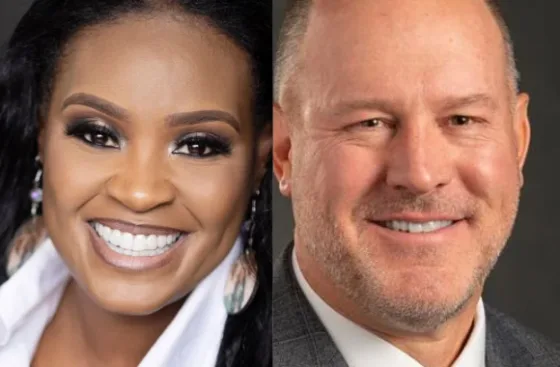
Balow (pictured, right), a Republican, sued Chairwoman Brianna Scott and Board Secretary Stefan Fletcher with the assistance of the Foundation for Individual Rights and Expression.
The national free speech group told The Fix the “ideal outcome would be for the court to declare the code of ethics unconstitutional and bar the board from enforcing it or withholding resources from Balow because Balow refuses to agree to it.”
“FIRE warned MSU that the revised code was unconstitutional earlier this year, but the board declined to engage with our concerns,” Senior Attorney Greg Greubel told The Fix via a media statement.
The case could take “2-3 years to litigate,” Greubel said, but noted the free speech group asked for a “preliminary injunction to prevent the code of ethics from being enforced against Balow while the case proceeds.”
Democrat trustee also alleges racial discrimination
Trustee Vassar, a Democrat, is being represented separately. She has her own 40-page lawsuit against Scott, President Kevin Guskiewicz, university attorney Brian Quinn, and several others. In addition to free speech violations, she also alleges racial discrimination against her as a black woman.
The lawsuit calls the code of conduct a “loyalty oath.”
“It is a loyalty oath, and it demands loyalty to the wrong principal: Michigan law directs a trustee’s fiduciary loyalty to the public, not to a Board majority,” Vassar (pictured, left) argues in her lawsuit.
She also alleges the automatic sanctions violate Fourteenth Amendment due process by imposing punishment without notice or a hearing.
The dispute builds on years of division between Vassar, Board Chair Brianna Scott, and the board majority. In October 2023, Scott accused Vassar of bullying and ethics violations in a letter shared with The State News. That clash triggered a separate legal investigation, Vassar’s March 2024 resignation as chair, a censure, and a removal referral which Gov. Gretchen Whitmer declined in June 2025.
The board also previously settled with a professor whom Vassar accused of racism after he raised concerns about her allegedly inappropriate mixing of board business with the private interests of donors, as The Fix reported.
Michigan State defends the policy
MSU spokeswoman Emily Guerrant confirmed to The College Fix that “the university will be fighting the lawsuit in court,” saying the May updates are necessary to ensure effective governance.
“Elected officials have a responsibility to maintain confidential information, such as information regulated by law or because of contractual obligations, or consistent with their own policies,” she said.
“Debate and dissent among the Board are not the same as disclosing confidential information or spreading misinformation,” Guerrant said. “Trustees are expected to ask hard questions and engage in robust discussions. The purpose of the policy is to reinforce the fiduciary, ethical, and professional responsibilities that accompany governing a major public institution.”
Even as the university tries to tamp down public criticism, professors and other community members criticized the board, including Vassar, but also the lucrative raised offered to President Guskiewicz.
The Fix obtained dozens of emails sent to Chairwoman Brianna Scott via a public records request. The emails showed both criticism of the ethics policy as well as the brief decision by President Guskiewicz to leave for Clemson. He reversed that decision after being offered a $1 million raise, though his actual raise ended up being about half a million dollars.
Governance expert weighs in on trustee duties
Unlike most states where public university trustees are appointed by the governor and legislature, Michigan elects its trustees directly.
Robert Scott, a senior consultant at the Association of Governing Boards of Universities and Colleges and author of “How University Boards Work” told The College Fix that MSU’s code reflects standard fiduciary duties. He named these three duties as “care,” “loyalty,” and “obedience.”
Loyalty, as defined by Scott, means acting “in the best interests of the institution, not out of self-interest. This duty specifies that a trustee should not have mixed loyalties, but pledge allegiance to just one institution at a time.”
“Subscribing to these duties does not violate a member’s right to speech that is responsible and consistent with his or her duties and responsibilities to the institution,” Scott said.
While the Supreme Court bars vague loyalty oaths that infringe on free speech, Scott said standard governance duties are different.
“For the State to require board members to follow standards of care, loyalty, and obedience does not constitute a ‘loyalty oath’ as commonly understood as a restraint on free speech,” he said. Scott added that trustees who believe they have been mistreated can appeal to the attorney general or governor’s office.
“If a trustee disagrees with board policy, it is incumbent upon that trustee to introduce an amendment to the policy and seek agreement on the proposal,” Scott said. “Failing that, someone might resign the position and run for election based on a campaign of reform.”
MORE: University of Kentucky may prohibit ‘political activity’ on campus Wi-Fi