
 FIX EXCLUSIVES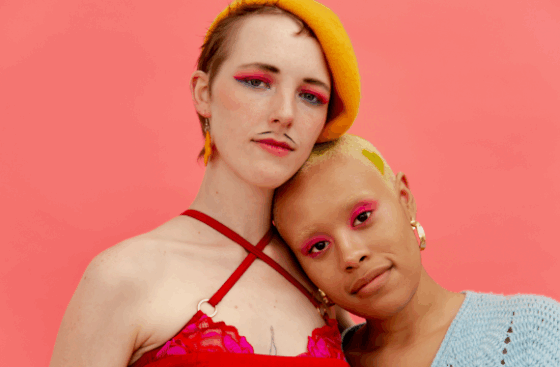
‘Trans is fine as long as they aren’t non-binary,’ person allegedly said
A library employee at the University of Missouri reported his co-workers for allegedly saying during a hiring interview that “being trans is fine as long as they aren’t non-binary,” according to a bias report obtained by The College Fix.
The Fix recently obtained the bias report via a public records request.
The staff member appears to have reported the allegation on behalf of the person who interviewed for a job last August and alleged discrimination based on “their” “gender identity.”
According to the complaint, the interviewer had said he or she would “super not discriminate.” The identity of the interviewer is not known and the person reporting the incident, a librarian, named three possible respondents, whose names are redacted.
The “named respondents are constantly misgendering them and their coworkers,” the person who filed the complaint also alleged.
The person who relayed the discrimination also alleged other instances of discrimination. “They were given a ‘changing room’ with no light and a faulty lock that didn’t lock. They felt very uncomfortable changing in there as anyone could walk in while they were changing.”
The filer appears to be librarian Gabe Harman who did so after speaking to his supervisor, Vera Elwood. Neither responded to multiple emailed requests for comment on the allegations in the past several weeks.
The Fix asked Harman what prompted him to file the report, for clarification on the timeline of the incidents, and for details about the reported issue with the changing room facility, and any resolution to the complaint.
However, Mizzou spokesman Travis Zimpfer said no formal complaint has been submitted. The Office of Institutional Equity, which received the complaint, considers the matter “closed.”
“University of Missouri policy (CRR 600.010) prohibits discrimination on the basis of gender identity or gender expression, as well as race, color, national origin, ancestry, religion, sex, pregnancy, sexual orientation, age, disability, protected veteran status and any other status protected by applicable state or federal law,” Zimpfer said.
Zimpfer said the Office of Institutional Equity investigates only alleged policy violations and only “contacts the relevant party to learn more information” when a report is submitted. Because no formal complaint was filed in this case, no parties were notified and no further action was taken.
In a typical case, the Office of Institutional Equity would contact relevant parties for more information. Each party is notified of investigations and findings.
In any case, “[i]n accordance with university policy (CRR 600.050.V), OIE keeps the identities of participants in discrimination investigations confidential.”
The Foundation for Individual Rights and Expression weighed in on when potentially offensive speech becomes discriminatory harassment.
“Even offensive speech is protected by the First Amendment unless it meets the standard for discriminatory harassment articulated by the Supreme Court in Davis v. Monroe County Board of Education,” Program Counsel Jessie Appleby told The Fix via email.
According to FIRE, the correct approach in cases like this is not to investigate protected speech.
“When a university receives a complaint that appears to allege no more than protected speech, the correct approach is to have administrators conduct a preliminary, internal review,” Appleby said. “If the review confirms the alleged speech is protected, the university should close the matter without notifying the speaker—thereby avoid a chilling effect on speech—while offering support to the complainant.”
Appleby said even investigations or required meetings can be problematic and “likely to chill student expression because the process itself implicitly threatens discipline—even when the outcome ultimately concludes in favor of the speaker.”
The report is one of about two dozen complaints turned over by the university as part of a public records request for bias reports from the fall 2024 semester “based upon a search of complaints related to race, sex, sexual orientation, gender identity, or gender expression.”
Mizzou charged The Fix a fee to process 259 reports at one time. However, it has yet to provide a response in the past month as to where the other 230 or so other reports are.
MORE: University of Nebraska investigates grad student’s ‘drag’ Mass
IMAGE CAPTION AND CREDIT: A ‘non-binary’ couple; Shann Daniels/Diversify Lens

