FEATURED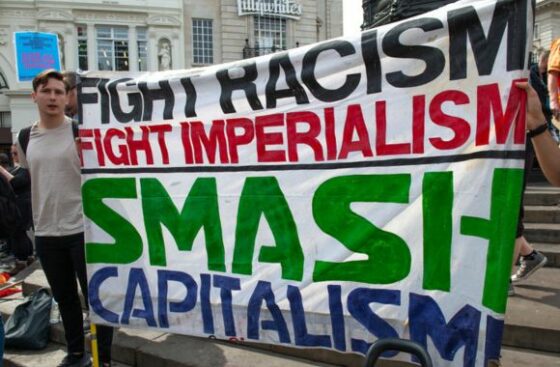
Scholars say students’ responses raise questions about whether they really understand what socialism is
College students rated socialism slightly more favorably than capitalism in a recent North Dakota State University survey – but some scholars say their answers also suggest confusion about what the two economic systems are.
“I think that there’s a lot of confusion among students, but not just students, maybe people in general, about what really is capitalism, what is really socialism,” survey author Professor John Bitzan told The College Fix in a recent interview.
The annual American College Student Freedom, Progress and Flourishing Survey aims to understand students’ perspective on various political and sociological topics. This year’s survey, published in mid-September, not only asked students about their views on capitalism and socialism but also about how they defined the economic philosophies. The survey included about 2,000 college students nationwide.
The survey found that 27% of college students viewed socialism positively, while 24% viewed capitalism positively.
More students (48%) defined socialism as “redistribution and active government” as opposed to “the classic definition of government ownership of property and central planning,” according to the survey. In contrast, 31% of students chose the classic definition, and among those, 16% viewed socialism positively.
Broken down by political views, 58% of liberal students associate socialism with “redistribution,” compared with 40% of conservatives and 38% of independents.
“What those left-of-center students are actually defining is a large welfare state,” Jenna Robinson, president of the James G. Martin Center for Academic Renewal, told The Fix when asked about the survey.
“They’re not defining socialism,” she said, adding, “I think you see that actually with DSA candidates as well. You’ll see some DSA candidates saying we need to tax the rich more; well, that’s not textbook socialism.”
Robinson said this misrepresentation of socialism is one of the many examples showing the need for a greater emphasis on political science and economics in general higher education courses. Her public policy organization advocates for civics and informed citizenship to be part of the core liberal arts curriculum.
Similarly, Professor Bitzan, director of the university’s Institute for Global Innovation and Growth, told The Fix that people often have an incorrect perception of Nordic countries being socialist.
He pointed to Sweden, emphasizing “that it’s a private market, they have private property, competitive markets, and they do have a big social welfare system, but it’s paid for by taxing everybody.”
On the issue of capitalism, the survey asked students to choose between two definitions, “one reflecting free market capitalism and one describing cronyism.” According to the results, 55% chose the free market option and, of those students, 37% had a positive view of capitalism.
Meanwhile, 26% chose a definition the survey characterized as “cronyism,” in which businesses gain advantages by buying government favoritism.
A related finding, students also held “contradictory beliefs on government ownership of business property,” according to the survey summary. Nearly seven in 10 students said they favor “government-owned grocery stores,” but a nearly identical number also said they “are opposed to government ownership in strategic sectors.”
Additionally, the survey found that support for expanded public benefits sharply depended on who would pay: 76% supported universal healthcare and free higher education when funded by a wealth tax on the top 1%. Support, however, dropped to 42% when funding involves higher taxes on most workers.
Kevin Wallsten, a political science professor at California State University and senior fellow at the Manhattan Institute, said students’ dissatisfaction with capitalism should be considered in tandem with college expenses and doubt about the value of a degree.
“There’s a lot of uncertainty about what a college degree will buy you going forward. And this creates frustration and resentment,” he told The Fix when asked about the survey.
Regarding future outlooks, the survey found that only 38% of students believed the world has improved over the past 50 years in extreme poverty, life expectancy, hunger, and literacy. In contrast, 50% thought it has worsened.
Both Wallsten and Bitzan emphasized that this pessimism is misplaced, as all of these metrics have, in fact, drastically improved worldwide in the past 50 years. However, they noted that the results are telling about students’ beliefs about the future.
Along with economic issues, the survey also asked students about free speech issues. It found a gap between students’ stated support for free speech and their willingness to tolerate controversial speakers.
Two in three students (66%) prioritized protecting free speech over ensuring nobody felt uncomfortable; however, nearly as many (58%) considered shouting down a speaker acceptable for at least one of several specified views, such as police shootings, vaccines, or sex and gender.
Wallsten said this is known as the “principal policy paradox.”
“You can get very high levels of support for all sorts of values in the abstract. At a principal level, people love a lot of different things. But when you ask them to apply those principles to concrete cases, suddenly you realize that they’re not, in fact, supporters of those principles, and we see this all the time with free speech,” he told The Fix.
MORE: Outraged by ‘Run, Hide, Fight: Infidels’ screening, GWU student leaders vote to ban TPUSA funding