
 EDITORS' CORNER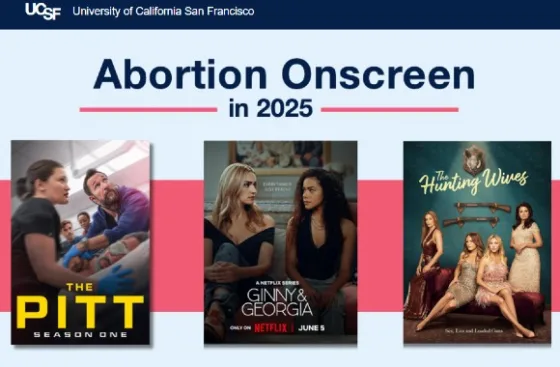
ANALYSIS
Too few TV shows in 2025 depicted Christian characters as being ok with aborting unborn babies, according to a University of California at San Francisco researcher and self-described abortion “activist.”
Steph Herold told NPR that she observed this and other “concerning tropes” this year as part of her annual research into how abortions are portrayed on TV. She works for the public university’s research group Advancing New Standards in Reproductive Health.
Of abortion in general, “I think there still is a lot of stigma, even in allegedly liberal Hollywood,” Herold said.
Her study, “Abortion Onscreen,” published last week, found “a return to concerning tropes” in 2025. Herold tracked 65 abortion plotlines in shows such as “The Pitt, “Call the Midwife,” “Chicago Med,” “W.A.G.s to Riches,” “Love is Blind,” and “South Park.”
Although she acknowledged that TV does not depict reality, Herold told NPR that she wishes more shows would make an effort to:
Fewer characters this year received emotional support around their abortions, and more shows, she said, including Chicago Med, 1923, Breathless and Secrets We Keep featured plotlines that emphasized shame and stigma around abortions, especially because of religion. These storylines, the report says, “both obscure the diversity of religious observance among people having abortions, portraying religious patients as exclusively Christian, and also only associating religion with prohibiting abortion, instead of being a meaningful or supportive part of someone’s abortion decision-making and experience.”
According to her study: “Several shows portrayed religious opposition to abortion, focusing on characters who were unable to reconcile their Christianity with the possibility of an abortion, even in dire health circumstances. Other shows reinforced the perceived unacceptability of abortion by depicting characters having false pregnancies and convenient miscarriages.”
The study continued:
On 1923, The Secret We Keep, and Breathless, religious convictions kept characters from pursuing what could have been life-saving abortions. These depictions both obscure the diversity of religious observance among people having abortions, portraying religious patients as exclusively Christian, and also only associating religion with prohibiting abortion, instead of being a meaningful or supportive part of someone’s abortion decision-making and experience. Though not religiously themed, other shows linked abortion and shame by having characters describe past abortions as unforgivable (Her Majesty, All’s Fair), call people who have abortions “killers” (Happy Face), and otherwise ridicule people who have abortions (The Real Housewives of ATL, W.A.G.s to Riches).
At the heart of the research is determining how TV shows are influencing audiences’ thoughts about the hot-button topic.
As Herold wrote in the opening line, “Television depictions of abortion are particularly important to track to understand what accurate and misleading information audiences are exposed to through this content.”
However, the portrayal of Christians as being opposed to aborting unborn babies is indeed accurate, as other scholars’ writings indicate.
Professor Michael Gorman at St. Mary’s Seminary in Maryland wrote about this in his book “Abortion & the Early Church.” He wrote that Christianity has consistently taught every human being is unique and valuable because he or she is created in the image of God, and killing an innocent human being is wrong.
Research by University of Southern California Professor Christopher Tollefsen also confirms this. As he once wrote, from the time of the early church, Christians have believed that abortions are “contra-life” sin, “murder,” and the “killing of persons.”
In recent years, abortion activists like Herold have made a concerted effort to sway Christians to support abortion. These include publicizing events where liberal pastors “bless” abortion facilities and encouraging entertainment media to include storylines with that message.
The strategy seems to have had some success. A July poll by the Family Research Council found a significant drop in pro-life attitudes among church-goers.
“In 2023, 63% of regular churchgoers described themselves as pro-life,” the poll found. However, this year, “only 43% of churchgoers described themselves as pro-life.”
Compared to 2023, fewer churchgoers also believe the Bible is “clear and decisive” in its teaching about “the morality of killing an unborn child,” according to the poll.
MORE: Public universities spend millions subsidizing pro-abortion website: analysis

