EDITORS' CORNER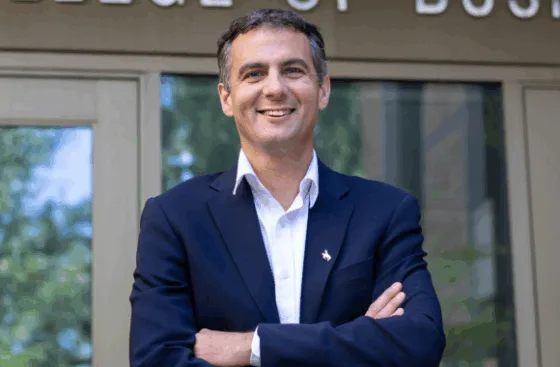
Key Takeaways
- Northern Michigan University rejected Scott Beaulier, a highly qualified candidate with a distinguished academic record, for its presidential role due to past criticism of welfare recipients.
- Criticism arose from Andrew Plocher, who took issue with Beaulier's 2007 academic paper arguing that welfare recipients may engage in poor decision-making, framing it as blaming the poor instead of addressing structural injustices.
- Supporters of Beaulier, including his co-author Bryan Caplan, argued that the attacks on him were anti-intellectual and indicated a troubling trend in academia of rejecting qualified candidates based on political correctness over merit.
OPINION – UPDATED
Northern Michigan University passed over an accomplished scholar for its president role after a complaint targeted him for his past criticism of welfare recipients.
Professor Scott Beaulier is an alumnus of NMU and the dean of University of Wyoming’s business school. He applied to lead his alma mater, but the university ultimately picked someone else.
While it is not clear what the deciding factors were, Beaulier (pictured) was targeted for criticism by someone who took issue with an academic paper the applicant wrote decades ago.
“I write to express deep concern about the candidacy of Scott Beaulier, who co-authored an academic article titled ‘Behavioral Economics and Perverse Effects of the Welfare State’,” Andrew Plocher wrote to the board of trustees.
“In it, Beaulier and his co-author argue that recipients of government assistance are not just economically disadvantaged—they are behaviorally and cognitively deficient,” Plocher said, according to student newspaper The North Wind. Plocher is not a student but is married to NMU Professor Anna Zimmer.
The paper does not use the term “cognitively deficient.”
Plocher, does not appear to have any economic training and is the pastor of a liberal Lutheran church. He criticized Beaulier for saying welfare recipients make poor choices.
“Many activities– from over eating, drinking, smoking, and drug abuse to crime and unprotected sex combine immediate gratification with delayed costs,” he wrote along with co-author Bryan Caplan, a George Mason University economist. “We argue that it is no coincidence that the poor are much more prone to engage in such activities than the rest of the population.”
Plocher said the applicant is wrong, saying the paper erroneously places the blame on poor people for their “decision making” instead of where it should be, in his mind – “structural injustice.”
But there is no reason Beaulier should apologize, according to Caplan.
“If you take the time to actually read ‘Behavioral Economics and Perverse Effects of the Welfare State,’ many readers will find some of our arguments less than convincing,” Caplan wrote on his Substack. “But you should still be repelled by Plocher’s — and NMU’s — utterly anti-intellectual response.”
The Federalist added further context to Plocher’s attacks on Beaulier, including the insinuations that the scholar does not care about poor people.
The University of Wyoming dean is the first in his family to attend college, after growing up in rural Michigan, Helen Raleigh wrote. Yet, according to Raleigh, the university let unfair attacks scuttle the application of a highly-qualified individual.
“America’s universities will fail to succeed unless they choose leaders based on who is the most qualified candidate and who is best equipped to lead the university into a promising future — regardless of leftist attacks,” Raleigh warned.
Editor’s note: The article has been updated to clarify Plocher’s relationship to the school.
MORE: University of Nebraska negative $800,000 ROI survives proposed cuts