
 FEATURED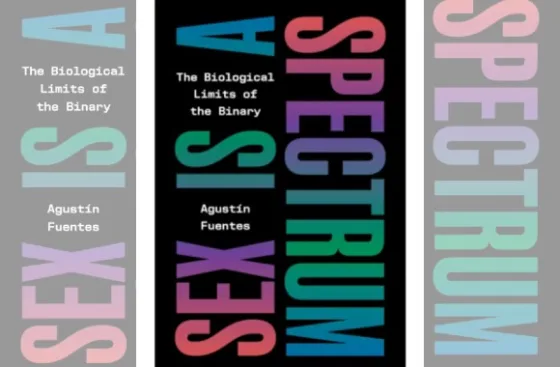
Key Takeaways
- The book challenges the long-established biological view of sex as binary, asserting instead that it's a "biocultural construct."
- In a review published in The Lancet, Harvard Professor Sarah Richardson compared the two-sex view to "bigots of yore" who believed women were intellectually inferior.
- Meanwhile, former Harvard biologist Carole Hooven warns that such views suppress academic freedom and discourage honest discourse.
A Princeton University professor’s new book “Sex is a Spectrum” has raised broader concerns among scholars about academic freedom and censorship on the issues of transgenderism and human sexuality.
Evolutionary biologist Carole Hooven, who left Harvard after being castigated for saying sex is binary, particularly took issue with another Harvard professor’s widely-read review of the book, published recently in The Lancet. It described those who hold that sex is binary as “bigoted” and “hateful.”
“To discover what’s true, people need to have their views challenged,” Hooven told The College Fix in a recent interview.
“And for that, we have to know what people’s views actually are. If professors are calling people who hold certain views hateful, or bigoted, that decreases the likelihood that people will say what they believe, and expose their views to criticism,” she said.
In the book, Princeton anthropology Professor Agustín Fuentes makes the case that the idea of only two sexes is false, and there are many different components to what defines someone’s sex. He writes that fundamentally, “sex is a biocultural construct.”
“Being human entails an astonishingly complex interplay of biology and culture, and while there are important differences between women and men, there is a lot more variation and overlap than we may realize,” a description of his book reads.
Along with presenting evidence from the fossil record, Fuentes also writes about today’s “hot-button debates around sports and medicine, explaining why we can acknowledge that females and males are not the same while also embracing a biocultural reality where none of us fits neatly into only one of two categories.”
In a glowing review of Fuentes’ book published in the prestigious medical journal The Lancet, Harvard Professor of Women, Gender, and Sexuality Studies Sarah Richardson took the views therein even further.
Richardson wrote that those who hold to the traditional two-sex view do so because such views “[facilitate] their political aims by fueling unhinged panic in some quarters about transgender threats to traditional gender roles.”
She compared the two-sex view to “scientific bigots of yore” who believed women were intellectually inferior, and argued that such beliefs rationalize “inequality and exclusion.”
Neither Fuentes nor Richardson responded to two emails from The Fix, asking for their comments on the criticism and academic freedom.
Fuentes’ arguments and Richardson’s review received significant criticism from scientists and doctors online, including Hooven, a former Harvard professor on evolutionary biology.
Hooven harshly criticized Richardson’s review in a recent post X, writing, “Not only has the Harvard professor disagreed with the gametic view [the two-sex view], she apparently feels free to publicly impugn the ostensible motives and character of those who endorse it.”
She wrote that Richardson’s review “exemplifies one of the main reasons Harvard is being targeted by the government.”
Hooven shared more in a recent email interview with The Fix: “This kind of behavior is harmful to academic freedom and opposes the true mission of the university, which should be knowledge, discovery, dissemination, and preservation.”
Richardson mentioned supporting “academic freedom” in her book review, the context being “the Trump administration’s attempt to control, by force of law, how scientists speak about and approach the study of sex-related variation.”
But Hooven expressed concerns that the professor’s arguments will result in self-censorship, as well as confusion about truth itself.
Given labels like “hateful” and “bigoted,” “Would any student in a class taught by the Harvard professor, having read her Lancet piece, feel free to write a paper that argued for a different view, of the science or politics?” she wrote on X.
The biologist has firsthand knowledge of this type of backlash as she left her position at Harvard University after being publicly castigated for saying that sex is binary. Since then, she has advocated for the academic freedom to hold unpopular opinions.
Dr. Kurt Miceli, the medical director at Do No Harm, an organization dedicated to pushing back against harmful medical transitions for youth, offered a similar take on the debate to The Fix.
“Speaking hard truths does not make someone a ‘bigot,’ and using ad hominem attacks only betrays the weakness of the arguments pushed by ideologues who claim ‘sex is a spectrum,’” he said.
When asked if he believes the general public’s views on the matter are shifting, Miceli expressed optimism for the future. A Pew Research poll from February found 66 percent of adults believe transgender athletes should compete “on teams that match their sex assigned at birth,” and 56 percent believe “gender transitions” for underage children should be banned.
“Thanks to the bravery of medical professionals and patients nationwide who have spoken out against pediatric medical transition, the tide is changing to end these harmful practices as well as the underlying gender ideology driving them,” he said, adding that he credits the Trump administration with much of this progress.
However, Hooven was not so optimistic.
“I’m not sure whether things are improving, but if they are, I do not see the evidence,” she told The Fix.

