
 BUZZ
BUZZ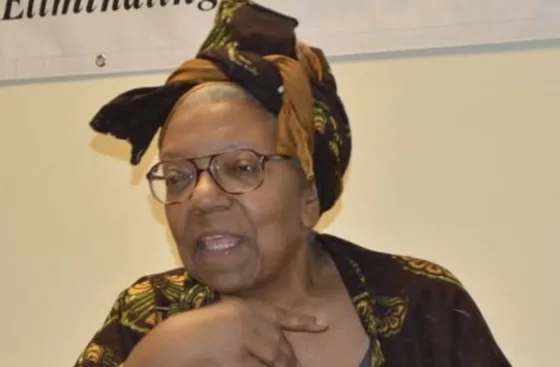
Kirk’s record ‘a pattern of rhetoric […] and alliances that echoed white supremacist and Christian nationalist ideologies’
A professor emerita from the University of Dayton School of Law recently penned an article titled “Charlie Kirk, White Supremacist, Dead at 31.”
Posted on her Race, Racism and the Law website, Vernellia Randall claims that “behind the branding of ‘patriotism and ‘freedom,'” the record of the Turning Point USA co-founder “shows a pattern of rhetoric, organizational culture, and alliances that echoed white supremacist and Christian nationalist ideologies.”
Randall makes use of the discredited Southern Poverty Law Center and the far-left Guardian newspaper to allege Kirk “openly embraced Christian nationalist language,” said “liberty was only possible with a Christian population,” and that his rhetoric “increasingly mirrored white supremacist and authoritarian themes.”
Randall also believes Kirk’s denial of “the existence of systemic racism,” belief that white privilege is a “racist idea,” and that critical race theory is a “dangerous indoctrination” further impugn his character.
TPUSA supposedly mirrored Kirk’s “hostility”; the New Yorker described the group’s work environment as “difficult … and rife with tension.” In addition, 11 years ago a staffer claimed to be the only black in the organization … “only to be fired on Martin Luther King Jr. Day.”
The evidence remains overwhelming: Kirk and TPUSA did not need to wear hoods or wave Confederate flags to advance the logic of white supremacy. By denying systemic racism, vilifying movements for justice, and legitimizing extremists, Kirk and his organization reinforced the architecture of racial dominance in America. That was the through line of his political project. He positioned himself as a defender of liberty, but the liberty he envisioned was conditional—anchored in whiteness, Christianity, and exclusion. His legacy is not simply conservatism. It is a record of advancing ideas and practices that aligned with white supremacy, even if he never wore the label himself.
And, not to be left out when it comes to highlighting the alleged irony between Kirk’s reverence for the Second Amendment and his murder, Randall says “For [Kirk’s] critics, this was not just irony but a brutal illustration of how the normalization of preventable violence eventually consumes even its defenders […] the broader truth remains: when a society accepts death as the ‘price’ of a constitutional right, it abandons any serious effort to build policies that protect life alongside liberty.”
On the same day Randall published her column, Biola University theologian Thaddeus Williams offered an analysis of Kirk’s past comments and pronouncements. A brief summary is available here, and Williams’ full report is on YouTube.
Williams notes that when “asked directly” about white supremacy, Kirk had said “When I encounter anyone around the ideology of white supremacy, I repudiate it and I reject it. … TPUSA rejects anyone that has hatred. … Would a white supremacist organization host a black leadership summit … host the nation’s largest young Latino leadership summit in the country?”
Four years ago, The College Fix reported on Professor Randall’s “Whitest Law School Report” in which she argued law schools should “set specific goals and deadline for elimination [of] excess whiteness.” She also called for the elimination of standardized testing for (law school) admissions.
At the time, the “whitest” law schools in the country were the University of Georgia, Samford University, and Mercer University.
MORE: The most shocking faculty reactions to Charlie Kirk’s assassination
MORE: Leftists’ latest complaint: Charlie Kirk didn’t debate the right way

