
 BUZZ
BUZZ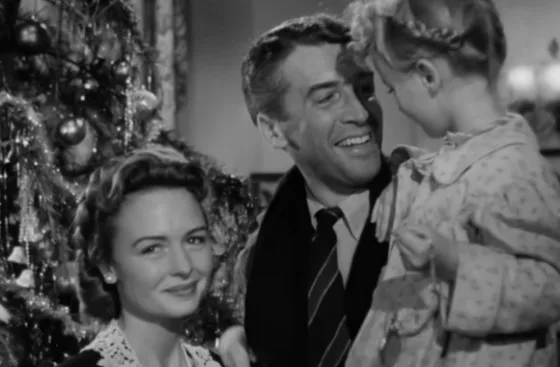
Beloved Christmas movie “It’s a Wonderful Life” has secret racial and “bigoted” messages according to a Carleton University professor.
Writing in the taxpayer-subsidized, liberal publication The Conversation, Professor James Deaville explores how the 1946 Christmas classic is politically incorrect and has racist undertones.
“Some depictions of music and sound beg analysis around how these reflect racist ideas about ‘proper’ musical, social and community norms,” Professor Deaville wrote on Dec. 21.
After providing the historical background of the film and its music, Deaville dives into what he sees are problematic messages in the movie.
He writes:
A key concerning aspect to the music heard in It’s a Wonderful Life revolves around the portrayal of Black musical forms and practitioners.
Capra’s known racism against Blacks, consistent with racist discourses and practices of the era, is reflected in how jazz and other Black musical forms appear and are framed.
In the iconic Bedford falls dance, the band plays three songs, including African American pianist and composer Johnson’s “Charleston,” which is performed by a white band.
As American journalism professor Sam Freedman notes in a podcast on whiteness and racism in America, the town features predominantly white citizens apart from a stereotypical depiction of a Black housekeeper in the Bailey family.
The professor also takes issue with how the alternative town of “Potterville” is portrayed. This is the alternative universe if George Bailey had never been born.
“The quaint main street is overrun by nightclubs and full of bright lights. Through Pottersville, the film projects a sense of moral degradation,” Deaville writes. “While negatively portraying jazz practised by Black artists, the film simultaneously draws upon and appropriates Black musical forms as necessary and key to popular American life but in a white-controlled version.”
At the end of his article, Deaville writes about how the villain in the movie is actually a wealthy white citizen.
Still, he wants viewers to ponder the racial and social class messages in the movie before they enjoy it.
“George awakens from his Pottersville reverie to re-commit to small-town life,” the professor wrote. “While some viewers see the ending as affirming community, the film also keeps George partly ignorant of how the forces of inequity are actually operating in his largely white community.”
“Maybe we can appreciate the film on a deeper level, when we consider its varied and competing narratives around music, race, class and belonging,” he concluded.
While Deaville criticized the film, another writer for The Conversation says George Bailey is an inspiration for those who are waging the resistance against President Donald Trump.
Professor Nora Gilbert said she “can’t help but see parallels between Pottersville and the U.S. today,” before listing how Trump has supposedly turned the country into an anti-immigrant country focused on greed.
“In Pottersville, one man hoards all the financial profits and political power. In Pottersville, greed, corruption and cynicism reign supreme,” Professor Gilbert wrote.
She continued:
Professor Gilbert also differed from Deaville. While Deaville said Frank Capra was a racist, Gilbert praised him for being an “anti-fascist.”But what horrifies George the most about Pottersville is how desensitized the people living in it seem to be to its harshness and cruelty – how they treat him like he’s the crazy, deranged one for wanting and expecting things to be different and better.
This is what the current political moment feels like to me. There are days when the latest headlines feel so jarringly unprecedented that I find myself thinking, “Can this be happening? Can this be real?”

