FEATURED
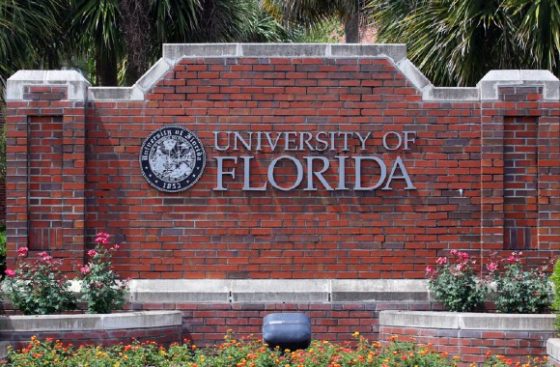
UT Austin, University of Florida top list
The Manhattan Institute’s City Journal released its second annual college rankings, evaluating 115 prominent colleges and universities on academic quality, campus culture, and core values.
The University of Texas at Austin ranked first with a score of nearly 80 out of 100, followed by the University of Florida (78.1) and the University of Notre Dame (75.7).
No school scored above 80. Only seven schools earned 70 or higher, 87 scored below 60, and the average score across all ranked institutions was roughly 50.
At the bottom of the list were Oberlin College (18.3), Smith College (26), and Macalester College (27.3), all scoring under 28.
Kevin Wallsten, senior fellow at Manhattan Institute who led the research, told The College Fix that the rankings consider aspects of higher education often overlooked by traditional ranking systems.
Wallsten also expressed surprise at the more than 60-point difference between the highest- and lowest-scoring universities.
“We were surprised that even our best performing schools still score relatively poorly on our 100 point scale (with none scoring above an 80). This suggests that every school has a great deal of work to do and no school should be resting on its laurels,” Wallsten said.
In developing the rankings, researchers considered what students should gain from their college education. They looked at curriculum rigor, intellectual diversity, student outcomes, institutional leadership, and freedom of speech.
“Our rankings are guided by the question: what should a college education actually deliver for its students?” Wallsten said.
The researchers scored the ranked schools on 95 variables by taking data from various sources. Wallsten said that the Manhattan Institute weighted each variable based on its perceived importance to a high-quality education and noted that no ranking is value-neutral.
Wallsten also told The Fix that the weights are published publicly, so that readers can make decisions for themselves.
When asked if the ranking should be used as a source for primary decision-making for families, Wallsten said that they take a holistic approach designed to take into consideration a large span of variables that may help families make more informed, well-rounded decisions about where their children should attend college.
“We have tried to provide information that is hard for families to find anywhere else. We hope this is useful for families and for alumni (who have to decide whether to give), trustees (who have to oversee colleges and universities) and taxpayers (who fund public universities),” Wallsten said.
Wallsten added that as a whole “elite schools were not penalized” and that the majority were ranked fairly well, due to producing good outcomes for students.
“Where [Ivy] schools tend to perform poorly, however, is on questions of free speech and viewpoint diversity. None of the eight Ivies, for example, ranks in the top 40 on ‘administrative support for free speech’ or on the ideological balance of the student body,” he said.
Wallsten pointed out that large public schools perform well due to the rankings giving a heavy weight to “the presence of the independent academic programs devoted to civics, the American founding, Great Books and civil discourse.”
Manhattan Institute Fellow Daniel Di Martino noted in a post on X that the rankings are “not about what school has the smartest students, but which schools add value to their students.”
“If you study history and earn 50K a year after paying 200K in tuition, was that a good degree? No!” he wrote.
However, not everyone agrees with this methodology.
In a post on X, pharmacology Professor Bimal Desai criticized the rankings for penalizing a school’s ideological leaning.
“I agree that all college rankings are broken but so is this one. It certainly fails miserably for STEM fields,” he wrote.
“Imagine a kid who wants to do engineering: Notre Dame #3, Claremont Mckenna at #5 (umm, ok), Carnegie Mellon #46 (what!), UIUC #53 (what!!) and UC Berkeley #62 (just nuts!!),” the professor wrote.
While the rankings may be “meaningful for a degree in humanities,” he wrote, they are “dangerously misleading for prospective students.”
“It seems that they just went out of their way to penalize universities for lefty bias and botched things up to make an ideological point of elevating universities in red states,” Desai wrote.
However, Wallsten told The New York Post that Manhattan did not reward schools for being conservative.
“We’re rewarding them for being politically balanced,” he said.