
 FEATURED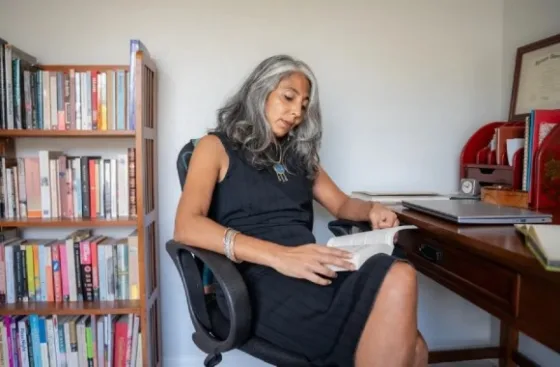
Professor is suing after South Florida State College president allegedly called assignment ‘political’ and then fired her
A South Florida State College professor is receiving support from a campus free speech group and a faculty alliance after she was fired for a “political” assignment that offended a student and the institution’s president.
Professor Vinita Prabhakar is suing the South Florida State College District Board of Trustees and President Fred Hawkins for allegedly violating her First Amendment rights. She is represented by the Foundation for Individual Rights and Expression.
“Unfortunately, we see these types of situations all too often …” Greg Greubel, FIRE senior attorney, told The College Fix in a recent email.
He said that no date has been set for the case Prabhakar v. Hawkins yet, as the lawsuit is still in its early stages.
“We believe that the College’s decision to terminate Vinita violated clearly established First Amendment law protecting students’ and professors’ rights to engage with pedagogically relevant materials in the classroom, even when those materials make some students or administrators uncomfortable,” Greubel told The Fix.
Prabhakar, an English professor for almost 20 years, filed the lawsuit on July 29 after being fired in February. The situation began when a student complained that an assigned short story for one of Prabhakar’s classes, “Bettering Myself” by Ottessa Moshfegh, made her feel uncomfortable, according to the lawsuit.
The story follows a Catholic school teacher who drinks too much, swears, and talks about sex during her classes. Prabhakar believes that the “deeply unsympathetic protagonist provides opportunities for critique and insight which students might miss with a more heroic or familiar narrator,” according to the lawsuit.
According to the complaint, when the student communicated unease, Prabhakar “acknowledged that the story could be difficult, and invited classroom discussion. The student then attended class, participated in the assignment, and later told Plaintiff she understood college reading would require adjusting to more challenging material than she had encountered in high school.”
However, the lawsuit claims that when college President Fred Hawkins heard about what happened and read the story, “he objected to its content, said he would not want his own college-aged daughter reading it, told Plaintiff ‘I don’t ever want to see this story again,’ and characterized the matter as ‘political.’”
The following day, the college suspended Prabhakar and informed her that her contract would not be renewed. After she asked why, the human resources director told her, “The President has the final say,” according to the lawsuit.
The case cites Florida’s Campus Free Expression Act, which “forbids public colleges from shielding students from ideas they may find uncomfortable, unwelcome, disagreeable, or offensive, and expressly protects faculty lectures, writings, and commentary.”
The College Fix contacted South Florida State College President Fred Hawkins and the campus media relations office three times via email over the past two weeks, asking about the lawsuit and the alleged “political” problems with the assignment, but neither responded.
Adding vocal support to Prabhakar’s case is the Academic Freedom Alliance, a coalition of faculty from across the ideological spectrum who are committed to supporting academic freedom.
According to a recent statement, the alliance sent a letter to the college insisting that Prabhakar be reinstated.
“These types of egregious actions break the college’s own stated commitment to academic freedom and send a chilling message to other members of the faculty who must discuss difficult and controversial material as part of their teaching duties,” the letter stated.
The alliance’s director of operations Howard Muncy did not respond to an email from The Fix asking why they decided to come out in support of the professor’s case.
Prabhakar also spoke about the importance of academic freedom in a recent statement through FIRE.
When she was a child growing up in the Middle East, Prabhakar said she saw classroom censorship firsthand. Government officials would come into classrooms and command them to black out the word “Israel” in their atlases, according to her statement.
“Pages of our history books had been glued together so we couldn’t read them. When we asked our teacher why, she answered quietly that she’d lose her job if she defied the government,” Prabhakar said.
“My job isn’t to tell students what to think, but to teach them how to think for themselves. The question isn’t whether you or I or the students like this particular story. The question is whether a public college president should fire professors over readings he personally dislikes,” she said.
“If every book had to survive the personal approval of a college president before it could be taught, students would never encounter many of the greatest works ever written. Rather than raising any violation of college policy or flaws in the course, he simply fired me over the assignment that I, and many others, have used for years,” she stated.
The Fix also contacted the Association of Florida Colleges union three times via email requesting comment about the lawsuit, but it did not respond.
Editor’s note: This article was updated to include a description of the short story and Prabhakar’s reason for assigning it.
MORE: Florida drops sociology from gen ed courses, bans DEI spending

