FEATURED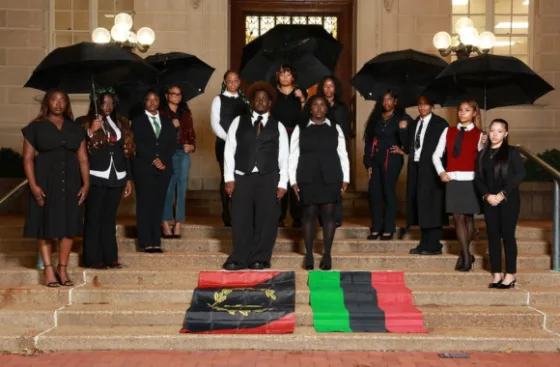
Thousands of dollars go to identity-based groups at Mizzou
The University of Missouri-Columbia ended designated funding for multiple identity-based student organizations, instead requiring them to receive financial support from the university in the same way as most other clubs on campus.
Still, numerous racial and gender groups received funding from the normal student organization funding streams.
In April, Mizzou informed leaders of five multicultural organizations that they would no longer receive direct funding from the Division of Student Affairs. Instead, they were reclassified as Registered Student Organizations in July, and are now subject to the same restrictions expected of other RSOs.
University deputy spokesman Travis Zimpfer told The College Fix in an emailed statement: “Five student affinity groups, which had received specified funding, were reclassified as recognized student organizations (RSO). As RSOs, they must now apply for funding on an equal basis with all other RSOs.”
The affected groups are the Legion of Black Collegians, Association of Latin American Students, Asian American Association, Queer Liberation Front, and Four Front.
“The university determined it needed to change how it provided funds to student organizations to comply with restrictions issued by the U.S. Department of Justice on allocating university resources, such as funding or space, based on protected demographic characteristics,” Zimpfer said.
The affected student organizations believe that the university handled the financial restructuring poorly.
“It was very frustrating and anxiety inducing to not only go through such a huge change, but to do so without any assistance,” Queer Liberation Front president Cassidy Colston told The Fix via email. “More than just wishing that the decision had not been made, I wish that the university had better communicated with these organizations and did more to support them.”
“The decision seems to have been made in fear, and out of a desire to simply comply with whatever is said by the current political administration,” Colston told The Fix. “There was no law or rule or regulation used to justify this decision.”
The Legion of Black Collegians expressed similar criticism.
“This defunding was not legally necessary; the July 2025 federal memorandum from the U.S. Department of Justice (DOJ) stated that if universities allocated money, resources, or space based on protected demographic characteristics like race or sex, they could lose federal funding,” communications chair Mirrah Conner told The Fix in an emailed statement. “It was NOT a requirement for universities; it was a recommendation.”
In July 2025, the DOJ released a memo that said recipients of federal funding must follow Title IV, Title VI, Title VII, and the Equal Protection Clause of the 14th Amendment. It specifically warned against harmful diversity, equity, and inclusion practices.
The DOJ has since launched investigations into multiple universities for violations of these laws. Mizzou president Mun Choi said, “In discussing with our team, including our general counsel’s office, our initial review indicated that we are not in compliance with Title VI because we’re providing specific benefits to certain groups based on demographics.”
Conservatives praised the university’s decision as a step toward ending discriminatory practices on campus.
“Student organizations should compete for university funding on a level playing field from the same general pool of resources,” Missouri Lieutenant Governor David Wasinger said in an emailed statement to The Fix. “The university should provide equal opportunity to every student organization rather than creating special funding categories based on race, ethnicity, gender, or other identities.”
“University leadership has taken meaningful steps in the right direction, but we must remain vigilant. DEI ideology has become deeply entrenched in higher education, and there is always a risk that the same policies simply reappear under different names,” Wasinger said.
While these organizations will no longer automatically receive funding, they are still able to receive funding as registered student organizations.
The clubs were previously able to receive more money than other student organizations. RSOs face some funding limitations; they have a $1,500 funding cap for events and a $3,000 cap for the academic year.
There are two other student organization categories: Sponsored Student Organizations (such as the student government) and University Programs. Both encompass a small number of organizations.
According to a document obtained by The Fix via an open records request, the Legion of Black Collegians received $73.94 in funding for Fall 2026 Welcome Week activities. About 26 other multicultural groups also received funding, for a total of $6,746.27.
According to another document obtained by The Fix, more than two dozen student organizations received funding for other club activities this semester, including the Latino Medical Student Association and the National Latinx Psychological Association student chapter. Most organizations that applied for funding received between $1,000 to $2,000.
There are still other funding cycles for this semester.
Colston told The Fix that the Queer Liberation Front has not yet received funding as an RSO, but it is “in the process of requesting RSO funding. We also have opened a bank account over the summer and also have made venmo and paypal accounts and made plans for fundraising events.”
“As an established RSO, we now have to get used to a completely different process of funding,” Conner, with Black Collegians, said. The Legion of Black Collegians is no longer “given the same flexibility with funds as we were before; we only are given a set amount for programming, and during Welcome Week we were able to apply for funding for small snacks/supplies.” The Legion was previously classified as a student government.
Conner said that the university “made this decision to pour more money into their plan of building an entertainment center and hospitality district on campus property to maximize the game day experience for fans. The best way for them to pull more money for this project was by attacking the funding given to multicultural organizations.”
The university denied this. “There is no truth to that. Student activity fees are not funding the university’s commercial development opportunities,” Zimpfer told The Fix.
Representatives for the Association of Latin American Students, Asian American Association, Four Front did not respond to requests for comment sent via email. The Fix asked why they believe the university restructured their funding, how their organization has been affected by this change, and whether they have been able to secure funding as RSOs.
Mizzou Turning Point USA chair Nathan Vass did not respond to requests for comment sent via email. The Fix asked whether he believes the funding restructuring was the correct decision, the university allocates funding in a viewpoint neutral manner, or TPUSA applied for RSO funding this semester.