FEATURED
“‘Do you have any resources on detransition? Do you have anything?’ And they said, ‘No, we don’t.'”
On college campuses, detransitioners often find themselves silenced, not just by peers but also by policies that prioritize affirmation over inquiry.
Two students who used to identify as the opposite sex recently spoke to The College Fix about their experiences and their desire to see colleges foster more support for truth-telling.
Soren Aldaco, who attended the University of Texas at Austin, sought campus resource support for detransitioning, and the gap was glaring. While identifying as male, she underwent a botched double mastectomy at age 19 that left her traumatized.
“I went to the gender and sexuality center before it closed and I asked them, ‘Do you have any resources on detransition? Do you have anything?’” she told The Fix. “And they said, ‘No, we don’t. Here are some resources related to re-transitioning from university health services.”
This leaves students like Aldaco without options. An ambassador for the Independent Women’s Forum, she told The Fix that students who view transgender medical care as fundamentally unethical won’t go to someone who is “facilitating harm to get help.”
UT Austin’s media relations office did not respond to a request for comment asking about services on campus for detransitioners.
But it’s not just university health and sexuality centers that pressure students into suppressing doubts about transitioning; campus dialogue and curricula reinforce transgender identification as well, detransitioners told The Fix.
Simon Amaya Price, who once identified as a woman but never pursued medical transition — and is considered a desister rather than a detransitioner, attended Bard College at Simon’s Rock and later Berklee College of Music in Boston.
After reading John McWhorter’s book “Woke Racism,” Amaya Price challenged affirmative action during a class discussion. The backlash was immediate.
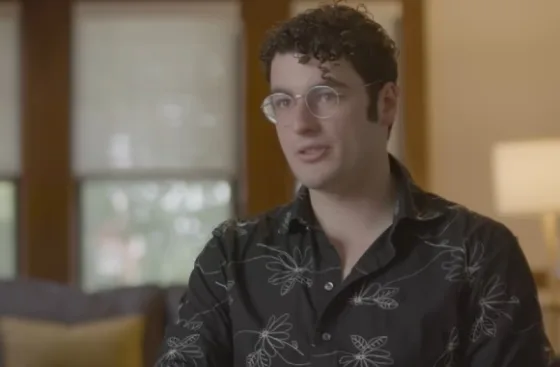
He said he lost credibility within the transgender community overnight, describing the environment as “cultish”: “You lose all friends if you question anything.”
For Amaya Price, this revealed how ideological feedback loops can trap students in transgender identification.
“There is a vocal plurality of the student body [at Berklee] who will dogpile you if you speak out against any part of the woke orthodoxy.”
Two thousand miles away in Texas, Aldaco described a similar dynamic. While studying the Sapir-Whorf hypothesis, the idea that language shapes and even creates our reality, she realized her own trans identity was self-reinforcing.
In trans spaces, she said, members know biological reality but manipulate language to construct a different reality. “The women who are identifying as trans know that sex is real in a lot of ways. We would just use code to talk about it … like AFAB and AMAB, when we actually just meant ‘male’ and ‘female,’ but we couldn’t use this heretical language.”
Amaya Price described being surrounded by the same narrative. “It was really hard to get out of the ideology because the only thing you saw on bulletin boards was pro-trans flyers … Professors had to ask for pronouns.”
These reinforcing loops, he said, turn campuses into echo chambers where dissent results in social expulsion.
Aldaco sees the issue as deeper than a passing trend. “Social contagion is how a lot of people classify it, but I think it goes deeper than that … in reality, it’s a deeper part of the identity formation process that is getting a little bit twisted.”
‘Get rid of the pronoun policy’
Along with campus health centers promoting only pro-trans resources, student codes of conduct are another problem.
Some colleges ban “improper” pronoun usage and categorize honest discourse as hate speech. Amaya Price, who desisted during his college years, sees these rules as direct assaults on expression.
“Get rid of the pronoun policy,” he said. “I am not a fan of telling people what they can and cannot say. … Say explicitly in your policy that using sex-based pronouns do not constitute any violation of the code of conduct whatsoever.”
The subjectivity in codes chills speech broadly. “There is a lot of stuff in the code of conduct at a lot of these colleges that basically define hate speech in such a broad and subjective way that saying things which are just true would qualify under that definition,” Amaya Price said.
Aldaco has witnessed similar backlash in the culture more broadly. “Recently, I went to the GenSpec conference and was a speaker. … there was a photo of detransitioners with myself and a few others that circulated somewhat virally on Twitter.” Aldaco described to The Fix how “vitriolic” people’s responses were to the panel.
This kind of pushback deters others from speaking out against the transgender ideology, Aldaco said, adding that the tool of alienation gives the trans movement the power that it has.
“I realized ‘oh, this actually happened to a lot of other people’ and … ‘oh, people have had this happen to them actually way more frequently than we’re able to recognize through data because people are afraid to speak up,” she told The Fix. “I know I certainly was.”
Students say campuses must return to truth-telling mission
Codes of conduct that overbroadly define hate speech also perpetuate the transgender community’s premise that truth-telling is harassment, the detransitioners told The Fix.
One way to fix this is to prioritize open dialogue and provide detransitioners the same platform as activists. Amaya Price believes schools should adopt The Chicago Principles, which outline rules and regulations for colleges to protect speech.
He said, simply, “It’s a free speech issue … I don’t want to be attacked for saying things which I believe and are true.”
As a college student, one of the ways Aldaco worked to foster more conversation was to co-organize a Bridge USA panel at UT Austin featuring two trans-identifying and two detransition speakers.
“Facilitating more conversations, so not even from an institutional resource level, but just facilitating more conversations to unpack questions” will give legitimacy to detransitioners, she said.
Campus exposure cuts both ways, Aldaco noted. “I think one of the beautiful things about college campuses is you get exposed to a lot of different people from a lot of different walks of life and different ways of thinking.”
Yet, “the downside is that you’re not just getting exposed to classical liberal thought, like ‘oh we should be able to speak our mind and have discourse … we’re reading the classics and cherish higher education.’ You’re getting exposed to these concepts of ‘men can be women’ and ‘sexuality can happen in various ways, including for children.’”
Aldaco demands more from institutions of higher education. “I’m asking you to facilitate a culture that frowns upon and makes culturally undesirable the shutting down of civil discourse,” she told The Fix.
For her, the bare minimum is “cultivating a culture where we can at least talk about these things freely and have the same space at the very least to talk like trans-activists do.”
She said “the fundamental building blocks of truth have been intentionally distorted in a lot of ways by academia especially.” And in seeking truth, “[I worried] that I wasn’t going to get that from academia, ‘cause I was already so skeptical of academia.”
By protecting and promoting civil discourse, Aldaco and Amaya Price believe colleges can better support students like themselves and reclaim their mission of being truth-seeking arenas.
As Aldaco said, “We’re at college not to be told the right way to think but rather to be taught how to discern effectively so that when we encounter reality beyond the classroom after graduation … we’re still able to be effective learners and members of society.”
MORE: From affirmation to isolation: Former trans students call for changes to campus culture