EDITORS' CORNER
OPINION/ANALYSIS: If spotlighting leftist campus activism is an ‘attack,’ what do we call the SPLC’s ‘Hate Map’ with the group Moms for Liberty on it?
Here we go again. Far-left academics are expressing displeasure that various right-leaning organizations keep track of what they say and do.
In the UCLA student paper the Daily Bruin, Anthropology Professor and Faculty for Justice in Palestine member Hannah Appel said she was “doxxed and threatened” through emails following an appearance she made at a pro-Hamas encampment almost two years ago.
During that appearance, Appel accused the university of utilizing “torture” tactics against the campers because officials (who had ordered the encampment vacated) prohibited outside food and water from being brought in.
Appel complained to the Bruin that she’s on the watchlist of Canary Mission, an activist group that “documents individuals and organizations that promote hatred of the USA, Israel and Jews on North American college campuses and beyond.”
This may have been the case at one time, but a search shows Appel currently appears nowhere on the site. The professor is, however, on Turning Point USA’s “Professor Watchlist.”
The stated mission of the watchlist “is to expose and document college professors who discriminate against conservative students and advance leftist propaganda in the classroom,” and cites Daily Bruin and College Fix articles about Appel at the encampment. Other than that it’s just publicly available information culled from her faculty page.
In general, the Professor Watchlist does nothing more than gather together public links on the internet consisting of news articles, social media posts, bios and the like.
Whatever you think about such “watchlists” in the internet age (personally, I’m not a fan), it’s not as though conservatives have a monopoly on them.
Media Matters, which hangs on every word uttered by anyone in conservative media, has been around for 22 years. It systematically monitors right-wing journalists for what they contend is misinformation, bias, or problematic coverage.
Right Wing Watch, a project of People for the American Way, purports to “expose [the] strategies and tactics” of MAGA Republicans and “their far-right allies” in “undermining our freedom.”
Then there’s the Southern Poverty Law Center, which according to Daily Signal Manager Editor Tyler O’Neil “eventually ran out of Grand Dragons to conquer” and started going over mainstream conservative groups. On its “hate map” you’ll find the Grand Knights of the Ku Klux Klan and American Nazi Party alongside … Moms for Liberty and the Alliance Defending Freedom.
That’s completely bonkers.
There’s also a lesser-known site created by several academics called “Faculty First Responders” which claims to “monitor the websites most responsible for generating the targeted harassment of faculty on a daily basis.” The College Fix is listed as one of its “usual suspects.”
In a post-Charlie Kirk assassination interview, Faculty First Responders Director Heather Steffen of Georgetown University said:
[T]ypically, an attack will begin with a post on social media. And that could come from a right-wing account like Libs of TikTok. It could come from a legislator or another public figure.
It could come from a student organization or simply from an agitated individual who has read about something a professor said online or elsewhere. So once the attack begins on social media, it will tend to gain traction there until it is, in some instances, picked up by a right-wing news outlet like Campus Reform, the College Fix, or the Washington Free Beacon. And at that point, the attack begins to circulate as a media smear campaign as well as a social media event.
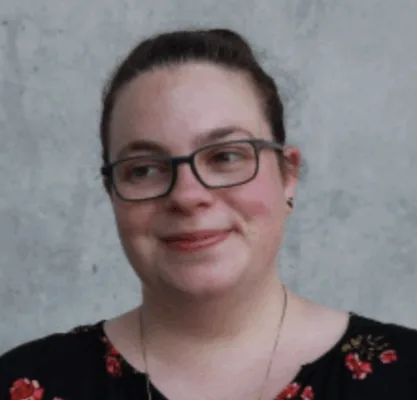
In response to host Leslie Wang saying “so it sounds like beyond mere intimidation, the end goal is really about getting people fired these days,” Steffen (whose research about the “intersections of labor and learning” at American colleges “employ[s] frameworks that derive from and contribute to critical, abolitionist, and decolonizing university studies”) answered:
‘I think the end goal is even bigger than that. So I think the end goal is really a deep chilling of speech and teaching, and research on campuses in the U.S. right now. And a serious attack, not just on individual academics, but on the public’s trust in the academic profession and in the whole project of higher education. So I think these attacks, really, they come at and they crumble the foundation of public trust that needs to exist in order for the academic profession to enjoy academic freedom, for instance.’
This is absolutely ridiculous, of course, as The Fix has always been a proponent of the First Amendment and does not try to get any college employee terminated.
Our editor-in-chief Jennifer Kabbany has specifically criticized those who, after reading a Fix story, contact an academic to berate him/her/them/zir/etc. What’s more, around 2017 she established a rule for Fix writers and editors that no links to individual faculty pages be included in articles so the occasional idiot can’t just point and click in a misguided effort to harass.
But note Steffen considers the mere act of reporting on something controversial said or done in a college classroom as an “attack.” Is an ABC news report on something an “attack” on that subject? If NBC airs a report that a politician did something potentially illegal, and the politician and his family end up getting harassed online and off, would NBC be leading a “smear campaign”? Should the report also be labeled an effort to “crumble the foundation of public trust” among government officials?
Somehow I doubt Steffen would agree.
Penn State University’s Roger Shouse doesn’t care about watchlists or critical reporting; he says as long as “critics spell check his name” and it’s not run by the government, who cares?
“It’s very strange to claim a private advocacy organization that published information that is publicly available is in any way a threat to anybody’s academic freedom,” Shouse said. “You as a professor have the right to do what you want to do, but you better have the courage to stand up and defend it.”
As a former teacher, I couldn’t agree more. I never had a problem with anyone — parents, district officials, you name it — coming to visit my classes and asking questions about my methods. And when asked the hypothetical whether classes should be recorded and/or put online, I always replied “Makes no difference to me.”
That’s because I was confident in what I taught, and I taught in an appropriate manner. If you do that, you have nothing to worry about. If Steffen and other professors feel similarly about their progressive subject matter and approaches, then they should feel as Shouse does.
Actual threats, of course, should be taken seriously, but for the more likely instances of angry emails, social media name-calling and the like, there’s a very easy solution: Ignore them. Delete them. That’s what email filters are for, as well as mute/block buttons.
So I’ll conclude with the headline my former Fix colleague Daniel Payne wrote almost nine years ago: “The College Fix reports on higher education — and we’re not going to stop.”
MORE: Professor Watchlist creators say criticisms lodged against it overblown, misguided