BUZZ
BUZZ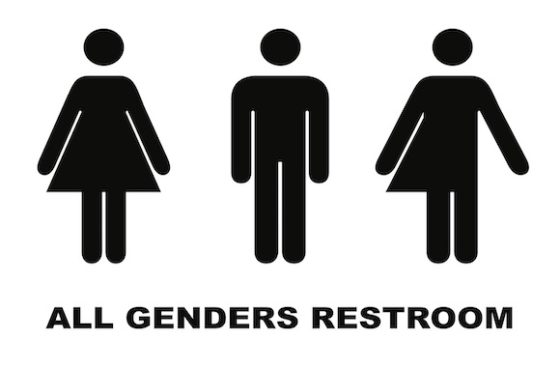
‘When you limit someone’s basic bodily functions, you limit their capacity to exist as a person in the world’
The Palmetto State’s new “bathroom law” has some transgender students at the University of South Carolina complaining they’ve been put on a “urinary leash.”
According to The State, the law signed by Governor Henry McMaster last month extends to state public universities restrictions already applied to public K-12 schools — students must use restrooms that align with their birth gender.
If a (public) higher ed institution allows trans individuals to use a bathroom that aligns with their gender identity, it could lose 25 percent of its state funding.
Colleges also could be sued if a person “encounters someone of the opposite biological sex in a [university] bathroom” and shows the school “did not take ‘reasonable steps’ to prevent the prohibited use.”
Public universities must provide “at least one single-user restroom and changing room” on their campuses, which “many, if not all” already do.
As of last year, The State notes the University of South Carolina had a total of 75 “single-stall and all-gender restrooms” located across 43 campus buildings.
USC student Elliot Naddell, a transgender man who made the “urinary leash” remark (used to “describe the impact that a dearth of public toilets had on Victorian era women’s ability to travel”) noted “he’s” memorized the locations of all the gender-neutral restrooms on campus and how to access them.
“It takes a lot of time, thought and effort out of my day,” Naddell said. “It’s miserable […] when you limit someone’s basic bodily functions, you limit their capacity to exist as a person in the world, basically.”
Naddell added “There’s no good solution to this. I certainly would rather use the men’s than the women’s, even if it is illegal. But I would rather not be put in that spot, you know?”
[C]ompliance doesn’t necessarily mean convenience for trans students and staff, who in some cases will have to travel out of their way to find a suitable commode.
Artemis Capece, a 20-year-old transgender student at USC, described the school’s gender-neutral bathrooms as “few and far between.”
“You might have to walk a while to find one,” said Capece, a rising senior pursuing a dual degree in sports media and the arts. “It can be like a five-to-10-minute walk between buildings, which obviously is not ideal.”
Finding a single-occupancy restroom on USC’s campus also takes more work than it used to.
Until this past school year, a map on the university’s Office of Multicultural Student Affairs website identified single-user and gender-neutral restrooms on campus as a resource for trans and non-binary students.
That map, which noted the locations of the aforementioned 75 bathrooms, is no longer on USC’s website, but a university spokesman said a “revised version” would be put up “at some point.”
The spokesperson also denied the map’s removal was due to the Trump administration’s “crackdown” on diversity, equity, and inclusion (DEI) initiatives.
The bathroom bill’s sponsor, Republican State Rep. Tommy Pope, said the law “was not intended to ostracize or alienate transgender people” but to “accommodate the majority of people, including young girls, who should be able to use the restroom without fear that they’ll encounter a biological male.”
MORE: U. Washington scrubs ‘all-gender’ restroom page from website in wake of complaint