
 FEATURED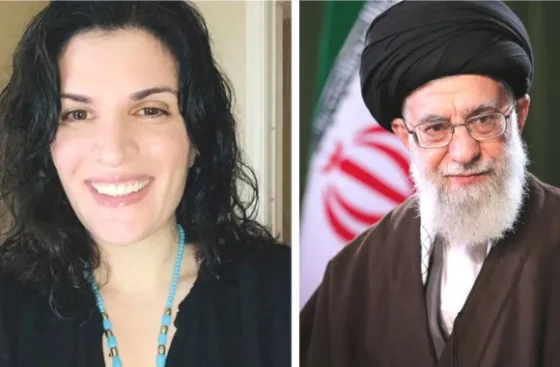
Key Takeaways
- Professor Shirin Saeidi is appealing her termination by University of Arkansas System President Jay Silveria due to her social media posts supporting Iran and calling for the destruction of Israel, with a final hearing scheduled for May 21.
- Silveria rejected a faculty committee's unanimous recommendation to reinstate Saeidi, citing potential funding concerns related to antisemitism responses under Title VI.
- Experts from FIRE and AAUP expressed concerns about the implications of Saeidi's dismissal for academic freedom, cautioning that it may lead to self-censorship among faculty regarding sensitive topics such as the Israeli-Palestinian conflict.
University of Arkansas System president rejected a unanimous recommendation by a faculty committee to reinstate professor Shirin Saeidi after she was terminated last year following her social media posts criticizing Israel and praising Iran’s supreme leader.
Saeidi (pictured) told The College Fix that she has appealed the decision, with a final hearing before the University of Arkansas Board of Trustees scheduled for May 21.
To justify the decision to terminate her, President Jay Silveria cited concerns over lost funding due to insufficient responses to antisemitism under Title VI, KARK reported.
“I am also concerned that the university could suffer a reduction or elimination of funding under Ark. Code Ann. § 6-16-2004 if its responses to antisemitism are determined to be inadequate,” Silveria said.
The move has ignited debates over academic freedom.
Saeidi shared with The Fix a letter from the Middle Eastern Studies Association to President Silveria, condemning the decision and demanding her reinstatement as Director of the King Fahd Center for Middle East Studies.
The letter expresses a grave concern over the rejection of the committee’s recommendation, as well as the cited reasons for the termination, calling the decision a glaring infraction of academic governance norms and free speech rights.
“Free expression is essential to any democratic society, and institutions of higher education must remain spaces where even controversial or unpopular views can be expressed, debated, and challenged,” the letter states.
“No faculty member should lose their position for expressive or associational activity protected by the First Amendment and the principles of academic freedom,” it states.
Reached for comment, university spokesperson John Thomas said the school has been consistent with university policies, principles of academic freedom, and applicable law, including the First Amendment.
He referred to the school’s Board Policy on Appointments, Promotions, Tenure, Non-Reappointment, and Dismissal of Faculty, which defines cause as “conduct that demonstrates the faculty member lacks the willingness or ability to perform duties or responsibilities to the University, or that otherwise serves as a basis for disciplinary action.”
However, some experts disagree.
Zach Greenberg, the director of faculty legal defense for the Foundation for Individual Rights and Expression, told The Fix that FIRE contested the termination on academic freedom grounds in a letter to the university.
He said, “We believe that the professor’s commentary on public issues in a private capacity remains protected by the First Amendment, even if it is offensive to others.”
He added that the Israel-Palestine conflict is a matter of public concern, saying, “The Professor’s commentary does not show unfitness to teach or any disruption to the university that would justify its actions.”
“We believe there should be no punishment for her social media posts, and we hope the university sees it our way,” he said.
When asked how universities should balance academic freedom with institutional policies, Greenberg noted that public and private universities are required to protect the expressive rights of faculty.
“Most institutions promise their faculty academic freedom and free speech. This requires universities to protect faculty when they speak, teach, and express themselves on matters of public concern in their private capacities,” he said.
Greenberg also spoke on the broader implications of this “chilling” decision, saying, “It’s Faculty may self-censor when speaking out about the Israeli-Palestinian conflict, or really any of the major national conflicts.”
“This case sends the wrong message to faculty and students that the discussion and perception of ideas in a university setting is under attack,” he said.
Kelly Benjamin, senior messaging and media strategist for the American Association of University Professors, told The Fix that “faculty members should be dismissed only for conduct that bears on their fitness in those roles.”
She added that “extramural speech rarely does.”
When asked about the role of administrators versus faculty committees in personnel decisions, Benjamin said faculty “should have primary responsibility.”
“That means that a faculty hearing committee’s judgment in such a case should normally stand, and an administration and governing board should overturn it only in extraordinary circumstances, only for compelling reasons that are clearly stated, and only following reconsideration and discussion between the board and the hearing committee,” she said.
She also noted that the AAUP has seen a rise in administrative “overrides” and “general trends in state laws and governing board policies that diminish the faculty’s role in decisions about faculty personnel matters.”

