FEATURED
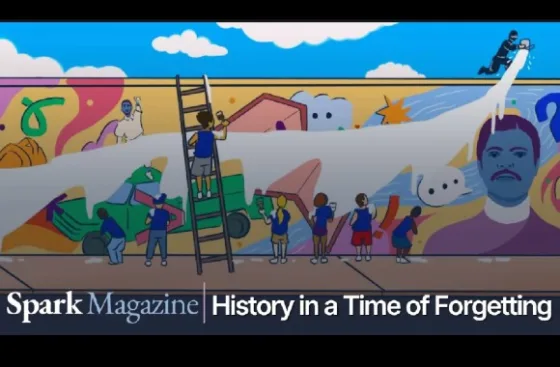
University essay series argues Trump administration is creating ‘regime of forgetting’
A history scholar at the University of Michigan criticized the federal government’s efforts to portray the United States in a positive light for the nation’s 250th anniversary, claiming during a webinar Tuesday that doing so “aims to conceal difficult but necessary truths.”
The “History in a Time of Forgetting” webinar, which The College Fix attended, kicked off an essay series of the same name focused on areas of history that the authors claim are a target of the Trump administration.
Jennifer Brady, director of the university’s Inclusive History Project, opened the webinar by criticizing the administration’s efforts to focus on the positive and unique qualities of the United States for the nation’s 250th anniversary.
The central thesis of the “History in a Time of Forgetting” series is that the Trump administration is creating barriers in order to push a “particular version of U.S. history,” she said.
Brady called this a “regime of forgetting,” a term that she said refers to powerful institutions making history more difficult for the public to remember. Examples of this include failing to create or maintain archives, neglecting to consider certain perspectives, cutting projects’ funding, or even threatening “retaliation for sharing knowledge that complicates a preferred narrative,” Brady said.
She accused the federal government of taking “concerted steps to shape and disseminate a version of the nation’s history that erases essential parts of our shared national past, and that aims to conceal difficult but necessary truths.”
The essay series is “a call to those who seek to resist the rise of a singular and exclusionary history,” she said.
Several of the series authors spoke during the webinar, including Tenisha Tevis, an education professor at Oregon State University. She wrote about the Trump administration cancelling her research grant.
The grant was supposed to fund a project involving black high school students using “GIS (geographic information systems) tools and data analysis of historical records to map the visible and invisible legacies left by slavery” in Oregon, which “entered the Union as a whites-only state,” according to her essay.
The National Science Foundation withdrew the funding in 2025, stating that the project did “not align [with] the agency’s priorities,” Tevis said.
Meanwhile, another panelist David Porter suggested that erasing some history, such as removing statues, is alright if it is the product of the powerful.
Porter, an English professor at the University of Michigan, wrote more about it in his essay:
Since the summer of 2020, when several hundred markers and statues were removed worldwide as part of a widespread public reckoning following the murder of George Floyd, many have increasingly come to recognize the truth of Nigerian novelist Chimamanda Ngozi Adichie’s warnings about the dangers of relying on a single story, especially when it’s a story of domination etched in stone by those with an interest in preserving their power and status. This recognition has led, in turn, to a growing interest in experimenting with more expansive, inclusive, and perhaps even fluid approaches to memorialization.
During the talk, Oregon State’s Tevis did admit that the Trump administration acknowledges America’s history is imperfect. She quoted from “The 1776 Report,” which the president commissioned, to make her point.
However, she took issue with the fact that the report “argues that the nation’s founding ideas were always working to correct” those wrongs, which makes the U.S. seem noble and slavery a “distant event.”
“And that’s how whitewashing usually works. It’s not always about deleting, but it’s simply not acknowledging it, right?” she said.
Others who spoke included Elisa Alfonso, a postdoctoral fellow in ethnomusicology at the University of Utah. She talked about rap artist Bad Bunny’s Super Bowl performance being controversial in connection with how the annual event is an emblem of American patriotism.
MORE: 95% of Michigan faculty donations go to El-Sayed over Rogers in Senate race