FEATURED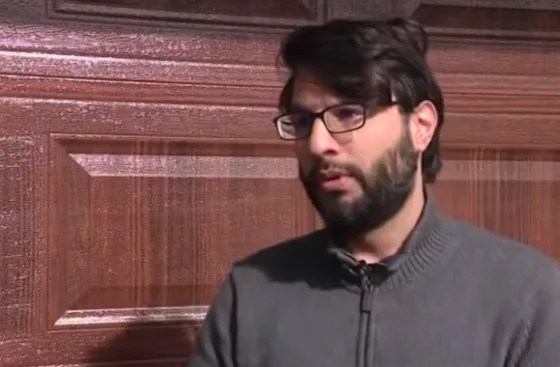
Also compared Israel to a cancer
A University of Washington school removed the director of its Middle East Center following comments he made criticizing the war in Iran and the concept of Zionism.
Professor Aria Fani is on leave until September, according to an automated response The College Fix received.
Several free speech experts told The Fix that Fani could challenge the decision on free speech grounds, but that the university may be able to argue his comments disrupted his responsibilities as a leader of the center. He remains an associate professor at the university.
Controversy began in March after Fani sent several messages to the center’s email list, criticizing the war in Iran and comparing his psoriasis to Zionism, or the idea of a Jewish political state.
“Ultimately, I understand Zionism as cancerous, a potential fatal outgrowth in our planetary body,” he wrote to his colleagues.
An Iranian immigrant himself, Fani received his doctorate at University of California Berkeley and began teaching at the University of Washington in 2019. He has worked as the director of the center since 2025.
In his comments, he criticized the current Iranian regime but said the U.S.-Israel alliance is a larger threat.
“The Islamic Republic operates in very similar fashion to the US/Israel, albeit on a much smaller scale,” he wrote.
“As such, Iran poses a real danger to its population and ecology while the US/Israel pose a planetary threat,” he said.
He wrote further:
To combat the latter, we need to understand how two economies -military and linguistic — work harmoniously: the latter presents certain groups as less than human while the former enacts that vision in material ways. Our ability to rein in the economy of militarism requires building a democracy, but we can get a massive head start on creating a new, anti- colonial economy of language.
University officials informed Fani on March 27 that he would be removed as director. The Jackson School of International Studies, which houses the center, made the decision, the student newspaper reported on April 8.
“Concerned members of the Middle East Center graduate and alumni community” criticized the decision to remove Fani in an open letter published by The Daily, the school’s newspaper.
The members called it “political censorship” and said the removal would discourage “students and scholars” from openly sharing their views on “politically sensitive topics.”
The university told The Fix that the Jackson school made the decision.
“Daniel Hoffman the director of the Jackson School of International Studies, will cover the administrative responsibilities of the Middle East Center for this spring and summer,” spokesman Vic Balta told The Fix. “Fani remains an associate professor at the University. These types of decisions are made at the unit level, and no one outside the Jackson School of International Studies was involved in this decision.”
He said he could not comment further “[g]iven that this is a personnel matter.”
Unclear if academic freedom protects Fani’s comments
A professor at South Texas College of Law who studies and writes about the Constitution said professors do have academic freedom protections in their role as scholars.
Josh Blackman told The Fix via email, “[Professors] should not be fired or de-tenured for writing and speaking about matters in their scholarly area.”
Academic tenure, however, is not extended to administrators. While administrators may have procedures or protections, “the issue does not turn on academic freedom,” Professor Blackman wrote. “Deans, for example, can be fired for their speech because they represent the institution—even if the Dean retains his academic tenure.”
A legal scholar at the Hoover Institution echoed Blackman’s comments.
Eugene Volokh reaffirmed that because of academic freedom, Fani “couldn’t be fired from his job as a professor for his e-mail.” Volokh is a former University of California Los Angeles law professor.
Volokh said a professor could be punished if that scholar falsely claims to speak on behalf of an organization, according to federal case precedent.
However, this does not appear to be the case with Fani’s emails, according to Volokh. It did not appear that the Middle Eastern scholar was “speaking on behalf” of the center, Volokh told The Fix.
If Fani wished to contest the center’s decision, he could argue that his dismissal violated his First Amendment rights as an individual, regardless of the academic freedom principles.
However, as Volokh noted, “under the First Amendment test, the university could indeed dismiss someone from that sort of post so long as it can show that his speech was potentially disruptive enough.”
The university has every right to “choose directors for various centers who they think will be unifying forces that generate support for centers, rather than ones that they think will be divisive forces,” he said.
MORE: Student injured after Israel Fest at GWU targeted in apparent chemical assault