
 FEATURED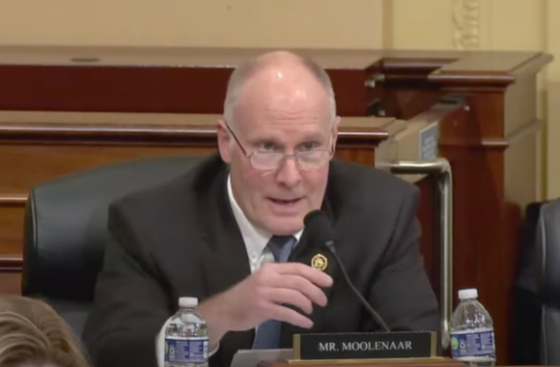
Questions raised about universities collaborating with Chinese entities on national security-related research
The University of Washington said it “takes research security and integrity very seriously,” following concerns raised by a Republican congressman about the school’s ties to the Chinese military.
Congressman John Moolenaar (R-MI) asked the National Science Foundation to look into “significant research security concerns the Select Committee on China has identified,” relating to the University of Washington and Texas A & M University.
The Safeguarding the Entire Community of the U.S. Research Ecosystem initiative “includes awards of $50 million to the University of Washington (UW) and $17 million to Texas A&M University (TAMU),” the congressman wrote.
Yet both universities have professors who collaborate with Chinese researchers who have ties to entities deemed national security threats, Moolenaar says.
For example, a University of Washington scholar co-wrote a paper with the Beijing Institute of Technology on “autonomous vehicle AI models.” Texas A& M professors conducted research with Chinese counterparts on technology including Global Positioning Systems, robotics, and metallic nanostructures.
He asked the National Science Foundation to pause funding to both universities until it completed a review.
In response to these concerns, UW spokesman Victor Balta told The Fix that “SECURE is a dynamic program that is not prescriptive but can assist universities of all sizes and other research entities to address research security concerns.”
“The University of Washington takes research security and integrity very seriously,” Balta said via email.
He said the university “directs significant effort and resources toward being leaders in research security and integrity, and goes above and beyond SECURE’s guidance and recommendations.”
“Given the evolving landscape, we are regularly reviewing our guidelines and protocols,” Balta said.
The National Science Foundation told The Fix it “is working directly with and will respond directly to the Committee.”
Moolenaar did not respond to requests for comment from The Fix and neither did Texas A & M.
However, a spokesman for the Texas university told Houston Public Media it has also been reviewing its protocols.
“The Congressman’s letter highlights concerns and identifies potential vulnerabilities related to academic publications involving international co-authors,” an unnamed spokesperson said.
“The Texas A&M University System significantly strengthened its research security framework in 2022,” the media rep said. “Any confirmed violations of system regulations will be addressed. This may include corrective and disciplinary action.”
Congressman Moolenaar asked the National Science Foundation to respond by the end of March.
In his letter he explained what he sees as the potential consequences of these research partnerships, writing:
Institutions entrusted with U.S. taxpayer dollars to safeguard the nation’s research enterprise should not simultaneously enable foreign adversaries to access and exploit sensitive research and taxpayer-funded scientific advances. When universities fail to enforce their own meaningful research security standards, they risk diverting U.S. innovation, talent, research, and federally funded discoveries to support the military and technological advancement of strategic adversaries, directly undermining U.S. national security and economic leadership.
As chairman of the Select Committee on China, the congressman has taken an interest in Chinese influence on higher education.
Both the University of Michigan and Eastern Michigan University cut ties with Chinese entities last year following a report from their home state congressman.
The Chinese Communist Party “is driving its military advancements through US taxpayer-funded research and through joint [U.S.-China] institutes,” the congressman told The Fix in 2024.

