BUZZ

Why does the Netflix(!) series about ax murderer Lizzie Borden include an apocryphal lesbian affair?
One of the great things about the realm of “critical studies” is that something can mean virtually anything one wants it to.
One such concept is “whiteness.” Academics will tell you it has nothing to do with actual white people, just certain aspects about the group as a whole are … distasteful in one way or another.
Like the Morgan State professor who didn’t like a FOIA request and told his boss to “do the right thing, not the white thing.” (Following the law is “whiteness”?)
Humboldt State University had an entire online resource guide devoted to the topic, including “white privilege,” “white fragility,” “white spaces” and “seeing white.”
Willamette University Professor Emily Drew (sociology) held a “conversation” at which white people could “acknowledge their faults and fix their ‘whiteness.’”
Even white paint has racial overtones!
The examples are endless — currently there are 628 pages of College Fix archives under “whiteness.”
And here’s the latest: UC San Diego student Gitanjali Boyd thinks that, although it’s become “increasingly commonplace,” contemporary media still isn’t sufficiently representative enough regarding the LGBTQ community — and it’s due to the “suffocating” effect of whiteness.
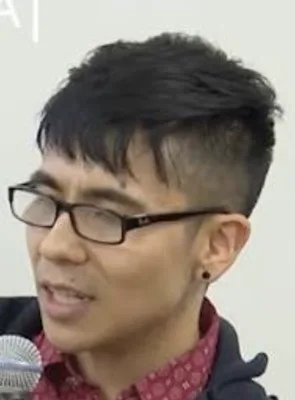
Boyd goes to UCSD Literature Professor Nguyen Tan Hoang, who claims that “in the dominant cinema, TV and the media, whiteness is the default. … [Hollywood] assumes that only white people are ‘relatable.’”
Hoang, who according to his faculty page uses “all” pronouns and researches “Southeast Asian cinema, queer cinema, experimental film, race and pornography, and videographic criticism,” offered up the new Netflix show “Monster: The Lizzie Borden Story.”
The show had the notorious 19th-century ax killer engage in an “historically inaccurate […] lesbian affair with the maid,” Hoang said.
This “consequential, if not intentional, erasure of queer identities that intersect with other marginalized communities is further manifested in the everyday realities of queer experience,” Hoang added.
(Netflix doesn’t exactly have a reputation for such accuracy, even when it comes to Caucasians.)
Boyd says it’s “unrealistic for the white queer community to demand solidarity solely on the basis of queer identity while excluding so many other experiences and demographics.”
She has issues with the show “Sterling Point” and the Los Angeles “Futch Night” sapphic (dedicated to the LGBTQ+ community) dance event. In the former, one of the characters has a “casual hookup” with another who has a “dubious queer identity.”
At the latter, “queer representation” is “swallowed” by whiteness because posters of “prominent queer activists and historical figures” allegedly lack “people of color.”
“It is only due to the suffering and work of people of color within the queer community” that shows like “Monster” and “Sterling Point” and events like “Futch Night” exist, Boyd concludes.
“It is the duty of the white queer community to truly put in the work to ensure that these spaces are safe for everybody.”
MORE: Evolutionary biologists reject ‘white, male’ framework, embrace ‘queer’ DEI research