FEATURED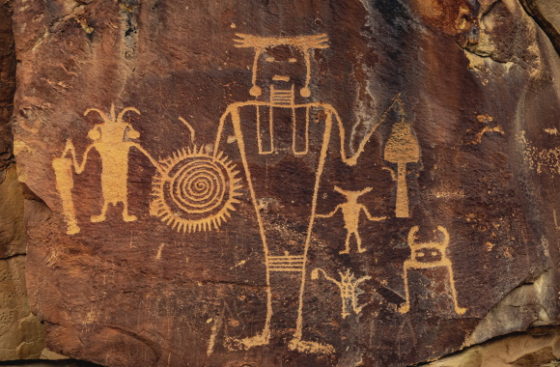
Anthropologist warns repatriation won’t stop with artifacts, will lead to ‘book burning’
One of UCLA’s museums is returning hundreds of items from its collection of Native American artifacts, including photo negatives, to a California tribe this winter – an effort that has one scholar concerned.
The public university’s Fowler Museum is repatriating items with Native American cultural affiliation in accordance with the Native American Graves Protection and Repatriation Act, according to a notice from the National Park Service on Jan. 7.
The federal law, first enacted in 1990, initially required public institutions to return Native American human remains to their descendants. However, some scholars say recent regulatory expansions that now include a broad range of “cultural items” are wiping out university collections and making the study of these cultures increasingly difficult.
In the case of UCLA, the Yuhaaviatam of San Manuel Nation, a Native American tribe in San Bernardino County, requested a total of “766 lots of cultural items” for repatriation from the university’s Fowler Museum, according to the notice.
The mission of the Fowler Museum is to “[explore] global arts and cultures with an emphasis on Africa, Asia, the Pacific, and the Indigenous Americas—past and present,” according to its website.
The cultural items slated for return to the tribe include “groundstone,” “ceramic sherds,” “faunal bone,” and “historic materials” such as “glass, metal, ceramics,” and “leather.”
The museum also is giving “photographic negatives of petroglyphs” in Black Canyon, San Bernardino County, to the tribe.
The notice indicated that all of the items had been “identified as culturally affiliated” with the Serrano and Taatavim peoples in consultation with the Yuhaaviatam of San Manuel Nation, and that the repatriation will occur “on or after February 6.”
A representative from the Yuhaaviatam of San Manuel Nation declined to comment when The College Fix asked over email why items such as photo negatives were requested for repatriation. The spokesperson said “it was decided not to participate in this story.”
Meanwhile, a professor emeritus of anthropology at San José State University said that the federal repatriation law “was never meant for the repatriation of data, such as photos or negatives.”
“It won’t be long until books containing images of petroglyphs are burned. To save archaeology and the knowledge of our past, NAGPRA needs to be repealed!” Professor Elizabeth Weiss posted on X in response to the UCLA notice.
Weiss told The College Fix in a recent email that the photo negatives likely will “be destroyed.”
“If the negatives, which contain images of petroglyphs from the Black Canyon site in San Bernardino County, are ‘repatriated,’ they will be destroyed — most likely burned,” she said.
Weiss posed the hypothetical question of whether tribes would continue to request repatriations for other photographs, saying, “Will the tribe next seek out copies of the 1973 book Prehistoric Rock Art of California that contains images of these petroglyphs, and destroy those too?”
“The repatriation of these negatives may seem trivial, but it opens the door to similar repatriations – and, ultimately, to book burning,” Weiss told The Fix.
When asked about the tribes’ motivations for repatriating items like photographs, Weiss said she believes “it’s part powertrip and part grift.”
“The tribal leaders are claiming everything back because they can. Because of their white guilt and political correctness, the NAGPRA committee doesn’t have the backbone to challenge anything the Native American ‘knowledge keepers’ and ‘elders’ say,” she said.
She added that “the tribe gets funding for consultation, ceremonial activities, and repatriations — these costs come at taxpayers’ expense.”
The UCLA’s media team, the Fowler Museum media team, and the Fowler Museum NAGPRA repatriation coordinator did not respond to The Fix’s emails over the past two weeks asking for comment on the repatriation list.
This is not the first time the UCLA museum has removed items from its collection. In 2025, it also gave 10 glass spearheads and a kangaroo tooth headband from its collection to an Australian tribe. According to a news release, the objects were “of deep cultural significance” to the tribe.
In recent years, Weiss and other scholars have raised concerns about growing restrictions hindering the study of Native American cultures.
In the Los Rios Community College District, for example, professors even are banned from using “images” of Native American cultural items in their classes.
Meanwhile, The Fix recently uncovered an interview with the Indiana University NAGPRA office director where she said she did not always tell airlines that she was carrying human remains onto flights due to tribes’ concerns.
In 2025, an Indiana University training program advised public employees that “tribes are in control” and “tribal knowledge is sufficient” when they are working to return Native American artifacts in their research labs and museum collections, according to records obtained by The Fix.
“‘We owe it to science’ is an unacceptable statement,” one presentation from the training stated.
MORE: Some California colleges still ban showing Native American cultural items in class