
 FEATURED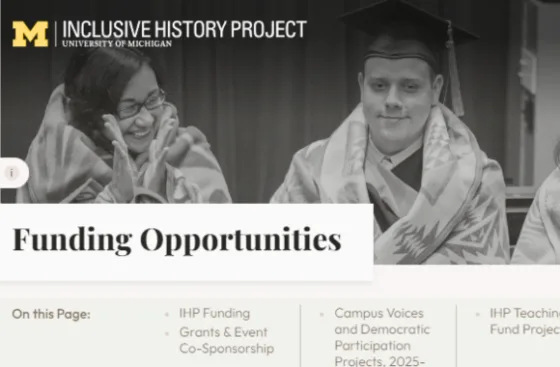
‘Focuses heavily on engaging diversity and differences in social work practice’
The University of Michigan funded a handful of classes this year under its “Inclusive History Project” initiative.
The classes include one on “engaging social justice, diversity, and oppression in social work.”
The class “focuses heavily on engaging diversity and differences in social work practice and advancing human rights and social and economic justice, through understanding power and oppression across micro, meso, and macro levels,” according to a description.
“We will explore the knowledge base that underlies skills needed to work towards justice,” the course description states.
The class also promises an “intensive focus on privilege, oppression, diversity, and social justice,” also known as “PODS.”
The university has yet to say how much money it spent on developing this course – The College Fix submitted a public records request on May 18 for more information but has yet to receive the documents four months later. However, the school offers up to $5,000 for new classes and $3,000 to redesign courses through the Inclusive History Project.
This course appears to be a redesign of a class offered as of fall 2023, if not earlier. The “Engaging Social Justice” course is required for students at the School of Social Work.
Other classes include “Introduction to Afro-American Studies,” “Topics in African Diaspora Studies,” and “Theories and Skills for Community Change.”
“Introduction to Afro-American Studies,” according to a class description, “provides an interdisciplinary introduction to the field of African American Studies through careful attention to the social, cultural, political, economic and historical realities of Black life in the U.S.”
SaraEllen Strongman, an assistant professor of Afroamerican and African Studies, will teach the class. Her research interests include “Black feminisms, Black women’s political and cultural history, and African American literature.”
The project has not published a description for “Topics in African Diaspora Studies.” The money went to David Luke, assistant vice chancellor at the College of Arts, Sciences and Education.
The Inclusive History Project did not respond to an email in the past several weeks asking for information on the decision process and award amounts.
Strongman and Luke did not respond to two emails and a voicemail left in the past thre weeks.
However, an academic expert criticized the courses.
“Public universities should prioritize courses that help students prepare for careers, embrace responsible citizenship, and grow as seekers of wisdom,” Jenna Robinson told The Fix via email. She is the president of the James G. Martin Center for Academic Renwal. “Special funding for politicized courses detracts from this mission.”
“This project undermines the principle of institutional neutrality, which says that universities are forums for debate but shouldn’t get involved in the debate themselves,” Robinson stated. “By providing special funding for politicized courses, the university is putting its thumb on the scale for a particular point of view.”
While former University of Michigan President Santa Ono previously promised to get rid of DEI within the university system, College Fix reporting has shown that diversity content is alive and well.
The Inclusive History Project previously funded a project on “Celebrating Feminist Psychology” in January.
As The Fix found at the time, the university provides many kinds of grants through the project, such as grants for research and events. It also funds up to $3,000 for “course redesign” and $5,000 for “course development.”
A February 2026 article identified numerous diversity statements at the University of Michigan’s law school, business school, and kinesiology school.
An April 2026 report from economist Mark Perry, a former University of Michigan-Flint professor, found the Ann Arbor flagship campus will spend $15.3 million in one year to support the salaries of 162 employees who continue to work on diversity-related efforts on campus.
MORE: ‘Homophobia’ infects gerontology case, Florida State U. course says

