BUZZ
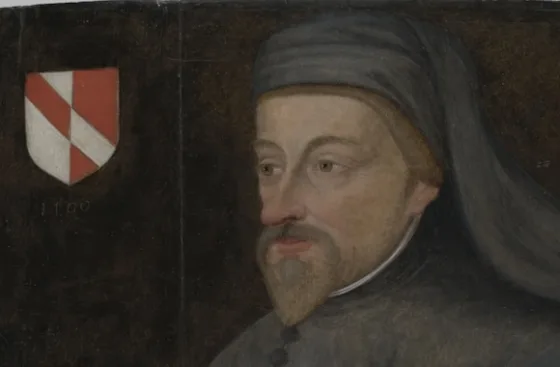
‘Chaucer’s falcon is the mother lode of whiteness’
Arizona State U.’s Arizona Center for Medieval and Renaissance Studies recently highlighted Washington & Lee University English professor Wan-Chuan Kao, who analyzes “how whiteness operates in medieval literature.”
According to its website, the center “promotes work that is historically grounded and theoretically expansive, with the aim of advancing dialogues that reach into the present moment and point us to different, more inclusive, futures.”
Kao’s analysis of Chaucer’s “The Squire’s Tale” was featured on the center’s “Throughlines,” a “dynamic pedagogical resource for engaging premodern critical race studies in the classroom.”
The professor, whose research and instruction are “grounded in his commitment to rigorous theorization and historicization: the unflinching pursuit of aesthetic responses, critical intuitions, close investigations, and transformative perspectives,” claims that a “Squire’s Tale” scene with Canacee and the falcon “might not immediately signal to you how the mechanisms of race are at play […] but they are.”
Canacee represents the “exoticized and Orientalized culture,” the falcon is “implied to be white and European,” and Kao notes “one of the ways” the scene could be viewed is via empathy:

But empathy is not unequivocally a universal good. Empathy, presumably, can reach across and into the distant past to make affective connections, and it can cross boundaries like racial difference. But employing cross-racial empathy does not change the realities of racial difference. It does not mark any break with the past, the transcendence of difference, or entry into a post-racial utopia. In fact, to enter racial difference is to enter a dangerous territory—empathy can be used as a master’s tool that actually produces racial difference and instills violence. …
Chaucer’s falcon is the mother lode of whiteness. She signifies in no uncertain terms racialization through whiteness, here coded as courtly language. And as a figurative instrument of whiteness, the falcon is a form of racial capital. Her gentillesse, racialized and tied to whiteness, is designed for the logistical chain of aristocratic production, valuation, and consumption.
Also available by Kao via Throughlines is an analysis of “Piers Plowman and whiteness in Passion plays” in which he argues “the ‘whitlether’ suit, a piece of garment worn by actors playing Christ [shows] whiteness was not only about skin color, but a discourse crafted through performance, material culture, Christian symbolism and racialized ideas of precarity.”
Kao’s syllabus for the course “Premodern whiteness and racialization,” an “introduction to premodern critical whiteness studies,” also can be viewed.
According to his faculty page, Kao’s past articles include “Leather Incarnate: Medieval, American,” “Globalising Whiteness: Transmission, Idolatry, and Fetishism,” and “Queer Theory and Late Medieval England.”
Washington & Lee’s The Columns reports Kao currently is working on his “upcoming monograph” at Wellesley College.
MORE: University to replace Chaucer with ‘decolonised curriculum’ in English department revamp
MORE: Scholars blast Nottingham U. for content warning on ‘The Canterbury Tales’ due to Christian themes