FEATURED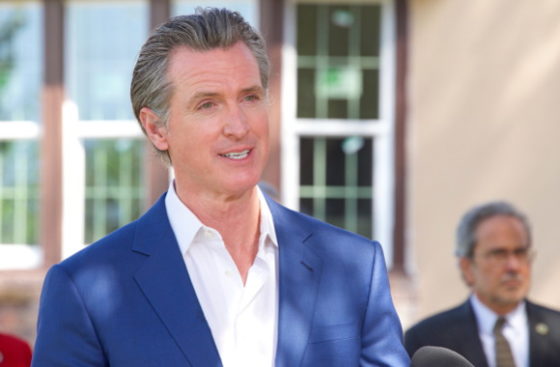
USC and eight other universities were initially offered the compact. Penn, MIT and Brown have also officially rejected it, and the offer has since opened to all colleges
Politicians and professors in California are loudly rebuking President Donald Trump’s proposal for a ten-point “compact” with universities, leading the University of Southern California to reject the administration’s offer.
The state’s Democratic governor, Gavin Newsom, played a role, becoming something of a de facto spokesman against the administration’s effort.
Speaking at the University of California, Berkeley earlier this month, Newsom had called the president’s effort to reform higher education a “code red.” He said that universities that received an invitation to join the compact have “no choice” but to refuse, adding to USC: “Do the right thing.”
To deter colleges from agreeing to the compact, Newsom also threatened to cut off state funding to any institution that signs on.
“If any California university signs this radical agreement, they’ll lose billions in state funding — including Cal Grants — instantly. California will not bankroll schools that sell out their students, professors, researchers, and surrender academic freedom,” the governor said in a news release.
The University of Southern California is the only school in California that has received Trump’s initial offer to join the compact. Reached for comment, USC referred The College Fix to its public statements on the matter.
“We are concerned that even though the Compact would be voluntary, tying research benefits to it would, over time, undermine the same values of free inquiry and academic excellence that the Compact seeks to promote,” USC interim President Beong-Soo Kim told the Trump administration in his letter to the campus community.
USC and eight other universities were initially offered the compact. Penn, MIT and Brown have also officially rejected it, and Trump has since opened the offer to all colleges.
It is unclear how Newsom could cut billions of dollars from USC. Unlike schools in the University of California or California State University systems, USC is a private university that does not receive funding directly from the state government. The money it receives is primarily through the Cal Grants program, which provides non-repayable grants to lower-income students.
USC received just $28.4 million from students’ Cal Grants in 2024-25, California Student Aid Commission spokesperson Shelveen Ratnam told Cal Matters. That figure is a tiny fraction of the school’s annual budget, which stood at $7.4 billion in the most recently reported school year, 2023–24. The university also has an endowment valued at $7.3 billion.
In addition to Newsom, the president’s compact met fierce resistance from the faculty at USC. During a recent meeting of the university’s academic senate, a variety of USC professors, department chairs, and researchers railed against the compact in a series of passionate speeches.
Faculty members denounced the proposal as “egregiously invalid,” “probably unconstitutional,” “antithetical to principles of academic freedom” and “a Trojan horse.”
At least one USC faculty member expressed support for the compact, however. USC chemist Anna Krylov said that, with a little tweaking, it would be worth signing. “[T]he essential ideas articulated in the Compact are excellent. The Compact is an opportunity for universities to signal good will, to reform, and to right their course, and to recommit to their mission of research and education. It is an opportunity to win back public trust,” Krylov wrote in an article for Heterodox at USC.
“However, the process should be improved—by making clear that the offer is open to all universities, by allotting more time for finalizing the content of such a historic document, and by inviting the broader community of universities and organizations championing academic freedom to participate in this process,” she added.
Trump’s proposal, titled the “Compact for Academic Excellence in Higher Education,” was unveiled at the beginning of October. It laid out a series of significant reforms that the administration wanted universities to adopt. These reforms included colorblind hiring and admittance, a commitment to institutional neutrality, and strict limits on tuition rates and foreign student enrollment.
In exchange for accepting its terms, Trump promised that universities that signed the contract would gain preferential access to federal funding. An administration official said that complying schools would be given priority for certain grants and would receive invitations to events at the White House.
The compact sparked an overwhelmingly negative reaction from academia once it was announced. Faculty groups and employee unions at targeted universities have lobbied their schools’ leadership to reject the offer. The president of the American Council on Education, Ted Mitchell, said that accepting the compact would establish “a horrible precedent to cede power to the federal government.”
While the political left has been virtually unanimous in opposing the compact, reactions on the right have been mixed. Some, like right-wing activist Chris Rufo, support the proposal as a much-needed plan to banish illiberalism from higher education. Rufo argues that Trump’s compact contains “common-sense principles” that should be “the opening ante in any negotiation between the White House and the elite universities.”
Other conservatives, however, are more critical of the compact, viewing it as an act of executive overreach that could place universities under the federal government’s control. Frederick Hess, a conservative education policy expert, sees Trump’s proposal as “well-intended” but opposes it for centralizing power over universities.
Hess wrote that he fears precedent that the compact sets may one day be exploited by a Democratic president to cram down reforms that conservatives oppose.
Walter Olson, a senior fellow at the libertarian Cato Institute, similarly opposes the compact as executive overreach. He wrote that universities would be “selling their souls” if they agreed to it.
“It should be an easy decision for college presidents not to stick their institution’s neck into this retroactive push-button guillotine.”
MORE: Penn, USC, Brown reject Trump’s reform deal, citing threats to ‘free inquiry,’ meritocracy