
 FIX EXCLUSIVES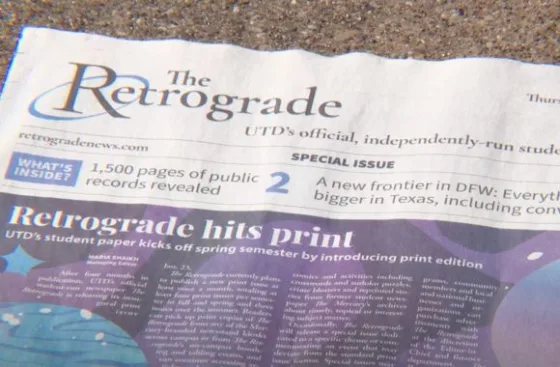
Key Takeaways
- The University of Texas at Dallas shut down its student newspaper, The Mercury, citing university bylaws, but critics argue this was censorship related to pro-Palestinian protest coverage.
- The administration's actions included the removal of newspaper copies, demotions of staff, and the firing of editor-in-chief Gregorio Gutierrez, which led to a staff strike.
- In response, former staff launched an independent newspaper, The Retrograde, but faced continued obstruction from the university, including removal of newsstands and barring outside speakers.
- Free speech advocacy groups claim UT Dallas is violating Texas state law by restricting student organizations from inviting speakers and engaging in retaliatory actions against student journalists.
The University of Texas at Dallas administration shut down its student newspaper and revoked its authority to host guest speakers this year, prompting accusations of censorship.
A Foundation for Individual Rights and Expression spokesperson and the newspaper’s former editor-in-chief told The College Fix the school is engaging in censorship and violating Texas law. However, UT Dallas claims it is only upholding university bylaws.
The conflict began when The Mercury, UT Dallas’s student newspaper for over 40 years, published articles on pro-Palestinian protests and other campus controversies, according to FIRE.
According to FIRE and The Mercury staff, the administration retaliated by removing newspaper copies from kiosks, demoting the faculty advisor, and cutting student reporters’ pay.
The decisive blow came when the university fired editor-in-chief Gregorio Gutierrez last fall, prompting the entire staff to strike in protest, only to be dismissed themselves.
UT Dallas administrators attributed Gutierrez’s firing to violations of student media bylaws, citing issues like holding multiple employee positions, causing budget overruns, and interfering with the advisor’s work, the Dallas Observer reported.
In a statement, the university said “the former editor was not removed for editorial content, but because he violated student media bylaws,” WNYC Studios reported.
The school also stated that a collaborative group of university faculty, students, and staff formed “a new advisory committee for student media.”
“Its goals included reviving the campus newspaper and ensuring the staff has necessary resources to operate with the editorial independence critical for student journalists,” the university stated.
However, the conflict between the school and student journalists didn’t end with The Mercury.
When the student journalists created a new newspaper independent from the school, the administration continued its attempt to limit the students’ reach, according to FIRE.
The administration removed its newsstands from campus and barred FIRE representatives from speaking at a planned event criticizing the university’s actions.
According to FIRE, the university “told Gutierrez that only registered student organizations could invite guest speakers.”
Gutierrez told The Fix, “The Retrograde was created late September 2024 as an independent non-profit newspaper as a response to UT Dallas’ decision to fire everyone at The Mercury.”
He also said “it would be a complete disservice to the student body to just suddenly stop providing news coverage on campus simply because our university did not like what reporting on their actions did for their public image.”
“Threats of censorship and prior-review were all too common under The Mercury, and creating our own newspaper seemed like the best way to continue providing crucial information to the students and faculty of the university without fear of reprisal,” Gutierrez told The Fix.
He added that he doesn’t think the university removed The Mercury due to the viewpoints of the newspaper, “since as a student newspaper we published a wide array of opinions and viewpoints.”
“It isn’t our viewpoints that campus administrators found objectionable, but instead the entire concept of journalism itself,” Gutierrez told The Fix.
Despite the university banning outside speakers, the students were able to put on their event.
Gutierrez told The Fix, “The students at The Retrograde were ecstatic to have FIRE on campus and even happier as we interacted with so many interested students. While FIRE representatives were not permitted to speak, no regulation prevented us from talking to students on their behalf.”
Meanwhile, FIRE Program Officer Dominic Coletti told The Fix the university is violating state law.
“UT Dallas’s policy banning student organizations from inviting outside speakers to campus violates Texas state law, which requires universities to allow student organizations to invite outside speakers to campus,” he said.
“It also continues a long pattern of discrimination against the student journalists who were going to host FIRE. The talk I planned to deliver was going to detail that long train of abuses and to encourage students to take action, decrying administrators’ actions,” he said.
Despite these setbacks, Coletti told The Fix that FIRE’s advocacy for free speech on campus persists. “Just last week, we helped student journalists with The Retrograde, UT Dallas’s independent student newspaper, to distribute their papers after the university removed their newsstands,” he said.
The Fix reached out for comments from the UT Dallas via multiple emails and phone calls, but did not receive a response.
MORE: New Cato Institute courses help students learn about campus free speech, open debate

