BUZZ
BUZZ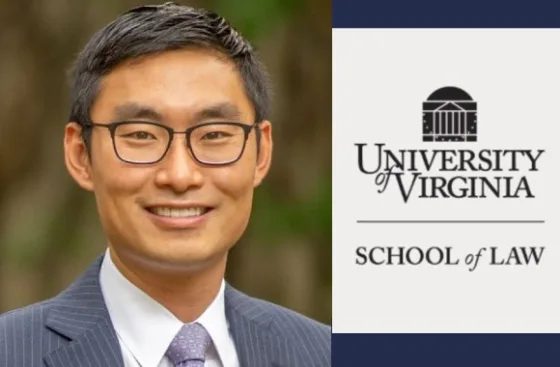
A University of Virginia law professor recently recounted a series of hostile incidents, including when another faculty member threw a plate at him, that occurred last year after he took up a case involving discrimination against a woman for being “straight.”
Professor Xiao Wang spoke about the campus backlash during the Nov. 7 panel “Civil Rights, Equally Applied” hosted by the Federalist Society. This week, Manhattan Institute investigative analyst Stu Smith highlighted some of the professor’s comments in a video on X.
Wang is the director of the UVA Supreme Court Litigation Clinic. He described himself as leaning “to the left” politically.
Last year, the problems began after a legal publication ran an article claiming Wang and his team were undermining “the legal protections of LGBT individuals” by arguing the case Ames v. Ohio Department of Youth Services before the U.S. Supreme Court.
“I have done none of those things and I would never do any of those things,” Wang said during the panel talk. “… But somehow it didn’t really matter because people in our law school, people on our law school faculty started believing those things.”
Reason’s Volokh Conspiracy blog described the case:
The thrust of the case was quite simple, and intuitively appealing: Heterosexual employees alleging discrimination based on sexual orientation have the same burdens as homosexual employees alleging such discrimination. Such symmetry is built into our antidiscrimination laws, which is why the laws ban discrimination based on “race” or “sex” or “sexual orientation” and not “against people of color” or “women” or “people who identify as LQBTQ.” Not surprisingly, the Court reasserted this principle in a unanimous opinion.
Prior to the court’s ruling, however, Wang said he and his students suffered continuous hostility.
“There would be no weeks that would go by when I wouldn’t have a student in my clinic say that a faculty member or another student would have harassed them or chastised them or chastised me or berated me in my office,” Wang said.
Perhaps the worst example occurred during a faculty lunch when Wang said he tried to have a civil discussion with a peer who disagreed about the case.
“I went and shook their hand and said, ‘Look, let’s talk about this case. Let’s talk about why you’ve been so hostile,’” he said. “And instead of talking about the case, they yelled at me, berated me in public. They threw their plate at me, and personally humiliated me.”
Wang said he did tell administrators about the incident, but he does not know if they took any action.
The bulk of his remarks highlighted his concerns about the lack of academic freedom, open dialogue, and good faith arguments at the law school.
To his peers, he said, “Our job is just to teach the children, not be the children.”
Commenting on X, Professor Jonathan Adler, who teaches at the William and Mary Law School, said such experiences have become “all-too-common” on college campuses these days.
MORE: Princeton hit with Title IX complaint over gender-neutral communal bathrooms