FIX EXCLUSIVES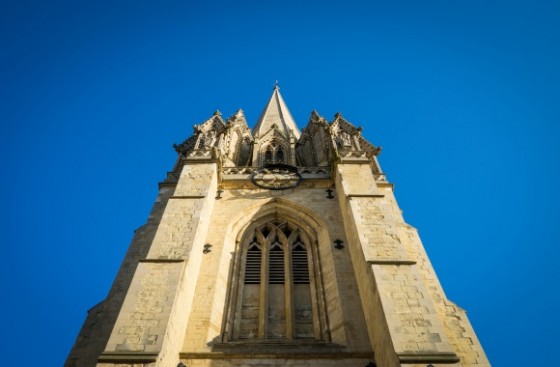
Professors say churches could become targets of political pressure, backed by donations
In the wake of the IRS’s recent decision to allow churches to endorse political candidates, some scholars are raising questions and concerns about possible unintended consequences.
“I like the idea of such an exception and I’d be in support of it as a matter of religious freedom but I worry about some of the ways it will play out on the ground,” Lloyd Mayer, a law professor at the University of Notre Dame, told The College Fix.
The Johnson Amendment states that tax-exempt charities, including churches and other religious organizations, cannot “participate in, or intervene in … any political campaign on behalf of … any candidate for public office.”
However, in early July, the IRS issued a decision exempting churches, Politico reports. The change is connected to an evangelical Christian group’s lawsuit alleging the amendment infringes on its religious freedom.
The IRS decision states, “When a house of worship in good faith speaks to its congregation, through its customary channels of communication on matters of faith in connection with religious services, concerning electoral politics viewed through the lens of religious faith, it neither ‘participate[s]’ nor ‘intervene[s]’ in a ‘political campaign,’ within the ordinary meaning of those words,” according to FOX 13.
 Professor Mayer (pictured) told The Fix in a recent phone interview that changing the statute is Congress’s job.
“It violates separation of powers to have the executive branch create an exception to the statute that Congress has not put in place but that Congress has rejected in recent years multiple times,” he said.
Several prominent evangelical organizations, including Alliance Defending Freedom and Focus on the Family, are calling on Congress to enact such a change through the Free Speech Fairness Act.
But Mayer and other legal scholars have additional concerns.
“I think the exception creates some dangers for churches and more importantly, it creates a very unstable situation that churches can’t rely on legally,” he told The Fix.
“Most churches that have felt strongly about getting involved in supporting candidates are already doing it,” he told The Fix. What’s more, “the IRS was not really enforcing the Johnson Amendment against churches [and] there were legal groups willing to step up and defend them.”
“What may happen though is churches that were more reluctant to be direct in what they said about candidates will be blunter about their support,” he said.
Additionally, Mayer predicted that church leaders who avoided politics for fear of alienating people may now face pressure to speak.
Regardless of what churches decide, he said, “The big danger is that churches will become targeted by candidates and campaigns and even the members of the congregation, pressured to line up with the political candidate one way or the other.”
 Philip Hackney, law professor at the University of Pittsburgh, also voiced concerns with the IRS decision in an interview with The Fix on July 22.
“I think it’s problematic for our democratic order to allow this and I actually think it’s problematic for the churches as well to become an attractive place for dollars, for politics to go, and that has a real potential to corrupt the mission of the church,” Hackney (pictured) said over the phone.
“There’s a reasonable argument to be made that where a religious leader…is speaking in a religious context [to] their people who are there to worship, that the Religious Freedom Restoration Act…makes it such that the IRS should not enforce the law in that particular context,” he said.
However, Hackney expressed concern that churches will become targets of political operatives and donations.
“So it kind of makes churches a political activity tax shelter and a political activity disclosure shelter as well because there’s no disclosure regarding who’s making those contributions to those organizations,” he told The Fix.
When asked if he thinks any fish will bite the IRS’s decision, Hackney said, “There are a lot of churches that won’t. A lot of churches think it’s a bad thing to do. That said, there’s definitely been a series of churches that have long been interested in intervening in campaigns and have been quite frustrated at the Johnson Amendment.”
“In terms of whether a church should or should not, I think that’s really a matter for the church to say,” Hackney said.
Recent polling by the Public Religion Research Institute found strong public opposition to churches endorsing candidates while being tax exempt.
A July 8 article by the institute in response to the IRS decision stated, “Republicans, white evangelical Protestants, and Christian nationalism Adherents and Sympathizers are the most likely to favor endorsing political candidates in places of worship.”
More widely, the researchers concluded that, “These results suggest a general national consensus favoring the separation of religion and the state.”
A PRRI spokesperson declined to comment when contacted by The Fix, but pointed to survey data from 2023 that found “three in four Americans (75%) opposed the idea that churches and places of worship should be allowed to endorse political candidates while retaining their tax-exempt status, similar to 2017, when 71% were in opposition.”
Meanwhile, Professor Mayer advised caution about the IRS decision because it came from “a filing in a single court case.”
“Technically, that filing, even if accepted by the court which it has not yet done, only binds the parties to that case,” he told The Fix. This means “it doesn’t give an exception for any other church legally.”
Because the exemption is not Congressionally-approved, it also could be changed by a future presidential administration, Mayer said.
Another danger lies in the complexity of election law.
“If churches get involved in supporting candidates, they have to be aware, …they also run into election law issues under both federal and state election law …Violations of federal election law and state elections are criminal violations so a pastor or church that knowingly breaches election law could be looking at civil and potentially criminal sanctions,” Mayer said.
“The lesson we learn from history of interaction of churches and government is that when they get too close, the church tends to lose,” he said.
MORE: Case against Trump admin over international students’ rights draws debate
IMAGE CAPTION AND CREDIT: A church in Oxford in the summer sun; Oliver Huitson/Shutterstock, University of Notre Dame, University of Pittsburgh