BUZZ
BUZZ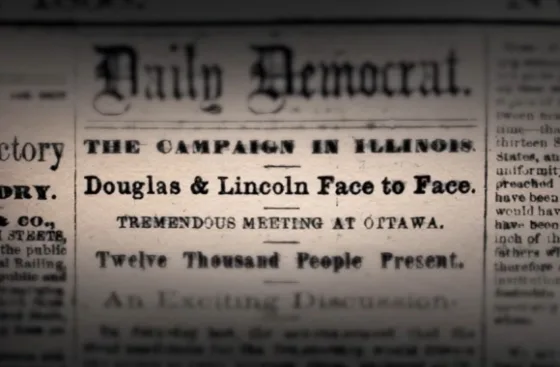
A black student was recently upset by a lecture on the Lincoln-Douglas debates, saying she felt the professor presented the topic far too objectively and arguing “it can’t just simply be debated.”
The lecture took place in a “Foundations of American Civic Life” course in April within the School of Civic Life and Leadership at the University of North Carolina Chapel Hill.
The News & Observer recently published a lengthy feature on the school, which has faced controversy, and embedded the anecdote in the nearly 2,000-word article.
The student in question, a black female freshman, told the newspaper she felt exasperated by the classroom experience.
The Observer reported: “The topic of the class was the 1858 Abraham Lincoln and Stephen Douglas debates. The debates centered around whether slavery should be permitted in new states joining the union from western territories. Professor Dan DiSalvo walked the students through each man’s argument, giving equal credence and sober analysis to each. The perpetuation of slavery in new territories was given equal weight as an idea.”
But the student said she was upset because “DiSalvo spent extensive time reconstructing the logic and political appeal of men like Douglas in a neutral, and at times, even sympathetic, tone, without putting the moral horror of slavery front and center.”
“I don’t like the way that we’re talking about these topics and debating views on slavery in the United States,” the student told the Observer. “In my experience going to a predominantly white institution, I already feel like I’m sometimes at a disadvantage. Talking about these things in a way that is framed to be debatable can be uncomfortable.”
She said she wanted a more sympathetic professor, “someone who is more in touch with the struggles and effects of slavery, someone who is more aware and empathetic toward how hard that period of time was and how complex it is. It can’t just simply be debated.”
Responding to the argument, Mitch Kokai in the Carolina Journal wrote it’s an example of why the School of Civic Life and Leadership is needed in the first place.
Kokai wrote that while the student wanted “someone more empathetic,” the reality is the lecture presented the debates exactly how they took place in 1858.
“Lincoln and Douglas competed for votes in a single US Senate race in Illinois. Yet those debates paved the way for Lincoln’s successful presidential campaign, the subsequent Civil War, and the eventual end of American slavery,” wrote Kokai, senior political analyst for the John Locke Foundation.
“As DiSalvo told the N&O in an email, the debates ‘cannot be understood without analyzing both Douglas’s and Lincoln’s positions,’ which ‘force students to confront whether a majority can legitimize what Lincoln regarded as a profound moral wrong.'”
Kokai wrote that students “must be willing to engage unfamiliar and even disturbing viewpoints, including those that fail to comply with ‘our era’s sensibilities,’ to appreciate the importance and relevance of events that dominated American political discourse 168 years ago.”
He noted that “continuing success of the American ‘experiment in self-government’ depends on current and future generations keeping open minds. History’s lessons will help them preserve and advance our civic life.”
MORE: Auburn counseling course teaches ‘reverse racism’ doesn’t exist