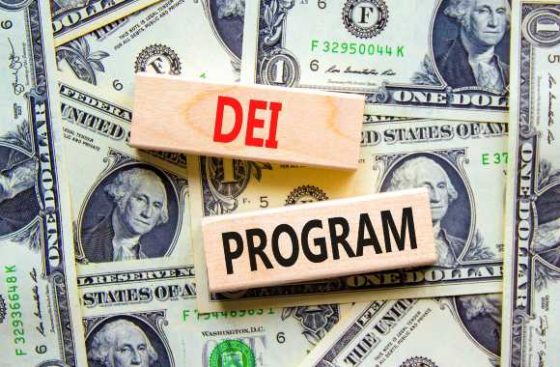
Fixing higher education’s myopia will take more than just cuts to DEI grants and programs, two scholars argued this week at City Journal.
To restore the focus on open inquiry and academic debate, Open Therapy Institute founder Andrew Hartz and University of Buckingham Professor Eric Kaufmann urged the Trump administration to devote funding to heterodox research.
Even half a percent would do, according to Hartz, a clinical psychologist, and Kaufmann, a sociologist.
“Remedying this problem would require no extra government funding but only a reprioritization of which studies get funded,” they wrote.
“The National Institutes of Health (NIH) allocated $35.3 billion in total grants in 2025 … Significant bias could be corrected if just one-half of 1 percent of the NIH’s budget were directed toward heterodox research,” Hartz and Kaufmann wrote:
The problem is extensive. From 1990 to 2020, the share of National Science Foundation grants with abstracts that invoke DEI-related terms rose more than tenfold, from under 3 percent to over 30 percent. In psychology, liberals went from outnumbering conservatives about four to one before the 1990s to roughly 14 to one today. When Manhattan Institute senior fellow James Manzi used AI to classify some 600,000 social-science abstracts from 1960 to 2024, he found that roughly 90 percent of politically relevant research leaned left. In the top four sociology journals, the share of papers focusing on inequality has risen to about 75 percent, on average.
Just as certain left-leaning topics are over-chronicled, other topics get neglected. Psychologists have built a vast literature on biases against women, but there’s virtually nothing on bias against men—though men die by suicide nearly four times as often, live roughly five years fewer, and account for nine in ten workplace deaths. Researchers have studied “right-wing” authoritarianism for nearly a century, but there’s much less mention of the left-wing form. Whole literatures are built on the psychological problems of conservatives, leaving the other side almost completely unexplored. …
A host of questions go unexplored: What specific ideological biases exist in film or literature? What are the outcomes for adolescents with gender dysphoria who received medical interventions versus those who didn’t? How does anti-religious bias affect social dynamics in civil society institutions? And many others.
Read the full column at City Journal.