FEATURED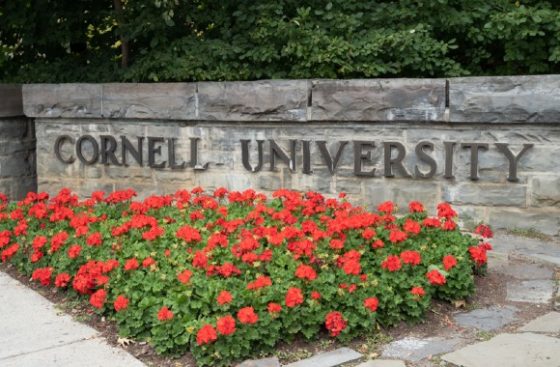
Course undermines integrity of academia, critic says
Cornell University is currently offering a course that explores the “nightlife” of “queer communities of color.”
The instructor and designer of “Nightlife,” Karen Jaime, told The College Fix that students will study “communities or groups of people who self-identify as both people of color and as queer.”
“For purposes of my course, I task students with critically examining kinship networks forged by queer communities of color who both work in nightlife and who socialize in nightlife venues,” she said.
She also told The Fix the course has “a robust enrollment every year” and she credits part of the course’s popularity to its description on the university’s website.
According to its description, the course explores “the ways in which nightlife demonstrates the queer world-making potential that exists beyond the normative 9-5 capitalist model of production.”
“Through close readings and sustained cultural analysis, students will acquire a critical understanding of the potentiality of spaces, places, and geographies codified as after hours in the development of subcultures, alternative sexualities, and emerging performance practices,” the description states.
The course is cross-listed with multiple departments, including the Society for Humanities and the Feminist, Gender & Sexuality Studies Program.
But not everyone agrees with the course’s approach.
Ethics and Public Policy Center fellow Nathanael Blake told The Fix the course undermines the integrity of academia “by promoting navel-gazing presentism.”
EPPC applies “Jewish and Christian traditions to contemporary questions of law, culture, and politics,” according to its website.
“This course and others show that this department is thoroughly dedicated to varieties of critical theory, which are ultimately antithetical to the truth-seeking and truth-teaching missions of higher education,” Blake said.
“It will encourage them to dwell upon the trivial, and to try to make the banal seem profound by burying it under layers of jargon,” he said.
He added that universities will inevitably promote certain viewpoints while discrediting others. However, there needs to be “appropriate space … for good-faith exploration and debate in pursuit of the good, true and beautiful.”
Asked about concerns that the course imposes an ideological agenda, Professor Jaime said, “I do not instruct students on what to think but rather assist them in acquiring critical methodological tools for the completion of research projects related to the course.”
Cornell University has offered the course each spring since 2017, making 2026 the tenth year it has been available to students attending the private, Ivy League research university.
The Fix reached out to Cornell University’s media relations for comment but did not receive a reply.
Students at Cornell can also study “sexual identity … queer theory, the body, healthism, reproductive justice, and human rights” in the school’s “Sociology of Sexualities” course this semester.
“We will develop an understanding of sexuality as a socially constructed system of stratification that is shaped by race, gender, class, and ability,” the description states.
These courses are among numerous offerings at universities nationwide that focus on “queerness.”
Boston University offers a “Food, Gender, and Sexuality” course that helps students explore the concept of “queer food,” The Fix previously reported.
Students might consider “how [their] food choice is representing [their] gender identity,” the professor said in an explanatory video produced by Boston U.
A class offered by Yale University last year asked students to consider “whether science can be made queer.”
Readings included “Scientific Racism and the Emergence of the Homosexual Body,” “Transvestism, Transsexualism, and Homosexuality,” and “How to Bring Your Kids Up Gay.”