
 FEATURED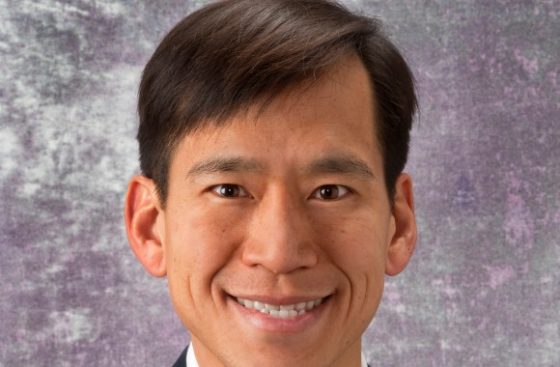
Third Circuit Court of Appeals reinstated medical professor’s case after judge threw out defamation claims
A federal appeals court reinstated a medical professor’s defamation and civil rights retaliation case against the University of Pittsburgh last week over an article he wrote criticizing affirmative action.
“I have devoted my career to caring for patients, training the next generation of physicians, and contributing to scholarship within my field. When I published this article, I was doing the same thing,” Dr. Norman Wang said in a statement after the ruling.
In its July 7 opinion, the Third Circuit Court of Appeals decided that a federal judge erred in dismissing most of the doctor’s claims last year. The ruling means his lawsuit can move forward.
The medical professor expressed relief at the court’s decision, saying it “strongly supported my version of the events and rejected the narratives and excuses from the defendants.”
“No professor should be demoted for raising honest questions in a peer-reviewed academic journal,” Wang said.
Wang is represented by the Center for Individual Rights, a legal organization that works to restore individual rights essential for a free and flourishing society. The center referred The College Fix to the professor’s statement when contacted for comment this week.
The center described the Third Circuit ruling as a huge step for “scholars who are punished for taking positions that oppose the race-preference and DEI orthodoxy within academia,” according to its news release.
In 2020, Wang published an article in the Journal of American Heart Association arguing affirmative action harmed the medical academy, The Fix previously reported.
Prior to his article, he worked in the university’s medical center for nearly two decades. He was also the director for the cardiology fellowship program where he helped select and train fellows.
According to the appeals court ruling, four months after his article was published, a doctor filed a complaint against Wang on July 29, 2020.
Within a week, Wang was fired from his director position, had his article retracted, and faced a social media pressure campaign where some of his colleagues labeled him as a racist, according to court documents. Wang was also banned from any role teaching fellows, residents, or medical students.
Dr. Mark Gladwin, then chair of the medical school’s Department of Medicine, also sent out a hospital-wide email denouncing his article, according to the case. Gladwin is now the dean for the University of Maryland’s School of Medicine.
Wang sued later that year, alleging that he was defamed and had his First Amendment rights violated. Three years later, Wang added civil rights retaliation claims, all of which a federal district court rejected last year, the University Times reported.
Delivering the opinion of the court last week, Third Circuit Judge Stephanos Bibas revived most of Wang’s claims.
“A culture that cancels instead of counsels sacrifices persuasion on the altar of power. In doing so, it forgets that the remedy for disfavored speech is more speech, not coerced silence,” Bibas wrote.
The appeals court ruled that Wang’s defamation claims against his university, the hospital system, its physician practice, the American Heart Association, and fellow colleagues Dr. Kathryn Berlacher, and Dr. Samir Saba may proceed.
According to the opinion, Berlacher and Saba allegedly launched an online social media campaign against Wang. Berlacher used the hospital’s Cardiology Department Twitter account and said Wang used “misquotes, false interpretations, and racist thinking.”
The court ruled that Berlacher’s tweets amounted to more of a “hit job than academic disagreement.”
The American Heart Association at the time also issued a news release accusing Wang’s article of “misquotes,” in which Judge Bibas said it “gave no examples.”
The court concluded Wang is able to plead malice allegations against Berlacher, Saba, and the association. Because employers may be liable for defamatory statements made by employees within the scope of their employment, the court ruled that his defamation claims against his university and medical school also may move forward.
His Title VI civil rights retaliation claims against the hospital system also may proceed, according to the ruling.
Initially, the lower court dismissed the allegations, ruling that the doctor failed to prove the primary objective of the hospital’s federal funds was to provide employment.
However, the appeals court ruled that residency programs straddle between “education and employment” and Wang’s claims against the hospital may be heard.
The appeals court did agree with the lower court on dismissing his civil rights allegations against the university, determining that Wang failed to prove the university’s primary purpose was to fund his employment.
It also refused to resurrect Wang’s First Amendment retaliation claims. The appeals court agreed with the District Court’s conclusion that there was a lack of state action against Wang.
The Fix contacted Gladwin, Saba, and the university and hospital media relations offices to ask about the ruling. No one responded to emails July 8 or 9.

