
 BUZZ
BUZZ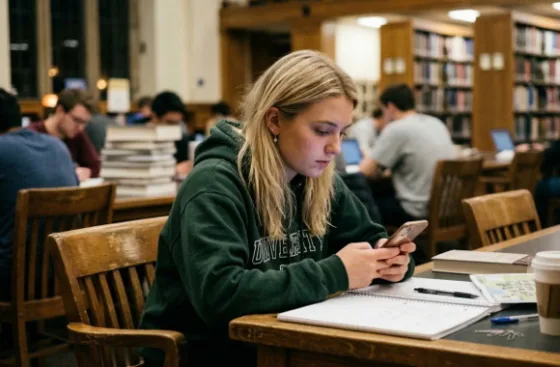
Another professor has joined the chorus of scholars warning that students’ reading skills and attention spans are abysmal.
Writing in the Chronicle of Higher Education, literature Professor Tyler Jagt told of an assignment for his rhetoric and writing class that asked students to read a 20-page paper. Not one student finished the paper.
“It was the same length I had assigned for five years and the same length I had read without complaint as an undergraduate a decade ago,” wrote Jagt, who has taught literature and critical writing at Mercer University, James Madison University, and Wake Forest University.
“When I asked why, a student answered honestly: It was too long, and she kept losing track of what the paper was about. This was not a remedial class: These were students who had cleared the admissions process and written essays good enough to get them here. Yet a routine academic reading assignment had defeated them.”
Jagt is not alone in sounding the alarm on students’ lack of reading skills and attention spans today. As The College Fix has previously reported, some college students struggle to read even a handful of sentences. Some Ivy League students can’t finish an entire book. In fact, some students do not have enough of an attention span to finish a movie anymore.
Jagt, in his piece in the Chronicle, cited three main problems contributing to the situation: the ramifications of smart phones, AI, and common core.
“My students from districts that protected sustained reading through small class sizes, strict phone policies, and faculty who refused to teach to the test all arrive with their attention relatively intact,” he wrote. “My students from districts that surrendered to devices and standardized testing arrive cognitively winded.”
“A democracy that requires a literate electorate is now training one fraction of that electorate out of literacy while marketing to the other a “deep work” lifestyle as a luxury good. The students who cannot read a 20-page article today are the voters who will not be able to read a bill, or the jurors who cannot follow a closing argument, tomorrow.”
MORE: Even Ivy League students are struggling to read whole novels

