BUZZ
BUZZ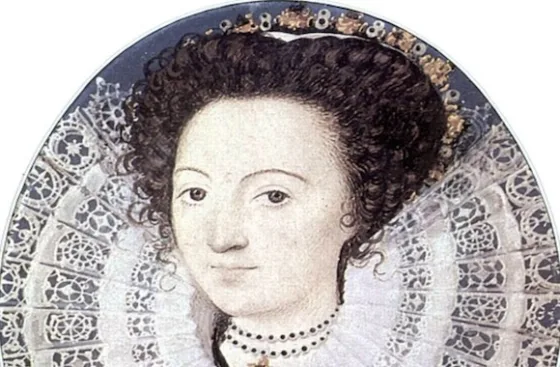
‘[E]rasure of identities in the racialised and patriarchal narration of history reinforces prescribed roles and power relations in society’
A new book by a feminist historian claims William Shakespeare actually was a black Jewish woman from North Africa.
Irene Coslet, who has an MSc in Media, Communication and Development from the London School of Economics and “has devoted over two decades to the study and practice of gender equality across multiple countries, focusing on gender and development and gender-based violence prevention,” wrote about this theory in a Jan. 16 LSE blog post.
Coslet’s upcoming book “The Real Shakespeare: Emilia Bassano Willoughby” asserts the real playwright — Bassano — was “of Moroccan descent,” “covertly Jewish,” and the daughter of a Venetian Court musician.

Coslet’s claims aren’t novel; Shakespeare scholar John Hudson first proposed the theory of Shakespeare’s alleged real identity years ago.
According to a 2010 Globe and Mail article, Hudson claimed Bassano “wrote the sonnets about herself” and used “Shakespeare” as a “front” to “hide her identity.”
Hudson noted Shakepeare’s plays contain musical references “three times more than other typical plays of the period,” and these (supposedly) point to Bassano’s musician relatives.
Coslet argues the topic of Shakespeare’s true identity is best approached via a “Critical Theory and Feminist Theory” perspective:
[A] central component of my framework is the concept of the ‘Subaltern’, developed by Gayatri Chakravorty Spivak. History, Spivak argued, is narrated by the hegemonic West, and in particular by white men as the ‘Subject’. The ‘Subaltern’ is silenced: female and black identities are suppressed and constructed as ‘the Other’. Depicting female and black identities as the Other, Spivak argued, justifies and perpetrates the domination of the white male Subject. This erasure of identities in the racialised and patriarchal narration of history reinforces prescribed roles and power relations in society.
According to The Telegraph, doubts about whether Shakespeare actually penned his works originate from the fact he had “little formal education,” yet somehow “was able to ascend to the level of a literary genius with an enormous breadth of knowledge.”
Coslet told The Telegraph that if Shakespeare “was a female of colour, this would draw attention to issues of peace and justice in society.” She added “What if women had a pivotal role and a civilising impact in history, but they have been silenced, belittled and erased from the dominant narrative?”
While Bassano was relatively light-skinned, Coslet’s book argues she “may have […] deliberately lightened” it as at the time in Elizabethan England, “light skin was considered beautiful.”
Coslet concedes “we do not have any detail” on just how Shakespeare “exploited Bassano’s position as a woman to plagiarise her work,” but says “it is reasonable to assume” that he “took advantage” of similarities between his name and Bassano’s pseudonym.
Coslet ultimately tags “historiographical misogyny” and “historiographical racism” as the culprits for historians not giving Bassano proper credit for her contributions.
One critic, University of Birmingham Shakespeare Institute Director Kate McLuskie, said the Bassano “theory” is “entirely circumstantial, or depends on quasi-allegorical readings of the texts.”
“It is elegant and ingenious, but has no documentary foundation,” McLuskie said. “A beautiful story that is not less beautiful for being entirely false.”
MORE: UCLA grad students create gay, Latino Shakespeare play ‘Romeo and Julio’
MORE: ‘Cancel Shakespeare’ course offered by premodern critical race studies professor