
 FEATURED
Free speech group says faculty must tread carefully on policing speech
Florida State University removed a policy demanding students avoid allegedly offensive comments after The College Fix started asking questions.
The College Fix asked the university to clarify a syllabus policy in a class called “Teaching English in College.”
“Everyone is expected to treat each other with respect and work in the spirit of cooperation when asked to contribute to discussions, workshops, and small group work,” the syllabus stated. “Disagreements are perfectly acceptable, and even encouraged.”
However, certain language would be policed, the instructors for the summer course said.
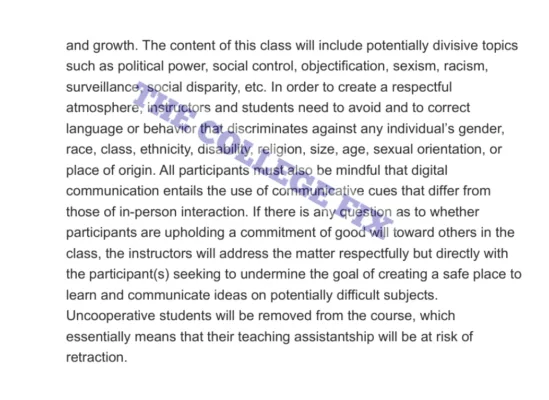
“The content of this class will include potentially divisive topics such as political power, social control, objectification, sexism, racism, surveillance, social disparity, etc,” the instructors wrote.
“In order to create a respectful atmosphere, instructors and students need to avoid and to correct language or behavior that discriminates against any individual’s gender, race, class, ethnicity, disability, religion, size, age, sexual orientation, or place of origin,” the syllabus stated.
The original syllabus also stated “uncooperative students [would] be removed from the course, which essentially means that their teaching assistantship [would] be at risk of retraction.”
University spokeswoman Amy Farnum-Patronis told The College Fix via email the policy has been removed.
“[A]s previously written, the course policy did not fully reflect the process provided to all students when there are behaviors that may violate student conduct codes,” she said.
One of the course instructors, Rhea Lathan, did not respond to an emailed request for comment sent in the past several weeks.
The Foundation for Individual Rights and Expression took a mixed approach to the issue, saying that restrictions on student speech could be justified in some situations.
FIRE’s Director of Policy Reform, Laura Beltz, told The Fix “academic freedom affords faculty members a great degree of deference in how they govern their classroom” even if this includes “actions that typically run counter to free speech principles in other contexts.”
For example, Beltz described how a student “levying ad hominem attacks at other students during class and preventing the class from reaching the educational objectives of [a] discussion” could reasonably be disciplined by the instructor.
Beltz’s main free speech concern over the Civil Interaction section of the original syllabus is its potential to be unevenly applied based on viewpoint.
“Faculty certainly can’t discriminate against students, so to the extent a rule like this is applied to restrict some viewpoints but not others — not to shape class discussion and meet educational goals but instead to only shut down or grade speech based on viewpoint — that would be problematic,” she said.
Recognizing the risk of viewpoint discrimination, “FIRE recommends that colleges train faculty on free speech principles and apply policies in a viewpoint-neutral manner,” Beltz said.
The free speech group gives Florida State a high ranking for supporting expression. It is ranked 17 out of 257 schools in the latest “College Free Speech Rankings.” However, it still has a “C” grade for its policies.

