
 FEATURED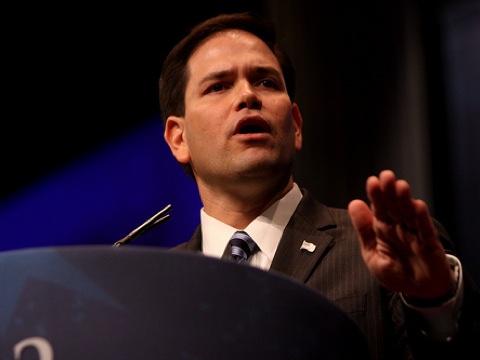
Key Takeaways
- The Foundation for Individual Rights and Expression alleges federal immigration law allows the secretary of state to unfairly penalize international students for protected speech.
- The lawsuit challenges provisions in the Immigration and Nationality Act that allow Rubio to initiate deportation for speech deemed to compromise national security.
- A Washington University in St. Louis law professor believes freedom of expression is a fundamental human right for citizens and noncitizens alike, and a crucial aspect of a democratic society.
Amid an on-going debate about noncitizens’ right to free speech, the Foundation for Individual Rights and Expression has sued Secretary of State Marco Rubio and the Trump administration for allegedly violating international students’ rights.
“The goal of the lawsuit is to establish that the First Amendment prohibits deporting and revoking the visas of lawfully present noncitizens for engaging in protected speech,” Conor Fitzpatrick, supervising senior attorney for FIRE, told The College Fix in a recent email.
The lawsuit, filed in August, challenges the constitutionality of two statutory provisions in the Immigration and Nationality Act.
One gives the secretary of state the power to “initiate deportation proceedings against any noncitizen for protected speech if the secretary ‘personally determines’ the speech ‘compromises a compelling foreign policy interest,’” according to the campus free speech organization.
The other provision being challenged lets Rubio revoke noncitizens’ visas “’at any time’ for any reason,” according to the lawsuit.
The case alleges these provisions are having a muffling effect on speech for foreign students.
Fitzpatrick told The Fix, “Lawfully present noncitizens on college campuses should not have to fear that voicing the ‘wrong’ opinion in a class discussion, term paper, or in the student newspaper could result in their deportation.”
He said the U.S. Supreme Court case Bridges v. Wixon established that noncitizens are entitled to freedom of speech and of the press. He said the 1945 case did not distinguish between lawfully present noncitizens and illegal immigrants.
FIRE’s lawsuit is “asserting First Amendment protections for lawfully present noncitizens,” he said.
“There are narrow, statutory distinctions between citizens and noncitizens in campaign finance (noncitizens, generally speaking, cannot contribute to election campaigns). But those are not pertinent nor at issue in this case,” he said.
“A college education is about having your beliefs challenged, and challenging others’ beliefs. No college student, citizen or not, is well-served by having to self-censor their true beliefs, or engaging in discussions with classmates who are self-censoring out of fear of government retribution,” he told The Fix.
Fitzpatrick said FIRE’s case is different than other similar lawsuits, like the one The Fix covered recently involving the American Association of University Professors and other university associations.
That case alleges the Trump administration violated foreign students’ and faculty members’ rights when it detained or deported them or revoked their green cards for their involvement in pro-Palestinian activism.
Fitzpatrick said FIRE’s lawsuit directly challenges the constitutionality of the statutes, whereas the AAUP case is “challenging the ‘policy’ of the administration of targeting pro-Palestinian speech.”
When contacted by email about the lawsuit, the Department of State’s media relations office told The Fix that it does “not comment on ongoing or pending litigation.”
In August, a department official announced that the government revoked between 200 and 300 students’ visas due to “engaging in terrorist activities” or “having certain links to terrorist organizations,” Reuters reports.
Earlier this year, the government detained former Columbia University student Mahmoud Khalil and Tufts University student Rumeysa Ozturk for leading anti-Israel protests on their campuses. In an interview with CNN over the summer, Khalil refused to say if he condemns Hamas, a terrorist organization.
In recent months, the Trump administration’s immigration actions, coupled with the tension between free speech and national security, regarding foreign students and faculty have drawn debate among legal scholars, including conservatives and libertarians.
A law professor at Washington University in St. Louis described the overall situation of noncitizens’ rights as “complicated and contested.”
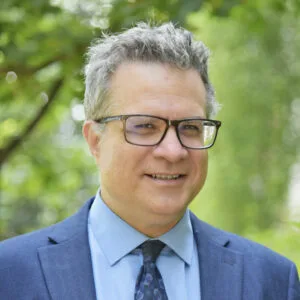
Professor Gregory Magarian, who specializes in constitutional law and free expression, told The Fix that he believes deporting noncitizen students for “political statements or activities” is unconstitutional – “both as a matter of substantive First Amendment law and as a matter of due process.”
“The state of constitutional doctrine about non-citizens’ rights is complicated and contested. However, I am not aware of any doctrine that would cause the First Amendment rights of a non-citizen present in the United States to turn on whether or not they have legal permission to be in the country,” he said in a recent email.
Magarian told The Fix there are three key reasons why he believes noncitizens should have the same right to free speech as citizens.
He said the freedom of expression is a fundamental human right, and that right “should not depend anywhere on one’s citizenship status.”
“Audiences as well as speakers are constitutionally relevant beneficiaries of a system of freedom of expression,” he said.
Additionally, “even if non-citizens did not have a valid direct claim of First Amendment rights (which, again, I believe they do), their expressive freedom should still be protected for the sake of citizens’ interest in hearing what they have to say,” Magarian said.
And finally, he said: “One major justification for First Amendment rights is to prevent government abuses of power. Governments can abuse power by silencing non-citizens as surely as they can by silencing citizens.”

