
 BUZZ
BUZZ
One prof claims GOP has shifted ‘sharply to the right’ while Dems’ tilt to far-left is slower.
This past week a trio of academics at George Washington University discussed how “rapid” changes in U.S. domestic and foreign policy are, according to the student paper, “harming” the country’s reputation abroad.
The Hatchet reports that at the non-partisan BridgeGW event, Professor Sina Azodi (Middle East politics), Dean Kimberly Morgan (political science/international affairs) and James Evans (history) agreed that “widening ideological splits” between Republicans and Democrats “have fueled abrupt shifts in foreign strategy.”
Morgan, who researches “the politics of social policy in the United States and Western Europe, with particular interests in immigration and social welfare,” claimed the GOP has moved “sharply to the right” while Democrats’ shift to the left has been slower.
Morgan said “underpinnings” of the post-World War II world — organizations such as NATO, the United Nations and the European Union — are being taken to task by MAGA Republicans and European far-right parties. President Trump has “intensified” such efforts by “sidelining” career civil servants and cutting programs like USAID.
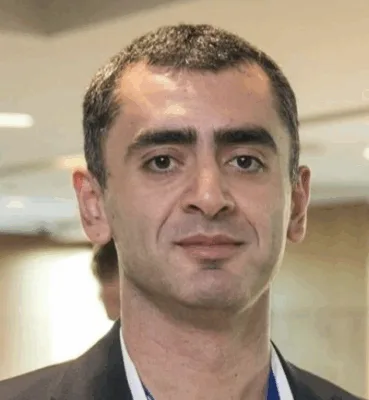
Azodi (pictured) added that Trump’s “unpredictability” has led to European distrust, something that began in his first administration. He also referenced former Joints Chiefs of Staff Chairman Mark Milley contacting Chinese officials to assuage their fears of a possible [Trump-initiated] attack.
“If you don’t know who you’re dealing with, you have a president that his chairman of the Joint Chiefs of Staff has to call his Chinese counterpart and say, ‘Hey, guess what? We’re not planning to attack you,’ then it means that you’re not in a good position,” Azodi said.
Regarding China, Evans said it is one area of agreement between the contemporary GOP and Democrats, as lawmakers want to “learn and engage with the country.”
“[T]he U.S.-China relationship is really several billion very small connections between lots of individual people, including everybody in this room,” the Harvard PhD candidate said. “When you think about it very much in individual terms it becomes much less overwhelming.”
Evans also noted social media has made it a lot tougher for scholars to discuss the “complexities” of foreign policy as more people see it as a “zero sum” game.
“What happened to all of these individuals who five or 10 years ago were very smart and thoughtful about their answers, and now we’re seeing them on the news giving these sound bites that are really sort of undermining the U.S.’s ability to conduct policy?” he asked.
MORE: Hillary Clinton teaches foreign policy ‘decision-making’ course at Columbia

