
 FEATURED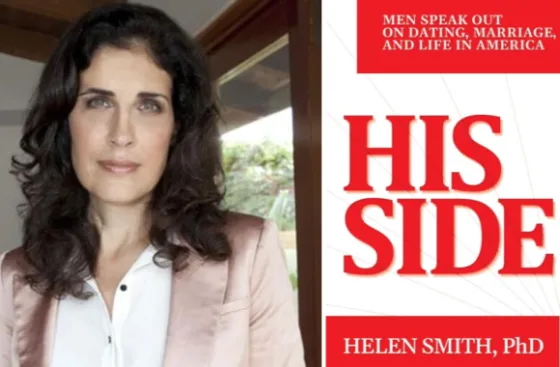
OPINION
Helen Smith, a licensed psychologist with over 20 years in the field with an emphasis in clinical and forensic psychology, has published a new book: “His Side: Men Speak Out on Dating, Marriage, and Life in America.”
Released in February, it offers a follow-up to her book that came out in 2013, ” Men on Strike.”
No longer is it a “man’s world,” and Smith weaves together dozens of interviews of men from all ages and walks — their thoughts, struggles, concerns and experiences — to paint a picture of what it’s like for them in today’s landscape that casts men as misogynists and portrays masculinity as toxic and something to be shunned.
In an interview this month with The College Fix, Dr. Smith spoke on how the book’s themes resonate in today’s society, and how it’s helping tell a side of the story higher education, mainstream media and popular culture rarely platform.
(This interview has been edited for length and clarity)
How has the reception been so far?
As far as the men reading it, the feedback I’ve gotten has been really good. The men who read it, I think they get a lot out of it. They see themselves or someone they know in the stories and relate to some of the themes the book outlined.
What I’ve been surprised by mostly is many women are reading it. I had one woman tell me she was getting it for her book club. Another woman said she read the book to “figure out men and help me understand my man.” I think there’s a lot more interest today in men’s issues than when I did “Men on Strike.”
Sydney Sweeney just had an article about a new movie she’s in, and she was even talking about how men in our society have to walk on tiptoes and can’t be open about anything. And I think a lot of women don’t really like this either.
Do you think it’s accurate to describe this book as debunking the concept of male privilege that’s so often touted at colleges and universities and by feminists today?
Yes. One of the problems people don’t realize is, in some contexts, women have privilege.
Certainly when it comes to colleges, men definitely are on the outside. I’ve always had mostly men in my practice, and those men would tell me, especially the college-aged men, about the things they were dealing with, that they couldn’t speak up in class. That they are afraid to speak up. Today’s statistics show fewer and fewer men go to college, and fewer men want to go to college. They deserve to be in a place that isn’t hostile to them.
Title IX was passed in 1972, but it’s progressively gotten worse. It was originally a good idea, that people don’t discriminate based on sex, but now it’s become: Women first, women only. Women are the ones getting scholarships. It used to be: “Faculty is all men.” That’s actually not true. Studies have shown that “[W}hen all else is equal between highly qualified candidates for entry-level faculty positions, professors in academic science overwhelmingly prefer women over men.” (Study is here) It’s very difficult now as a white man, particularly in fields like English and psychology, to be hired. Many of my interviewees and readers have confirmed this. So many men have quit going into those fields. Helen Andrews’ work calls it “the great feminization.”
So you have to wonder, where do men fit in? And more importantly, how do we have an equal and a welcoming place for men to be able to learn and to be able to reach the goals that a free society should strive for?
You wrote in your book that most men have been indoctrinated since birth to view their lives and American culture without a focus on real masculinity, but through the lens of toxic masculinity or no masculinity at all. What did you learn about what men face and how they can survive in this paradigm?
Well, what I learned is that men ultimately feel that their sense of purpose in the world is not important.
It’s much harder today to find their sense of purpose because we have kind of this old contract saying men are supposed to still provide and do all of the things that we expected men to do before. But at the same time, women are supposed to have the jobs, they are supposed to almost act like men, they’re supposed to be the Girl Boss and everything. And I think the men in my book felt purposeless.
They felt that it was hard to be in a regular workplace, so many of them had to carefully choose their workplace. I had one guy in his twenties who is a perfusionist, which means you work a heart-lung machine, and he said that he purposely chose his job at a hospital where the surgeon was male and the people there were mostly men. He said when women were around, it often became a situation where it was more about if he offended somebody. With the men, he could just go in and be himself. He could make jokes or talk more openly and felt less likely to have somebody come after him. And I think a lot of men I interviewed felt like this.
At colleges, many of the men told me that women would just say insulting things in front of them. They think anybody who’s a man deserves it. So I think men are dealing with the hostility by opting out of certain environments and institutions and finding other ways. One man started his own health care business, another man became a personal trainer.
So it depended on the men as to what their survival mode would be, but I definitely found that most men adapted in some way.
You dedicate a chapter on your interviews with frat guys. What do we learn about how the deck is stacked against them living as public enemy number one: male and heterosexual?
They were very open and very honest. People think that these guys are unfeeling, uncaring, but many frats are actually very moralistic.
But they don’t express an opinion. They’re just looking to get through and not cause a scene because they know ultimately they’re probably not going to win that case. And I think the dating scene is very difficult because, particularly on a college campus, you’ve got mainly women who are liberal. There are some conservative female students, but the majority of the women and all the frat guys I talked to had liberal girlfriends. The young men that I talked to mainly saw these differences as a value problem. They didn’t want to look at it as politics, because I don’t think they wanted to believe that it could lead to bad outcome in their relationship.
Women don’t understand boundaries anymore. They’re told ‘You go girl,’ colleges tell them everything they do is right. Culture tells them they deserve everything. But I think that’s turning. And I see more and more men not putting up with it anymore.
What was one of the most important aspects of being male that you uncovered?
Men don’t have male role models anymore. They don’t have as many father figures, they also don’t see men working in the schools or in secondary education. And I think not seeing your gender represented when you’re young like that, that’s really hard on the men.
Most of the men said that one of the most important things for them was some male relationship, whether that be a stepdad or a father figure, or even a male teacher — somebody, somewhere along the way who had nurtured or helped them understand what it was to be a man and how to have your life’s purpose.
I think that it was very important to them, and I think that’s hard for some of these guys today without it.

