FEATURED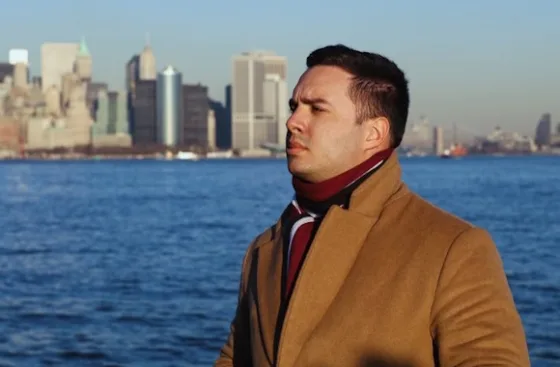
OPINION: ‘Venezuelans know authoritarianism. We lived it. We escaped it. And we will tell you that bureaucratic objections from far-off academics are not equivalent to daily repression.‘
In recent days, a number of American professors have rushed to condemn U.S. action against Nicolás Maduro, framing it as reckless, illegal, or imperialist.
Many of these critiques, captured in recent coverage by The College Fix, reflect a familiar trend in parts of academia: an instinct to criticize U.S. policy first and ask questions later, or in recent years, plainly criticize everything President Trump does.
I left Venezuela in January of 2019 to pursue an internship at the CATO institute in Washington D.C. Before my visit ended, colectivos gangs in Venezuela threatened me by telling my mother that if I came back, I would face the worst consequences for all the activism I did in my homeland. As a result, I was forced to exile in the United States.
As someone who understands Venezuela from the inside, both historically and personally, anti-interventionist arguments miss the human stakes, the security context, and the real moral responsibility of scholars to look beyond abstract theories toward the people who have suffered under dictatorship for years.
In a campus newsletter, a University of Colorado Boulder faculty member declared that America’s actions turn the U.S. into a “fascist authoritarian regime.” That claim is not just hyperbolic; it’s a distortion of both history and civics that deserves a direct response.
Calling the United States “fascist” because it undertook a mission to remove a dictator misses important distinctions between constitutional democracies and authoritarian regimes. Fascism historically refers to a totalitarian ideology rooted in suppression of dissent, elimination of civil liberties, and fusion of party and state power, seen most brutally in 20th-century Europe, not in the U.S. today, but definitely seen in Venezuela.
In reality, it is the Venezuelan regime that resembles a modern fascist order. Under the 27 years that Chavez and Maduro governed Venezuela, over 8 million Venezuelans left the country under increasingly desperate economic and social conditions, as well as the constant persecution from the regime. Both dictators were known for imposing the will of their party throughout the state onto the population, attacking individual liberties and handing control of key industry sectors to the corrupt military.
Weak comparisons to fascism are not just sweeping, they erase the lived reality of those actually living under censorship, political imprisonment, and state violence. Venezuelans know authoritarianism. We lived it. We escaped it. And we will tell you that bureaucratic objections from far-off academics are not equivalent to daily repression.
If anything, calling America “fascist” for doing something many Venezuelans themselves have begged for is to invert reality.
Behind much of the academic critique is a familiar legal argument: that U.S. intervention violates international law or norms of sovereignty. But these critiques often ignore one critical point: Maduro himself ceased to be a legitimate leader long before this operation.
His regime manipulated elections for decades, jailed political opponents, and oversaw an economic and humanitarian collapse that produced millions of refugees. When a regime no longer represents its own people, clinging to a narrow definition of sovereignty amounts to defending tyranny rather than protecting rights.
International law is not meant to serve as a refuge for dictators. It exists, at least in principle, to protect human dignity. Furthermore, it was the Chavez and Maduro regime that gave our resources and sovereignty to the Russian, Chinese, Cuban and Iranian regimes.
Some academics worry that the U.S. will “occupy” Venezuela or is motivated purely by oil. This misunderstands both the intent and the strategy at work. The ultimate long-term goal is transition back to Venezuelan self-rule — restoring institutions so that Venezuelans can govern themselves without fear, hunger, or repression.
Regarding oil: yes, Venezuela has the world’s largest reserves, and stable regional energy markets matter. But reducing U.S. interest to “oil greed” ignores a far larger context: Venezuela has been a sanctuary for trans-national criminal networks, a staging ground for alliances with foreign adversaries, and a source of regional instability. Those are serious national security concerns that the United States is in its own right to address as it deems pertinent.
The most striking thing about many of these academic critiques is what they leave out. Rarely do they center the voices of Venezuelans, the actual victims of this conflict. The mothers who cannot find insulin or food for their children, the families torn apart by forced migration, the citizens who watched their institutions crumble, the political prisoners being tortured on a daily basis. Venezuelans did not ask for academic debate over abstract norms. We asked for freedom.
At a moment like this, scholars should be asking themselves: Are we speaking for universal principles, or are we protecting comforts of ideology over the brutal realities of lived suffering?
If universities are to be spaces of moral and intellectual leadership, they must resist the easy fake moral highground of pithy slogans, like “U.S. fascism,” and instead engage honestly with history, law, and human consequence.
There is value in skepticism. There is value in questioning power. But there is also value in recognizing when action aligns with long-standing U.S. principles: defending human rights, supporting self-determination, and confronting criminalized state actors that endanger regional stability.
More than anything, Venezuelans want what most of the world takes for granted: freedom, dignity, and the chance to build a future without fear. We should judge policy not by how well it fits comfortable academic categories, but by how it responds to that profound human longing.
Andres Guilarte is a Venezuelan-born political and opinion research professional. After experiencing political persecution under the Chávez–Maduro regime, he moved to the United States, where he worked in public policy and advocacy roles before building a career in polling and analytics. He has also been a public speaker focused on raising awareness about authoritarianism and the risks of socialism and frequent political commentator in media. He now serves as vice president of opinion research at EyesOver US and Stratus Intelligence.