
 BUZZ
BUZZ
Penn professor: Invasion was a violation of Nicolás Maduro’s ‘personal and international rights’
The academic experts were out in force within hours of President Trump’s early Saturday military action in Venezuela to remove dictator Nicolás Maduro.
University of Michigan Law Professor Barbara “The Hunter Biden Laptop is Russia” McQuade told MS NOW that even though a grand jury had already indicted Maduro, the way Trump went about apprehending him was “off the rails.”
“The way they ordinarily would arrest somebody who is not living in the United States is through an extradition request,” McQuade said. The problem is Maduro’s arrest “violates the U.N. Charter,” and given the United States is a signatory to that charter, Trump’s violation of it thus becomes “a violation of the Constitution.”
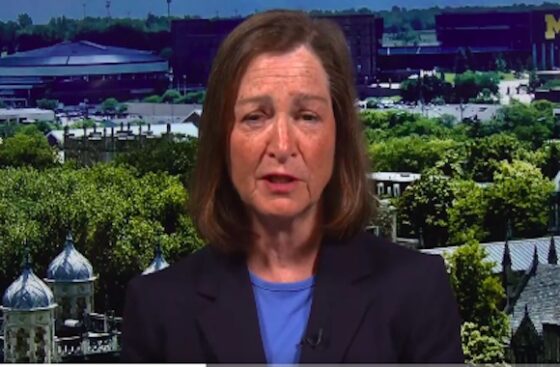
McQuade added the administration “kind of open[ed] the floodgates” for other countries to act similarly, and cited Russia possibly abducting Ukraine President Zelenskyy and/or China doing the same with Taiwan.
University of Massachusetts Boston Politics Professor Luis Jiménez agreed, saying Trump “will threaten people all the time, like Greenland for instance […] that means why doesn’t China invade Taiwan tomorrow?”
UC Davis Law Professor Raquel Adana, who according to her faculty page “has led multiple research projects and programs around gender violence, transitional justice, criminal justice, sustainable development, immigrant justice, and immigrant trauma,” wondered what the “real” motivation was behind the invasion, and claimed the president’s stated justifications were “not valid.”
While acknowledging Maduro was an “illegitimate leader” and “human rights abuser,” Adana said there likely would be “celebrations among some Venezuelans residing in the U.S.” She added the invasion never “should have been done unilaterally,” but noted the precedent of George H.W. Bush capturing Panamanian President Manuel Noriega in 1989.
University of Pennsylvania Law professor Claire Finkelstein told Al Jazeera she doesn’t think “there’s any basis under international law” for the U.S. action.
“Maduro has personal jurisdiction rights, so not only is it a violation of Venezuelan sovereignty […] it’s a violation of his personal, international rights,” she said.
Finkelstein, who in October chided President Trump for his “attempt to federalize the California National Guard,” added the invasion was “an act of war against Venezuela” as there was “no immediate threat” to the U.S.
Creighton University’s Michael Kelly said Maduro’s arrest violates international law as the U.S. is not technically “at war” with Venezuela.
University of British Columbia Political Science Professor Max Cameron claimed the invasion “is part of Trump’s vision for the western hemisphere,” essentially a continuation of the Monroe Doctrine. He implied that even Canada might not be safe from a future Trump endeavor in the Arctic region.
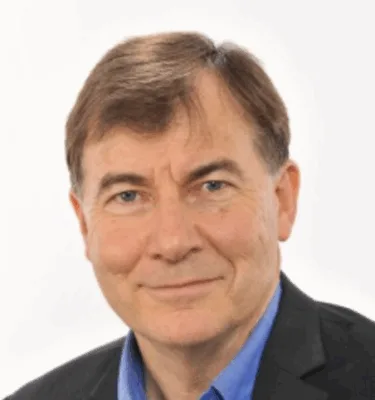
University of Otago Professor Robert Patman referred to the Venezuela action as a “direct challenge” to New Zealand and other nations that believe “international relations should be based on rules, procedures and laws.”
Patman said “I think it’s time that we made our voice clear. Foreign policy in this country has been traditionally bipartisan. We have stood up for the rule of law internationally.”
And while admitting Maduro and his now-former government personnel were “not the good guys,” Kalamazoo Valley Community College Political Science Professor Kevin Dockerty said it is “unclear” if Trump’s action was “entirely constitutional or legal.”
But Sheridan College Engineering Professor Vito Masi, a native Venezuelan, had a bit of a different take, saying he “longed” for the end of Maduro’s dictatorship and “expressed relief” at the U.S.’s intervention.
“For many years we have been waiting for somebody to do something,” Masi said. “That the only country that could help us is America shouldn’t stop me or other Venezuelans from opening our hands and saying ‘you’re very welcome.'”

