FEATURED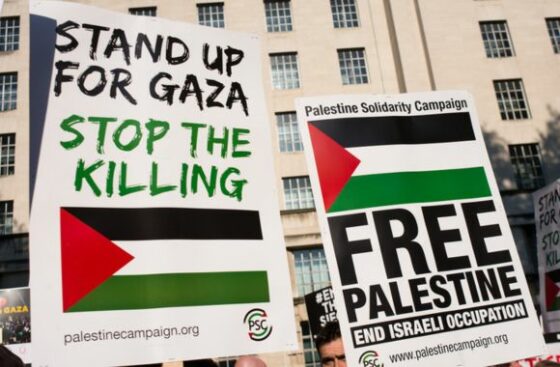
Key Takeaways
- The Palestine Solidarity Committee at Indiana University-Bloomington has been suspended pending an investigation into an unspecified 'dangerous' incident, raising questions about due process and the club's right to operate.
- University officials have not clarified the nature of the allegations or the specific policies the group is accused of violating, prompting concerns about transparency and fair treatment for student organizations.
- Supporters of the committee claim the investigation aims to intimidate students who advocate for Palestinian rights, while critics argue that activists may engage in antisemitism under the guise of activism.
UPDATED
A pro-Palestinian group is currently barred from operating – though it is not exactly clear why.
Indiana University-Bloomington’s student conduct office informed the Palestine Solidarity Committee that it must cease all activities until an investigation is completed.
The investigation centers around “an alleged incident that is considered dangerous and disruptive to the university community,” according to a letter sent to the club.
According to the letter, the organization potentially presents “a substantial risk” to those in the college community. The letter did not specify what the alleged incident was.
The letter required the club to host a meeting between its members addressing the suspension of activities order, schedule a meeting between the President of the Committee and the Office of Student Conduct, and “mandated to provide a complete roster of new and active members” by the next business day at noon. “This roster must include the date each new member began affiliation with your organization” the letter states.
Mark Bode, the executive director of media relations for the Indiana University system, did not respond to two emailed requests for the comment in the past two weeks.
However, a student activist with the Palestine Solidarity Committee told The College Fix his club does not know what specifically they are accused of doing wrong.
“The mission of the [Palestine Solidarity Committee] is to organize at Indiana University in support of Palestine.” Bryce Greene wrote in response to a question about the group’s mission and impact on campus. Greene said that the club educates the community “about IU’s role in the ongoing genocide and advocating for an end to this complicity.”
Greene said the “investigation involves immediately shutting down any activity the organization would want to do, while being apparently required to deliver a list of active members.”
“To date, the university has not even informed the organization what they are accused of,” Greene said.
However, Green said he thinks the whole aim of the investigation is to “scare students who want to speak out against genocide.”
Faculty advisor Amr Sabry shared similar concerns with The Fix via email. He said normally the school gives specifics for why a group is suspended.
“In the case of PSC, the cease and desist order, coming in the summer, when students were not even on campus, and following a pretty consistent pattern over the past two years, has all the appearances of intimidation and constraints on free speech of students,” Professor Sabry told The Fix.
The lack of details “raises due process concerns” according to Graham Piro with the Foundation for Individual Rights and Expression.
Piro said the university must “be clear and specific about what policies the group is alleged to have violated, what incidents allegedly violated the policies, and the steps the group can take to defend itself.”
“Indiana’s actions in this situation raise further concerns about how it will treat other student groups who face allegations that they violated university policy,” Piro said.
However, not all believe the mission of the Palestine Solidarity Committee is merely about anti-genocide activism.
“[T]here is no such thing as a Palestine organization that does not engage in antisemitism” Rabbi Yaakov Menken, executive vice president of the Coalition for Jewish Values, wrote in response to an email inquiry. “The Romans instated the name Palestine specifically to dissociate Jews from Judea, and that has never changed. To refer to descendants of Arab invaders as Palestinians’ is to rewrite Jews out of 2000 years of history in their homeland.”
The Fix asked Menken about the differences between protected free speech and unlawful harassment.
“Harassment, which is not part of free speech, does not have to be stated directly,” Menken said.
“Chants to ‘bring back the KKK’ would rightly be called racist harassment of Black students. Chants to ‘free Palestine’ are no different – Israel is the only free country in the Middle East; what they want it to be ‘free’ of is Jews.”
The midwest executive director of StandWithUs provided comments via a media statement.
“This cease-and-desist letter shows Indiana University is taking allegations of policy violations seriously,” Yossi Held stated. “While we don’t yet know the outcome at IU, we’ve seen Palestine Solidarity Committees and Students for Justice in Palestine chapters across the country violate school policies with calls for ‘disruptions’ since October 7, 2023, causing chaos and creating a hostile environment for Jewish and pro-Israel students.”
“Universities have an obligation to enforce their rules, and investigations like this are an important step in protecting all students and student groups on campus,” Held said.
Editor’s note: Due to an error by an editor, comments from Held and Sabry were not originally included. The article has been updated to include their comments.