A group of sad college students; Odua Images / Shutterstock.com
OPINION: Because how many would choose to attend one where you ‘call out examples of privileged social identities’?
A few years back, The College Fixreported on some of the politically correct nonsense that went on at Princeton University’s mandatoryfreshman orientation.
Included: A “primer” which explained “trans women are women” (and “there’s no ifs, and or buts’ about it”), a session about “systematic racism” from an organization with a history of antisemitism, and students being asked to “identify” themselves via socioeconomic status, racial, or sexual identity.”
And so on.
But this past week, it appears Princeton is backing off some of the nonsense — or, at least not requiring students’ attendance.
Citing “budgetary considerations” and “comments on the length of orientation and concerns about providing adequate time for students to settle into college life,” the university is scaling back orientation by four days.
The programs Outdoor Action, Community Action, and Dialogue and Difference in Action have now been made optional during the fall break.
The Daily Princetonianreported Wednesday that the changes have resulted in an “intense backlash from students.”
Outdoor Action leader Yao Xiao said he and other student leaders/trainers were “taken aback” when they heard about them.
Dialogue and Difference in Action leader Nikoloz Inashvili said “most students have other fall break plans and would likely not sign up” for the programs if they’re optional.
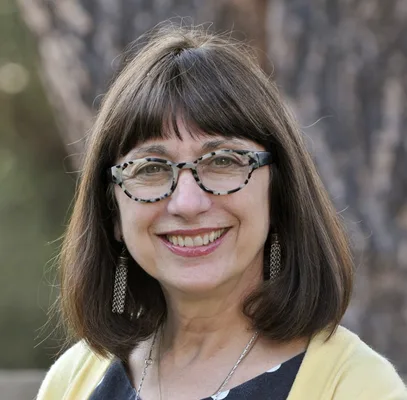
UCLA’s Maryanne Wolf who couldn’t bring herself to say the word ‘trump’ at orientation / UCLA School of Education & Information Studies
Nathan VanAlstine, also a DDA leader, added that making the programs optional over fall break “may feel intimidating [to students], during a stressful part of the semester.”
He said he “worr[ies] that someone who is already struggling to find their place will talk themselves out of going.”
Community Action leader Victoria Shen felt the change was “kind of hypocritical for [school officials] to want students to get to know campus more, ease into campus life, if they’re cutting the actual time short.”
But the real giveaway came from Community Action leader Zoya Jadhav who said the “beauty” of the previous iteration of freshman orientation “force[d] students to be in an uncomfortable position in terms of the people that they’re surrounded with” (emphasis added).
Of the three now-revised programs, Outdoor Action seems the most innocuous, although it has had a section called “Nature and Spirituality” in which students learned “how nature is reflected in different spiritual traditions” and “explore[d] how different religious traditions connect with nature through discussion, nature exploration, meditation and yoga.”
The Community Action programs have first-years “learn what it means to be part of a community, how to grapple with complex societal questions, and begin to develop an awareness of their personal values.”
At one such workshop — at which students had to “identify” themselves in various ways (noted above) — one student said “we were pressured into revealing intimate details about our lives, yet it was wholly impersonal because we were reduced to whatever categorical boxes we fill by chance.”
But I’d bet good money most Princeton freshmen won’t miss the mandatory nature of Dialogue and Difference in Action, at which students “discuss issues of identity, privilege and difference.”
Take this example from 2018 at which freshmen “learn[ed] powerful lessons about each other”:
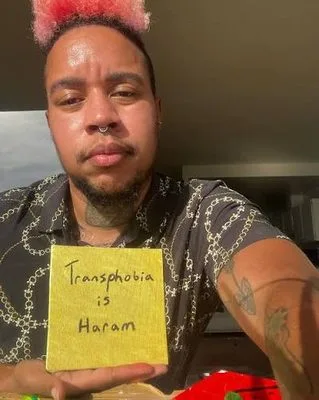
During one morning session, students sat in a large circle inside the camp’s lodge discussing privilege. J Mase III [pictured], an educator and founder of awQward talent, stood in the center and asked the group to call out examples of privileged social identities.
J Mase III / Instagram
“White.”
“Able-bodied.”
“Cisgender.”
“U.S. citizen.”
“Male.”
“Princeton student.”
“Our privileges can change from space to space,” Mase said. “Maybe you experience racial privilege or ethnic privilege in some spaces, but not in other contexts. When it comes to your own individual privilege story, you can [interpret] it the way you want.”
Mase then asked students to pair up and discuss a personal privilege that made them uncomfortable. When they reconvened, some students shared their stories with the larger group.
One student at the Mase workshop said her “privilege” was attending a private school in Louisiana, “a state with some of the worst education rates in the country.” Another student’s “privilege” was having parents who spoke fluent English.
In a recent Prince op-ed, a student described a freshman orientation “pre-read assembly” where Maryanne Wolf, director of UCLA’s Center for Dyslexia, Diverse Learners, and Social Justice, couldn’t bring herself to finish a sentence with the word “trump” in it.
You can probably guess why.
A basic “regular English verb, meaning ‘override’ or ‘overcome,'” Wolf instead “collapsed into her armchair, citing her inability to say ‘his name’ out loud, and instead spelled it out, letter by letter […] ‘T-R-U-M-P.’”

 EDITORS' CORNER