
 EDITORS' CORNER
OPINION: Niche streaming services provide outlets for such, but no women’s league will ever rival a men’s
Miami University’s “critical sociocultural” researcher of “sport, physical culture, and leisure practices” is still trying to convince you that a women’s baseball league “has a future” in the U.S.
Last year Callie Maddox wrote about the “persistent gendered assumptions” associated with baseball, lamenting (and reiterating in her current piece) that after girls sued for the right to participate in Little League Baseball 52 years ago, the founding of Little League Softball lured girls away from the former.
But “over 70 years after the dissolution of the All-American Professional Girls’ Baseball League – and nearly 30 years since the end of the short-lived Ladies League Baseball,” the new Women’s Professional Baseball League started up the beginning of last month to a “sellout crowd.”
(“Sellout” in this case was a whopping 5,200 people.)
Maddox repeats her assertion that “stubborn stereotypes” are responsible for baseball being viewed for men and softball for women, and bemoans the NCAA not sanctioning women’s baseball. She’s also concerned almost half the players in this new four-team women’s league are from outside the country.
Since only ESPN Select and Scripps Sports Network have been covering the WPBL, this means many have missed “highlight reel moments” such as the three-home run game by Kelsie Whitmore, and the walk-off grand slam by Andréanne Leblanc.
(Prof. Maddox had to find a barely followed X account with “she/they” pronouns to provide video of Leblanc’s HR.)
There’s even been drama: The manager of the Boston Hunters (a guy!) was fired after just three games, and there was a complaint filed about “misuse of funds and conflicts of interest” among the league’s board.
Of course, that all this happens in Major League Baseball (including the scandals), but at a much higher performance level.
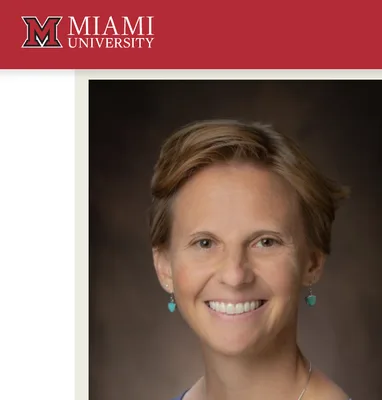
Maddox (pictured) also is hopeful the WPBL can emulate “thriving, established” women’s leagues like the WNBA and National Women’s Soccer League which, she says, are “seeing more investment, higher team valuations, lucrative media deals and growing fanbases.”
This is somewhat true; although the WNBA has lost a total of around $280 million since its inception 29 years ago, and the NBA still subsidizes it to the tune of 42 percent (like the NFL does with women’s flag football) which includes “key costs such as league operations, marketing, broadcasting infrastructure, and administrative staff,” things appear on the upswing.
The WNBA’s increased popularity does have a definite Caitlin Clark effect, which seems to have irked the majority black and highly lesbian league. The controversy surrounding this situation certainly will increase viewership, at least out of morbid curiosity.
Which is as good a term as any for the Women’s Professional Baseball League. Viewership may see a bump as inquisitive folks check out females playing baseball. After all, WPBL home run hitter Kelsie Whitmore also plays for the Savannah Bananas, a team which offers pure entertainment — it isn’t to be taken seriously.
As previously noted, “as a piece of pure trivia” Maddox’s stories about women’s baseball history are somewhat interesting and entertaining.” The increased growth of niche streaming services will even give fringe leagues like pro women’s baseball a viewing outlet.
But let’s not pretend the WPBL or WNBA will ever even come close to equaling Major League Baseball or the NBA. Most people simply prefer to watch the highest caliber of competition a sport can offer, and like it or not that is between men.
Contrary to what a former member of the Yale women’s fencing team once told us, cultural biases aren’t behind the popularity of men’s sports — it simply is a superior experience to watch such. Also simply, this is due to the biological reality that men are stronger and faster.
Something which, by the way, the WNBA has trouble figuring out.
MORE: Sorry, feminists and progressives: Men are better athletes

