
 FEATURED
Examples cited by department include Cal State LA offering ‘Black-only’ dorm space
The U.S. Department of Housing and Urban Development will “aggressively” crack down on colleges and universities that continue to offer race-based “affinity” housing, a department official told The College Fix.
Assistant Secretary for Fair Housing and Equal Opportunity Craig Trainor recently wrote a “dear colleague” letter warning campuses against “institutionalized separatism on the basis of race.”
“When that racial separatism violates the Fair Housing Act, we will aggressively enforce the law and hold every responsible institution fully accountable, regardless of the label, euphemism, or justification attached to the unlawful housing arrangement,” Trainor told The College Fix in an email last week.
Often referred to as “affinity” housing, some universities offer special residence areas for students of specific racial or ethnic identities. Universities often tout these specialized housing options as a way to promote diversity, community, and belonging.
However, Trainor’s letter, dated June 23, calls the term “affinity housing” a euphemism for discrimination.
The open letter “remind[s] educational institutions and fair housing organizations of the requirements of the Fair Housing Act.” The act states that it is unlawful to “make unavailable or deny, a dwelling to any person because of race, color, religion, sex, familial status, or national origin.”
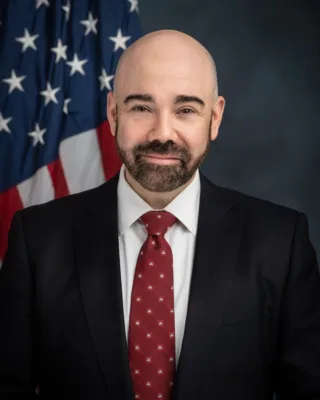
Trainor told The Fix in a statement via the department press office that HUD will not allow “unreconstructed ideologues to take us back to the dark days of ‘separate but equal’ on campus.”
“All American students have a right to an educational environment that is free from unlawful discrimination, and the Trump Administration will ensure that right is vindicated and protected,” Trainor said.
His letter cites problematic campus housing cases at UC Berkeley and California State University, Los Angeles.
In 2016, Cal State LA started offering “Black-only” housing options. Additionally, UC Berkeley’s housing website displayed “‘a picture of black students’ in a segregated dormitory.” The picture was accompanied by a quote that says, ‘I enjoy being around peers who look like me,’” according to the letter.
If the image displayed white students in an all-white dormitory, it would have sparked backlash, the letter states.
Neither of the universities’ media relations offices responded to The Fix’s emails asking if they had responses to the letter and if they still offer race-based housing.
Trainor’s letter does not mention specific actions against any one university, but warns institutions that the “Department will ensure maximum accountability for educational institutions violating the Act. No euphemism, woke rationalization, or appeal to ‘safe spaces,’ ‘affinity housing,’ or ‘cultural celebration’ will shield universities from liability where intentional unlawful discrimination is found.”
The HUD letter has faced pushback from some legal experts and scholars.
The Boston legal firm Nixon Peabody commented in an article at The Journal of Blacks in Higher Education that the letter “does not meaningfully distinguish between race-exclusive housing assignments and voluntary residential communities that are open to all participants.”
“Voluntary open-enrollment residential communities organized around shared cultural or educational themes present distinct questions, particularly where no student is excluded on the basis of race,” the firm stated.
R.B. Slater, managing editor of the journal, explained more in a recent email to The Fix.
“Race-exclusive would limit access to a particular racial group,” Slater said. “Many of these houses are open to students of all races who want to immerse themselves in a particular culture or environment. Thus, some of these residences may be all Black, but that doesn’t mean other students couldn’t live there if they wanted to.”
Meanwhile, a private legal organization founded by Cornell Law Professor William Jacobson also has been scrutinizing campus “affinity” housing.
Earlier this month, the Equal Protection Project filed federal discrimination complaints against the University of Connecticut and the University of Minnesota. The complaints accuse both of separating living arrangements based on race and ethnicity in violation of civil rights law. Both institutions are public and taxpayer-funded.
The University of Minnesota website does state that its “affinity” housing programs are “open to all” students. However, the complaint claims that “UMN’s decision to add the disclaimer suggests a consciousness that the programs’ race- and ethnicity-based descriptions are unlawful.”
The number of higher education institutions that currently offer segregated housing is not known. However, a 2019 report by the National Association of Scholars described it as “widespread.”
In the report “Separate but Equal, Again: Neo-Segregation in American Higher Education,” researchers found that out of 173 colleges studied, 42 percent offered segregated residential arrangements.
Chance Layton, spokesman for the National Association of Scholars, believes eliminating race-based campus housing should be a priority of the Trump Administration and Congress.
“As we found, these race-based policies encourage students to self-segregate, drive racial tensions on campus, alienates struggling students, and furthers race-deterministic ideologies,” Layton told The Fix when asked about the HUD letter.
His organization’s 2019 study describes “affinity” housing as a form of “neo-segregation,” and argues that it is harmful in two ways.
“The most readily apparent harm from such segregation is that it fosters a sense of insecurity,” according to the report. Additionally, neo-segregation “motivates an unending search for evidence that the larger community is hostile to the minority group.”
MORE: Western Washington University to debut ‘Black Affinity Housing’ to create ‘safer space’

