
 FEATURED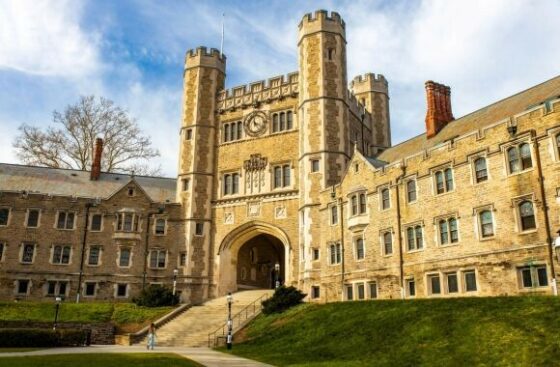
Star Trek posters, Antebellum architecture, celebration of independent thought make some students feel like trespassers on their own campuses, scholars argue
The design aesthetics of American institutions of higher education often make students from lower-socioeconomic and racially minoritized backgrounds feel like outsiders on their own campuses, claimed a group of scholars in a recent article published in the Educational Psychology Review.
“Many institutions of higher education were created by and for wealthy White men, to educate ‘young men of good hope’ for careers in law, medicine, and other high-status professions,” the scholars wrote.
“Today, intentionally or not, American institutions of higher education continue to serve the interests of wealthy White people and they have done little to dismantle socioeconomic and racial inequity.”
Together, they argued, these feelings of being an outsider are downstream of the “exclusionary function” of public spaces like parks and libraries on college campuses.
American universities are designed as “defensible spaces” that “undermine inclusion and perpetuate inequities” through territoriality, surveillance, and symbolism, the scholars noted.
The scholars responsible for the August 2025 article include Diane-Jo Bart-Plange from the Department of Psychology and Neuroscience at Boston College, Kyshia Henderson from the University of Chicago Department of Psychology, and Kelly Hoffman and Sophie Trawalter, both of whom have listed affiliations with the University of Virginia, Charlottesville and JP Morgan Chase.
The territorial nature of universities, they wrote, embodied by such structures as walls and gates, serve to cut universities off from their surrounding communities, thus engendering an us versus them mentality.
Campus surveillance programs, according to the article’s authors, disproportionately impact students from lower-socioeconomic status and racially minoritized backgrounds.
Symbols such as university logos and mascots, the authors argued, serve to “reaffirm wealthy and White students’ belonging,” while Antebellum architecture, “markings of exclusive groups,” Confederate monuments, and statues of figures such as Thomas Jefferson, can “signal to racially minoritized and lower-SES students that they do not belong.”
Other exclusionary symbols noted by the authors include the Greek organizations, Star Trek posters and soda can pyramids in computer science buildings, ornate plaques near gates, and anything celebrating individual self-expression or independent thinking.
To support their claims regarding the exclusionary nature of public spaces at universities, the scholars pointed to previous research they claimed suggests lower-socioeconomic status and racially minoritized students use less public space on campus and favor quasi-private spaces over more public campus spaces.
The authors also reported findings of two original studies they conducted at the University of Virginia. The first entailed having research assistants observe students in public spaces, estimate their socioeconomic status and other demographic features, and then rate how empowered they believed the observed students felt to take up public space on campus.
The second study involved having students fill out a demographic questionnaire after completing a survey inquiring how comfortable they felt engaging in various counter-normative behaviors such as kissing and burping in different private and public spaces around campus.
Regarding their findings, the quartet of scholars wrote these studies provided initial evidence that “lower-SES students’ behavior is constrained in public space on campus, relative to that of their higher-SES peers.”
“They seem to ‘take up’ less space in public spaces and feel less comfortable doing counter-normative things in public spaces, like kissing on the Lawn or walking barefoot in the Rotunda,” they wrote. “To us, this suggests lower-SES students feel less empowered to use public space on campus; they do not see it as theirs to use freely, without constraints.”
For statistical reasons, the authors noted, they were unable to assess the behavior of racially minoritized students in a similar manner. Therefore, it remains unknown where racially minoritized students feel comfortable kissing and walking barefoot.
Moving forward, the authors called on universities to make several reforms to empower lower-socioeconomic status students and racially minoritized students in their use of public space on campus.
“[Universities] must transform their cultural and social context, and they must reimagine their spatial context, their physical campuses,” wrote the authors. “Universities must no longer be places where lower-SES and racially minoritized students are made to feel like trespassers. They must be inclusive places, culturally, socially, and spatially.”
Suggested ways of doing this included more land acknowledgments, the abolition of campus police forces, erecting multicultural centers, and renaming or removing buildings and statues honoring the Confederacy.
The authors also recommended universities do more to share power with and serve their local communities.
The College Fix reached out via email to Sophie Trawalter, the corresponding author, regarding her research, but did not receive a response.
MORE: Princeton still requires RAs to participate in DEI, ‘microaggression’ training

