FEATURED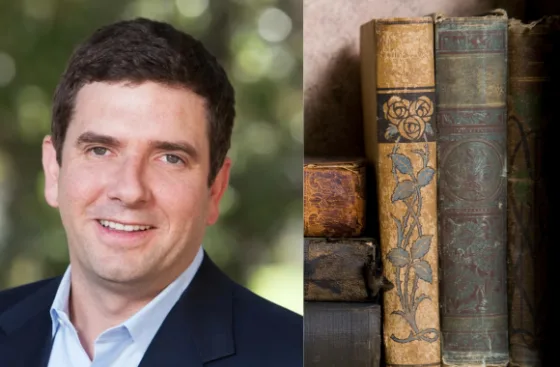
Less language focused on Western Civilization, more on ‘equity’
The University of Chicago has undergone a “curriculum degradation” in the past 13 years, according to a new analysis by an accounting professor.
Professor Ivan Marinovic, who teaches accounting at Stanford University, analyzed language used in University of Chicago course titles and descriptions between 2012 and 2025 for his analysis, published at the Heterodox STEM Substack.
He found the use of “progressive” language, such as “equity” and “intersectional” has doubled, compared to the use of “Western canon” words, such as “Bible” and “Western civilization.”
Applied to the course data from UChicago’s course catalogues spanning 2012 to 2025, the share of courses that featured terms on the progressive list rose from 12.7 percent to 28.3 percent while the signal associated with the Western canon decreased slightly from 13.2 percent to 11.9 percent.
In his post, Professor Marinovic did emphasize that this progressive signal identified with this method is “coarse” and “likely to yield many false positives and false negatives.”
Marinovic provided further comments to The College Fix about his findings.
He said that “the dominant story over the last twenty years is one of significant catalog expansion, not necessarily substitution.”
He continued that this “expansion, however, appears to have been heavily skewed toward the creation of new courses on narrow progressive topics, many of which carry low enrollment” and that while “substitution does appear to be happening as well… it is a slower process and the evidence is more mixed.”
The Fix also asked about potential limits to the keyword list used in the methodology.
Professor Marinovic told The Fix that his “impression is that the progressive keyword list is sufficiently comprehensive and does not materially inflate the results through false positives.” In contrast, “the Western canon signal is different matter” and that is because the “tradition is richer and more nuanced… there is [a] meaningful signal being missed, and that the list can be substantially improved.”
Another way Professor Marinovic intends to improve the conclusions of his initial analysis is by extending the analysis to course catalogues at a wider variety of schools.
He told The Fix “the dataset has already grown to fourteen institutions, and the intention is to continue expanding it toward a broader and more systematic sample, including smaller liberal arts colleges and regional universities.”
He emphasized that “this is an impression from the data rather than a conclusion from a completed analysis, and any strong claims will have to wait for more rigorous work.”
University of Chicago not the only school facing this problem, expert says
Professor Marinovic is not the only person to critically investigate the decreased focus of college curriculums on the traditional Western canon.
Madison Doan, a policy analyst at the Heritage Foundation’s Center for Education Policy, told The Fix via email that this trend has been observed at many other schools, specifically in the Ivy League.
Doan pointed to a book called “Slacking” that she co-authored with Adam Kissel and Rachel Cambre. The trio of education experts reviewed core curriculum options at Ivy League colleges and found most “no longer require a structured core curriculum, leaving students to navigate broad distribution requirements on their own with limited exposure to foundational texts or disciplines.”
They also identified a rise in “slacker courses,” courses that tend to be “framed primarily through DEI lenses,” “assume contested conclusions,” and “overly narrow… [such] that [they] don’t contribute to a broad education.”
Doan also told The Fix that this trend “extends beyond elite schools,” citing a 2020 report from the American Enterprise Institute and a 2024 report on medical schools from Do No Harm.
Asked about what universities can do to ensure a high quality curriculum, Doan told The Fix that schools “should focus on two things: structure and rigor.”
Including a “coherent core curriculum in foundational disciplines” is important so that “all students receive a broad academic foundation,” she wrote.
Secondly, “courses should promote open inquiry and analytical thinking” by “encouraging viewpoint diversity, emphasizing close reading and evidence-based reasoning, and ensuring courses are designed to build knowledge rather than reinforce predetermined conclusions.”
Professor Marinovic’s methodology for analyzing course catalogues provides a rough framework for assessing if curricula are achieving the aims spelled out by Doan.
Professor Marinovic “envision[s] a Curriculum Content Index (CCI) at the university-year level, constructed from publicly available course catalog data and syllabi,” according to commentary included in his analysis.
The index would allow “prospective students to assess how much of a university’s catalog engages the Western intellectual tradition versus ideological content,” and let “donors…direct funding toward institutions that maintain intellectual breadth, and policymakers to monitor trends and evaluate the effects of reform efforts.”
The Fix also asked Jamie McCormick, the associate dean of academic affairs of UChicago’s Division of the Arts and Humanities, if the trends identified by Professor Marinovic’s preliminary analysis were accurate and if President Trump’s recent actions directed at universities caused UChicago to reevaluate how it structures its curriculum.
Gerald McSwiggan, a spokesman for UChicago responded that the “University of Chicago’s Core curriculum provides all College students with a challenging, common academic program that serves as an important foundation for coursework in major fields of study — teaching undergraduates how to think critically and how to approach problems from multiple perspectives.”
He added that “while the Core has a rich history and is grounded in tradition, it is also important to note that it is reinvigorated year after year as faculty consider new ways to immerse students in UChicago’s culture of learning.”
“The emerging world of AI, advances in pedagogy, and the growth of new fields all play a role,” McSwiggan said.