
 FEATURED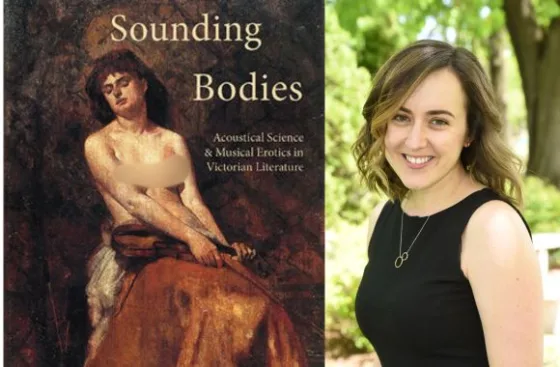
Key Takeaways
- The NEH funded $12,600 in projects related to Professor Shannon Draucker's book, 'Sounding Bodies: Acoustical Science and Musical Erotics in Victorian Literature,' which explores the connection between music and sexuality in the 19th century.
- Critics, including the National Association of Scholars, argue that the NEH favors progressive research and call for a more balanced funding approach to include conservative perspectives and promote intellectual diversity.
The National Endowment for the Humanities underwrote a digital access book about sexuality in Victorian literature by a Siena College Professor.
The State University of New York received $6,600 to create an open access edition of Professor Shannon Draucker’s book, titled “Sounding Bodies: Acoustical Science and Musical Erotics in Victorian Literature.” The NEH’s Open Book Program “supports the conversion of recently published books funded by NEH into eBooks that are freely available online.”
This is on the top of the $6,000 Draucker herself previously received for the book.
The book compares listening to music to orgasms, according to an NEH description.
“Can the concert hall be as erotic as the bedroom? Many Victorian writers believed so,” the description states.
The book reports how 19th-century “acoustical scientists” “described music as a set of physical vibrations that tickled the ear, excited the nerves, and precipitated muscular convulsions.”
“In turn, writers—from canonical figures such as George Eliot and Thomas Hardy, to New Women novelists like Sarah Grand and Bertha Thomas, to anonymous authors of underground pornography—depicted bodily sensations and experiences in unusually explicit ways,” the book states.
The Fix reached out to Draucker and asked via email if she believed she may have a harder time receiving grants from the NEH under the Trump Administration. She did not respond to emails and phone calls in the past month and a half.
The Fix also emailed Rebecca Colesworthy, the recipient of the open access grant, and asked what the money goes to and if she had any concerns about the funds being taken back by the Trump administration. She did not respond to an email on Sept. 19.
However, a higher education reform group criticized the NEH’s focus on “progressive research.
“[O]verall the NEH has been much more likely to fund progressive research, particularly over the last two decades and especially the last decade,” National Association of Scholars spokesman Chance Layton told The Fix via email.
Layton told The Fix that he believes “that some of the criticism as it comes to restricting grants or promoting other grants can be relevant and perhaps a real form of censorship.”
He also said, “from the conservative side of things it can be particularly hard to receive grant funding.”
Layton believes that while the NEH should not fund what some consider frivolous research, the NEH “is an organization that is supposed to fund the humanities and promote various projects” and do so “with regard to academic freedom and encourag[ing] intellectual integrity.”
Thus, he says “if the decision [to fund Sound Bodies] were made with those two things in mind, then you could argue it was an appropriate use of funds procedurally.”
To promote a better balance between the agency’s funding for conservative and progressive projects, he says the NEH “should review its current grants and try to find a more neutral ideological basis for funding various projects.”
To Layton, this standard would bring “more intellectual diversity to the overall grant portfolio.” Additionally, projects “that do benefit [for] the public good,” “enrich culture,” “shape character and pursue truth” should be prioritized.
These revised priorities Layton speaks of should be “something that the current administration and leaders [take] seriously.”
MORE: Colby College prison abolitionist project loses federal funding under Trump

