FEATURED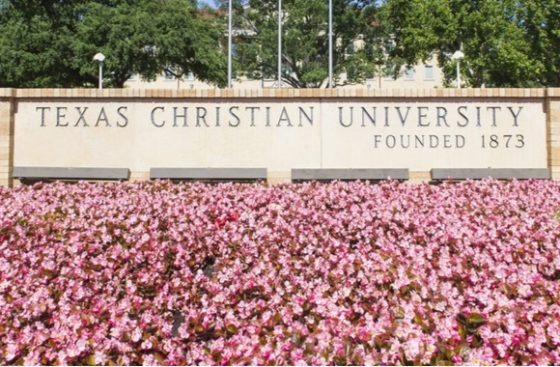
The change comes as alumni and Christian leaders raise concerns about the university drifting from its religious mission
Texas Christian University will dissolve its Departments of Women and Gender Studies and Comparative Race and Ethnic Studies at the end of this academic year, merging both programs into the English Department.
The decision, announced earlier this month, has sparked debate over whether the action could mark a return to traditional Christian values or is a cosmetic response to donors and political pressure.
Provost Floyd Wormley told faculty the merger is driven by low enrollment and broader budget restructuring that will also combine other small departments. “Decisions are not based on academic content but on data,” a university spokesperson told Inside Higher Ed.
Yet some professors questioned that reasoning. A professor in the department, Brandon Manning told Inside Higher Ed that the move follows “a decline in institutional support” for its race, gender, and sexuality programs.
This fall, nine students are enrolled in the Critical Race and Ethnic Studies program and two in Women and Gender Studies, according to the report. The university says these will be able to complete their degrees without disruption.
For alumni such as Preston Campbell, a 2019 fine arts graduate, the shift seems more financial than spiritual. He and other alumni have expressed growing concerns about the institution straying from its Christian mission in recent years.
“While the elimination of woke programs seems to indicate TCU is leaning back toward its Christian values on the surface, I wouldn’t be surprised if this change was largely influenced by long time donors pulling funding,” he told The College Fix in a recent interview.
He cited TCU’s financial reports showing donations dropping from $179.7 million in 2023 to $126.7 million in 2024, a $53 million decrease.
“They are most definitely rebranding without real change,” he said. “If they were actually listening to alumni, I’m sure they would be returning alumni emails voicing concerns, which I can tell you first hand: they are not.”
Campbell said he first noticed the school’s ideological drift years ago, when his campus tour emphasized diversity initiatives.
“As a 17 year old touring the campus, I remember being told about DEI initiatives,” he said. “As a child you think, ‘That’s great for them.’ As an adult, you realize, yes, it does affect you, financially and morally/ideologically when you are footing the bill for these people and watch this ideology be woven into the curriculum you’re paying to receive.”
He recalled being surprised that religion credits could be earned by studying other faiths instead of Christianity. “You could take a class on the Quran and that would count as your religion credit. From a Christian school.” he said.
Campbell also acknowledged past controversies such as the university granting course credit for volunteering at Planned Parenthood, offering tutoring only to students of color, and hosting a LGBTQ pride event.
“It’s the antithesis of equality,” he said. “It’s giving people a clear path to divisiveness and a victim mentality. Limiting tutoring opportunities to students of color is also the antithesis of equality, contributing to divisiveness and isolationism, it’s giving Jim Crow and it makes no sense to me why anyone would subscribe to this.”
The College Fix contacted TCU’s media relations office twice in recent weeks, asking about the department closures and the criticism about its mission, but did not receive a response in time for publication.
Everett Piper, president emeritus of Oklahoma Wesleyan University and a Washington Times columnist, agreed that the move appears reactionary rather than principled. Piper frequently writes and speaks about the erosion of biblical values at evangelical Christian colleges.
“If the school’s policy was x, y, or z up until 5 minutes ago, it seems clear these changes are driven by pressure, not principle,” Piper told The Fix. “If those who wrote and approved the original policies remain employed, then the change the school is now touting is little but window dressing. You don’t cure cancer with band aids. You have to remove the tumor.”
Piper said Christian colleges that stray from biblical teaching on life and sexuality inevitably lose their moral compass.
“Any church or college that can’t get the definition of life and sex right is going to be wrong on everything else thereafter,” he said. “Christian schools have no obligation to entertain teaching or behavior that is antithetical to their very mission and charter.”
TCU has not publicly tied its restructuring to politics but the changes follow years of scrutiny over the university’s DEI policies. Earlier this year, TCU quietly closed its Office of Diversity and Inclusion and removed DEI and LGBTQ pages from its website.
Free speech disputes have compounded that scrutiny. In October, detransition activist Chloe Cole said TCU canceled her speaking event “despite many rooms being available.”
“Texas Christian University holds pride events but will not allow Christian baptisms and events,” she wrote on X, calling it “how free speech dies.”
The university disputed Cole’s assertions, telling The Fix at the time that the event was scheduled on “short notice” and the requested room was “already booked.”
On its Department of Women and Gender Studies website, the university lists courses such as “Queer Theories” and “Transitional Gender and Sexuality.”
For Campbell, the symbolism matters more than the syllabus. “The woke mind virus runs deep in the veins of TCU,” he said. “They will have to seriously clean-house to get back on track.”
Piper echoed that sentiment: “The only thing that will make a difference is complete change in faculty and administration from the top down. These last minute policy adjustments, just because they got caught, mean nothing.”
MORE: Texas Christian U. pushes back on claim it canceled TPUSA event with Chloe Cole