
 FEATURED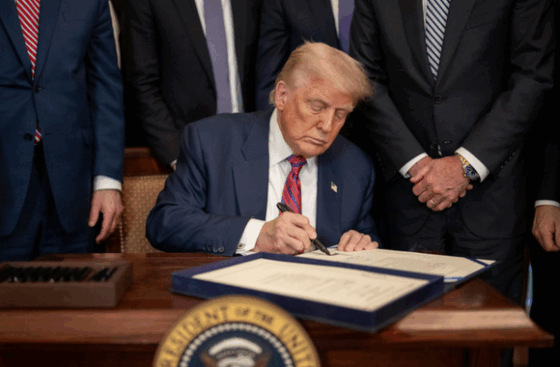
Key Takeaways
- The Trump administration significantly downsized the U.S. Department of Education, transferring many of its functions to other departments and chopping its workforce by 1,300 employees.
- Pressure from the Trump administration led to the end of many DEI offices and programs and the implementation of stricter admissions and hiring criteria.
- New limits were placed on federal student loans for graduate students, with caps introduced and the phase-out of the Grad PLUS loan program.
- The administration initiated investigations into antisemitism at universities, freezing funding for several institutions until the agreed to pay tens of millions of dollars and address discrimination.
ANALYSIS
From the ongoing efforts to restructure and downsize the U.S. Department of Education to high-profile settlements addressing antisemitism on campuses, President Donald Trump made a significant impact on colleges and universities in 2025.
Here are the top five ways the Trump administration reshaped the higher education landscape over the last year:
- U.S. Department of Education downsized
Fulfilling his campaign promise, President Trump began dismantling the Education Department this year.
Most recently, the Trump administration announced the agency will transfer many of its duties to other federal departments.
Programs such as Indian education, foreign medical school accreditation, international education, and major K-12 and postsecondary duties will be managed by the Departments of Labor, Interior, Health and Human Services, and State.
Earlier this year, the Trump administration significantly shrunk the Education Department by laying off 1,300 employees, as well as accepting hundreds of resignations.
- DEI took a major hit
In February, President Trump issued a major smackdown on diversity, equity and inclusion programs in higher education — declaring that DEI efforts are essentially discriminatory and colleges and universities could lose federal funding if they employ them.
As a result, universities across the nation curbed overt DEI efforts in over the last year.
According to a June College Fix survey, 87 schools effectively renamed their DEI offices while 78 appeared to actually close their offices without launching a similar program. Many more schools have taken similar steps to reduce DEI programs and practices in the last several months.
The Trump administration also issued a new federal directive this year that requires universities to expand reporting and disclosure of admissions data to enforce adherence to merit-based criteria.
Universities must submit detailed admissions data, including race, gender, standardized test scores, and GPAs of applicants, as well as admitted and enrolled students.
Trump also developed a “Compact for Academic Excellence in Higher Education.” The president extended the deal to all universities, offering federal funding incentives to those that implement specific reforms.
The reforms include a five-year tuition freeze, bans on race and sex considerations in admissions and hiring, and limitations on foreign enrollment. Several universities have publicly rejected the offer, while most have yet to respond.
- Student loan and financial aid changes
Trump signed a major spending law in July that places new limits on how much federal student loan money graduate and professional students can borrow.
Under the law, federal loans are now capped at $100,000 total for graduate students and $200,000 total for doctoral, medical, or professional degree students.
It also phases out the Grad PLUS loan program, which previously allowed graduate students to borrow unlimited unsubsidized federal loans. New applications for those loans will not be accepted beginning in July 2026.
In addition, the U.S. Department of Education recently entered a settlement with the state of Missouri to end what it calls former President Biden’s “illegal student loan bailout.”
The plan, which aimed to significantly lower monthly payments for borrowers and offer quicker paths to forgiveness, was repeatedly struck down in court for exceeding the Education Department’s legal authority.
If the settlement is approved by a court, it would effectively end the program, and current participants would need to apply for other legal payment plan options.
- Antisemitism crackdown
The Trump administration launched investigations and froze billions of dollars in funding for Brown, Harvard, Columbia, Princeton, the University of Pennsylvania, and other institutions in 2025 to crack down on antisemitism.
Several universities reached deals with the administration to restore funding in exchange for massive policy changes to address discrimination. Most recently, Northwestern University agreed to pay $75 million to resolve a seven-month-old federal anti-discrimination probe that froze at least $790 million in funding to the institution.
Over the summer, Brown University struck a deal with the Trump’s administration, committing to pay $50 million to regain federal research funding and settle three probes into alleged discrimination.
Columbia will review its admissions practices to address declines in Jewish and African-American enrollment, and also agreed to pay $200 million to end the federal probe into antisemitism and discrimination claims.
In August, the Trump administration suspended more than $200 million in research grants to UCLA, citing antisemitism and bias. In November, a federal judge ruled that the Trump administration cannot use the threat to cut federal research funding to force the University of California system to comply with its bias and antisemitism reform demands.
Meanwhile, the Trump administration also created a task force within the U.S. Department of Justice to assess how schools are handling reports of harassment and discrimination against Jewish students.
- Foreign student enrollment targeted
The Trump administration has revoked more than 6,000 student visas this year for reasons including staying past the expiration date, criminal activity, and supporting terrorism.
In May, the Trump administration ordered U.S. embassies to halt interviews for new student visas as it prepared to expand social media screening for all prospective applicants.
The administration in August also proposed capping student visa holders to a four-year stay.
As a result of Trump’s increased vetting, universities saw fewer international students on campus during the fall 2025 semester.
MORE: ‘Minority serving institutions’ are unconstitutional, DOJ says

