
 FEATURED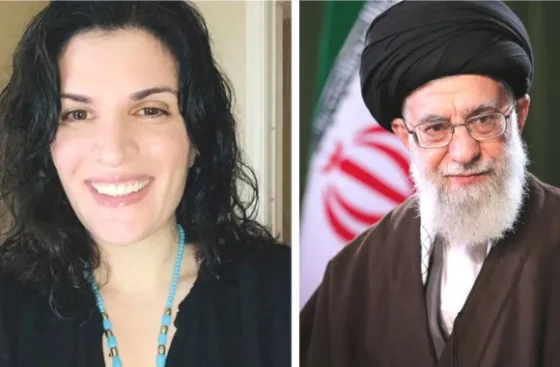
The University of Arkansas’s removal of a professor from her position as director of the King Fahd Center for Middle East Studies has drawn criticism over academic freedom concerns.
Professor Shirin Saeidi, who was removed as the director last month due in part to her social media posts praising Iran’s Ayatollah Khomeini and calling for the destruction of Israel, is demanding a hearing to address the allegations against her.
“Universities are meant to protect faculty from political campaigns—not validate them,” her attorney, John Jerome “JJ” Thompson Sr., told The College Fix in an interview this month.
Saeidi has requested a formal hearing under university policy to examine the facts through a faculty-governed process, he said, arguing her academic freedom and free speech rights have been violated.
“At the heart of this case is protected academic activity: scholarly engagement with controversial political issues,” he said via email. “Dr. Saeidi’s work—like the work of many scholars in the humanities and social sciences—often involves circulating, analyzing, and critiquing ideas that are uncomfortable, distressing, or widely misunderstood.”
But university leaders see it differently.
Saeidi’s posts “undercut any notion of diverse intellectual opportunity when it comes to one of the most important political issues in the Middle East,” stated a letter informing her of the demotion. “Frankly, such posts are irresponsible for someone in your program-leadership position.”
Saeidi, an associate professor specializing in Middle East studies, also made controversial statements on university letterhead without permission, according to the termination letter.
“Professor Saeidi was relieved of her duties as Director of the King Fahd Center for Middle East Studies on Dec. 5, 2025,” university spokesman John Thomas told The Fix. “Professor Saeidi released a copy of the Dec. 5 letter notifying her of her removal from the director role and the reasons for it. The University has confirmed that the letter is accurate and was issued by Dean Brian Raines.”
He added that the suspension is consistent with university policies, academic freedom principles, and applicable law, including the First Amendment.
The Dec. 5 letter from Dean Raines cited Saeidi’s social media posts as “troubling” and damaging to the center’s reputation. These included statements on X praising Iran’s Supreme Leader Ayatollah Ali Khamenei, lauding Iran’s response to an Israeli attack in June 2025, and calling for Israel to be “dismantled.”
Additionally, Saeidi faces scrutiny for using university letterhead to submit a character reference in a Swedish court for Hamid Nouri, an Iranian convicted of war crimes related to the 1988 mass executions in Iran, according to the letter.
Adding another layer, Saeidi faces an investigation into alleged academic fraud in her 2022 PhD dissertation, “Women and the Islamic Republic: How Gendered Citizenship Conditions the Iranian State,” published by Cambridge University Press.
According to a Dec. 17 New York Post report, the Alliance Against Islamic Regime of Iran Apologists accused Saeidi of fabricating and misusing material, including unauthorized use of survivor testimonies from Iranian political prisoners. Maryam Nouri, a former prisoner whose memoir “In Search of Liberation” was allegedly plagiarized, told the Post she was “shocked by the extent of fabrication, fraud, and dishonesty.”
A petition by the alliance calls for her termination and accuses Saeidi of defending the Islamic Revolutionary Guards Corps, “calling its terrorist designation ‘unlawful,’ and framing any criticism of the regime’s armed forces as “cultural suicide,” echoing the exact narratives of the Islamic Republic.”
But Thompson told The Fix that administrators’ have responded to external pressures from advocacy groups that have targeted Saeidi based on her scholarship and Iranian origin.
Meanwhile, the Middle East Studies Association has come out in defense of Saeidi as well.
The group argued that her statements on public matters within her expertise are protected under Board Policy 405.1, which prohibits dismissal based on scholarly opinions or citizen expressions.
MESA criticized the university for bypassing due process and demanded Saeidi’s immediate reinstatement, a public denunciation of the defamation campaign against her, and a commitment to protect faculty speech.
Saeidi remains on paid suspension, with no hearing date announced.
Thompson expressed confidence that a full review would vindicate her, emphasizing that the dispute is about upholding academic independence amid controversy.
“This case is not about endorsing any political position,” he told The Fix. “It is about whether public universities will stand by academic freedom and due process when scholarship becomes controversial—or whether they will allow external outrage to dictate who is permitted to teach, research, and lead.”
The Middle East Studies Association did not respond to requests for comment from The College Fix.
The Middle East Forum, which “monitors and safeguards against Iranian regime influence in American mosques, nonprofit institutions, and universities,” also weighed in on the controversy, citing the Islamic Republic’s repeated denouncements of the professor’s demotion.
“When a repressive regime that tortures and executes its own citizens rushes to defend one of its apologists abroad, it confirms we are hitting the right targets,” stated Gregg Roman, MEF’s executive director. “To the regime’s proxies who remain as faculty at America’s universities: your days of operating with impunity are numbered. We will continue exposing and dismantling this network until we rid America’s campuses of Tehran’s toxic influence.”
MORE: Scholars: Recent protests in Iran partly due to … climate change

