BUZZ
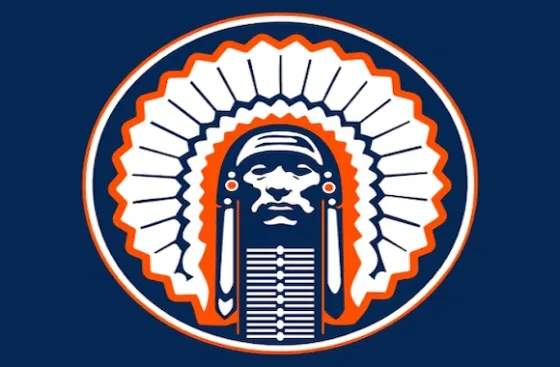
ANALYSIS: One prof has ‘filed multiple Title VI complaints’ about use of the Chief’s likeness ‘around campus and at events’
Earlier this month, the University of Illinois student paper The Daily Illinis declared in a headline that, on its 100th anniversary, the school was “reflecting” on the “divisive legacy” of former school mascot Chief Illiniwek.
Those reflections came from a pair of Native American and affiliated professors, along with a few progressive students.
Despite initial resistance to his ouster, Chief Illiniwek officially was retired as U of I mascot in 2007 following the NCAA’s ban on teams that had “hostile or abusive mascots, nicknames or imagery.”
As is often the case with such mascots, there appears to be a disconnect between outspoken (usually leftist) activists, and your average, everyday Native American.
According to a U of I Board of Trustees report, student activist Charlene Teters of the Spokane Tribe was a catalyst for the modern protests against the Chief beginning in 1989.
“Through her efforts, anti-Chief protests began on campus,” the report notes.
Two years later, the U of I Student Government Association passed a resolution “declaring the Chief Illiniwek performance discriminatory and calling for programs for its elimination and for an apology to Native Americans.”
In 1995, however, the leadership of the Peoria Tribe, “direct descendants” of the Illini, gave its approval for U of I’s use of the Chief. One tribal officer had said “protestors do not speak for all Native Americans and certainly not for the Peoria Tribe.”
Nevertheless, five years later the Peoria passed a resolution by a 3-2 vote which asked U of I to stop using Chief Illiniwek as a mascot.

Professor Rosalyn LaPier (pictured), who according to her/their faculty page uses “she/they” pronouns and researches “Indigenous landscape management practices [and] traditional ecological knowledge,” noted “they” “have filed multiple Title VI complaints” with U of I over the use of Chief Illiniwek merchandise “around campus and at events.”
LaPier claimed using any sort of Chief Illiniwek imagery creates a “hostile work environment” for Native faculty and staff.
“They” added “they’re” not only “hurt and angry” by some folks’ “continued infatuation” with the Chief, but also “fascinated and confused.”
“I’m really fascinated that a large segment of the community here has this attachment to such a racist symbol, and it really makes me, as a scholar, think about the history of racism in our country,” LaPier said.
One such “segment” is the Honor the Chief Society which, according to the paper, held a 100th-year celebration tailgate in honor of Chief Illiniwek before a game late last month. The group’s Facebook page featured many supportive comments.
But Dave Beck, an affiliated faculty member in the American Indian Studies program, asked “Is the administration going to or have they made a statement discouraging discouraging (‘Honor the Chief’ celebrations), and asking people not to be presenting racist images to our Native colleagues and students on campus?”
The U of I Native American House also condemned the tailgate and its “racist stereotypes, and said its members “refuse to remain silent” about imagery “that demean[s] Native peoples.”
Junior Smaya Anand, who’s working on a class project about the U of I community’s “fixation on the mascot,” claimed many have an “unwillingness to accept the offensive nature” of the mascot and a “skewed perception of Native American identity.”
In a somewhat equivocal statement, U. Illinois Executive Communications Director Patrick Wade told the Daily Illinis that U of I “discourages the wearing of Chief imagery” but that such displays “can be protected expression under the First Amendment” (emphasis added).
MORE: Professors demand NCAA punish U. Illinois because ex-mascot offends them
MORE: U. Illinois ditches ‘war chant’ at sporting events to be ‘inclusive’